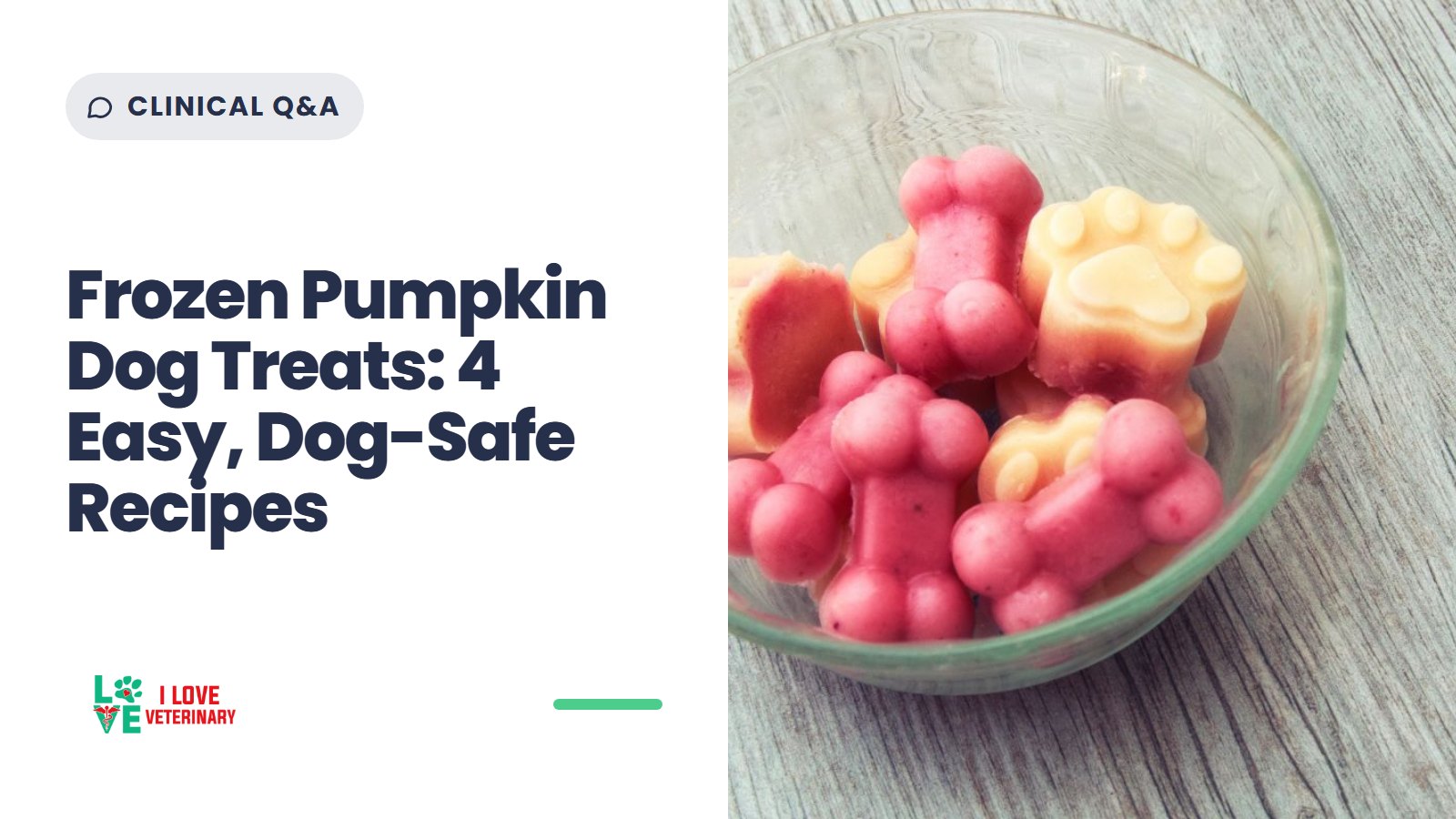
Mix plain canned pumpkin with plain yogurt, spoon it into a silicone mold and freeze it for about four hours. That's the whole trick, and it's about as easy as dog treats get. The one thing to get right happens at the store: buy 100% pumpkin purée, never pumpkin pie filling.
Below are four no-bake recipes, the label check that keeps them safe, and how to fit them into your dog's daily treat allowance.
Can Dogs Eat Pumpkin?
Yes. Plain pumpkin is a safe treat for most dogs, and plain canned pumpkin is the easiest form to use. It's also low in calories: about 83 calories per cup, according to the Tufts veterinary nutrition service.
Pumpkin has a reputation as a stomach fix, so a quick reality check. Tufts veterinary nutritionist Lisa Freeman points out that the small amount of fiber in pumpkin usually limits how much it can do as a fiber source. Think of these as treats, not medicine. If your dog has diarrhea that keeps going or has blood in it, or seems lethargic, feverish, weak or is vomiting, call your vet rather than reaching for the pumpkin. Puppy diarrhea is always worth a call.
Before You Start: Pumpkin Purée vs Pie Filling
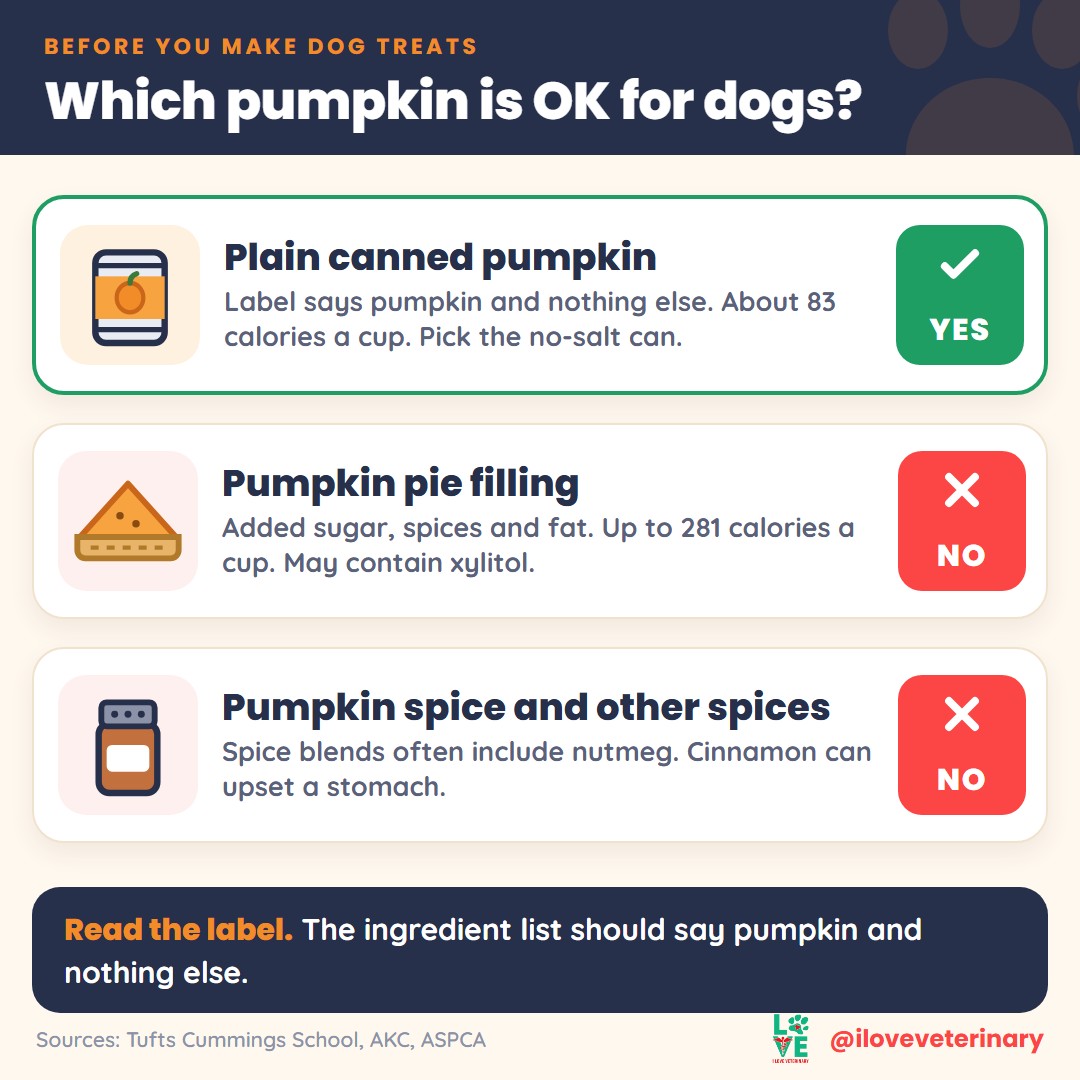
Pumpkin purée and pumpkin pie filling sit side by side on the shelf in fall, and the cans look alike. Read the label before anything goes in the cart.
- Pumpkin purée: the ingredient list says "pumpkin" and nothing else. This is the one you want.
- Pumpkin pie filling or pie mix: sweetened and spiced, often with fat and dairy already added. Tufts puts it at up to 281 calories per cup, more than three times plain pumpkin. Pumpkin spice blends usually include nutmeg, which can make dogs sick in larger amounts, and the AKC warns that pie mix may contain xylitol.
- Salted canned pumpkin: pick the no-salt can. According to Tufts, some salted brands carry nearly 600 mg of sodium per cup, compared with about 12 mg in unsalted pumpkin. That matters most for dogs with heart or kidney disease.
The same habit applies to everything else in the bowl:
- Yogurt: plain and unsweetened. Skip anything labeled sugar-free, low sugar or "light" unless you've checked the ingredients for xylitol, the sweetener the FDA warns is dangerous for dogs. Dogs don't make much lactase, so dairy can upset some stomachs. Start with one treat and see how your dog does. Our yogurt guide has more.
- Peanut butter: xylitol-free only. Some peanut and nut butters contain xylitol, and in dogs it can cause a dangerous drop in blood sugar and liver damage. Read the ingredient list every time you buy a new jar. If your dog ever eats xylitol, call your vet or an emergency clinic right away; our xylitol toxicity guide explains why it's urgent.
- Leave out entirely: chocolate, grapes and raisins, onions and garlic, macadamia nuts, xylitol and raw yeast dough. We skip spices too, cinnamon and turmeric included.
4 Frozen Pumpkin Dog Treat Recipes
All four use the same method: mix, fill a mold, freeze, pop out. A small silicone mold (paw prints, bones, mini pumpkins) makes the treats easy to release and keeps them bite-size. To learn your mold's size, pour a tablespoon of water into one cavity. The calorie figures below assume tablespoon-size treats.
You'll need: a bowl, a spoon or fork, a silicone treat mold or ice cube tray, and a small baking sheet to carry the mold flat to the freezer.
1. Three-Ingredient Pumpkin Banana Yogurt Bites
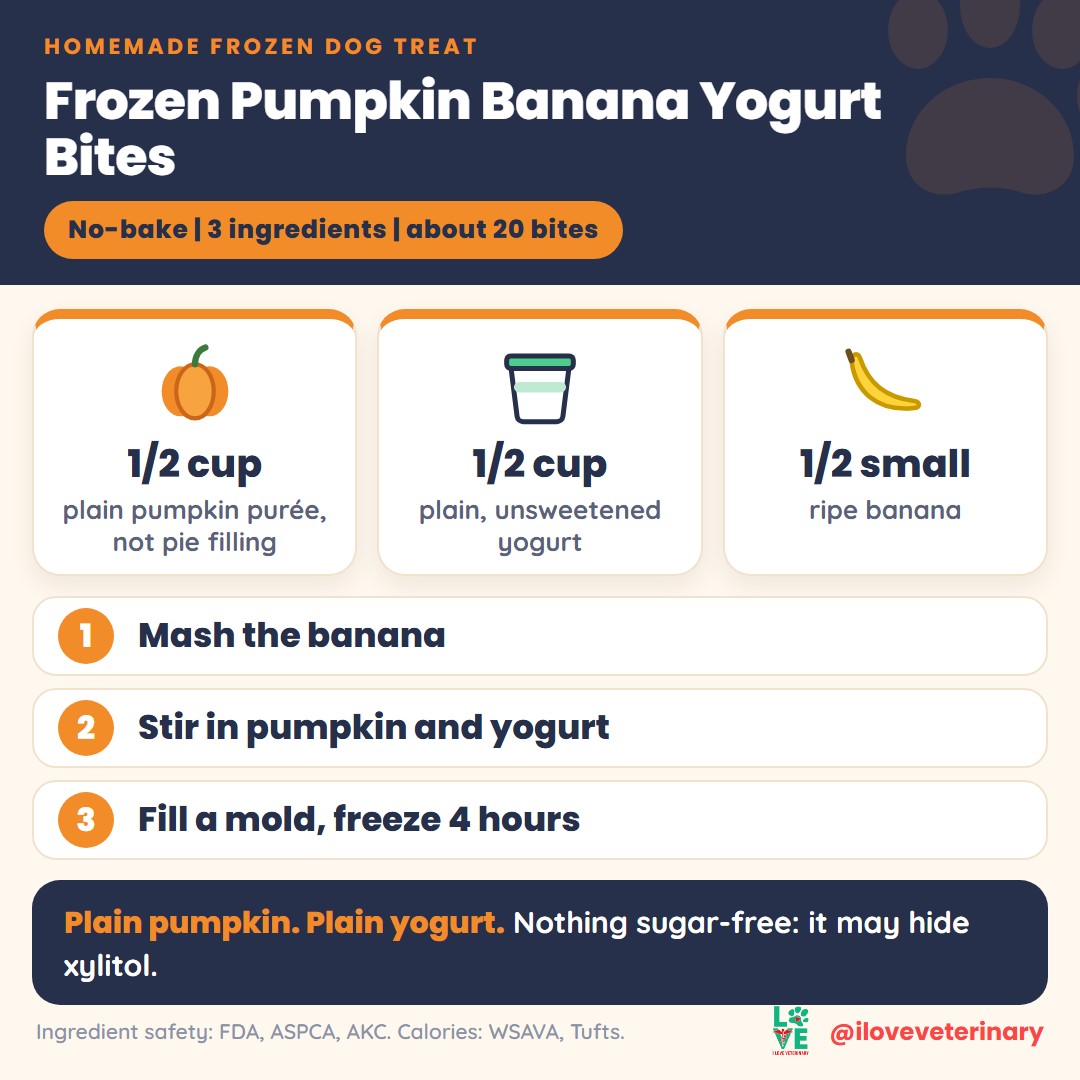
Prep: 10 minutes. Freeze: at least 4 hours. Makes: about 20 tablespoon-size bites.
- ½ cup plain canned pumpkin purée
- ½ cup plain, unsweetened yogurt (Greek or regular)
- ½ small ripe banana
- Mash the banana in the bowl until smooth.
- Stir in the pumpkin and yogurt until the color is even.
- Spoon into the mold, tap it on the counter to settle the mix, and freeze until solid.
Tip: bananas are sweet, so the AKC treats them as an occasional snack. Half a banana spread across a whole batch keeps it modest. For more banana ideas, see our dog treats with banana.
2. Two-Ingredient Pumpkin Yogurt Drops
Prep: 5 minutes. Freeze: at least 4 hours. Makes: about 16 tablespoon-size drops.
- ½ cup plain canned pumpkin purée
- ½ cup plain, unsweetened nonfat or low-fat yogurt
- Stir the pumpkin and yogurt together in equal parts. A little more of either is fine.
- To stretch the batch, stir in a splash of water.
- Fill the mold, freeze, then move the drops to a freezer bag.

3. Pumpkin Peanut Butter Cups
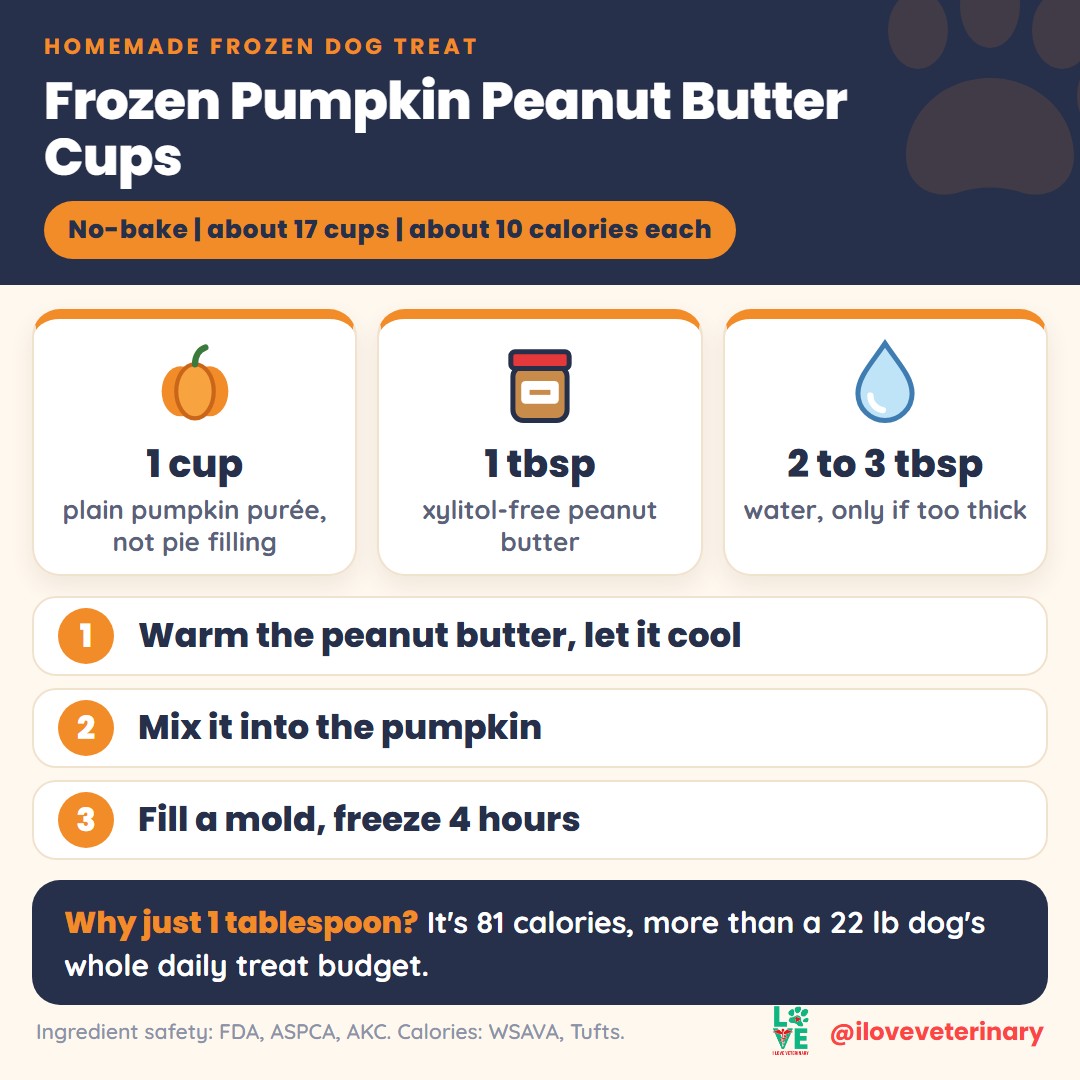
Prep: 10 minutes. Freeze: at least 4 hours. Makes: about 17 tablespoon-size cups.
- 1 cup plain canned pumpkin purée
- 1 tablespoon xylitol-free peanut butter (check the ingredient list)
- 2 to 3 tablespoons water, only if the mix is too thick to spoon
- Warm the peanut butter for a few seconds so it stirs in easily, then let it cool.
- Mix it into the pumpkin until smooth, adding water if needed.
- Fill the mold and freeze.
Why only one tablespoon? Peanut butter is the calorie-dense part. The WSAVA lists one tablespoon at 81 calories, which is more than the whole daily treat allowance of a 22-pound dog. Add a cup of plain pumpkin (about 83 calories, per Tufts) and the batch comes to about 164 calories spread over 17 tablespoon-size cups, or roughly 10 calories a cup. Peanut butters vary, so treat that as an estimate.
4. Dairy-Free Pumpkin Apple Cubes
Prep: 10 minutes. Freeze: at least 4 hours. Makes: about 28 tablespoon-size cubes.
- 1 cup plain canned pumpkin purée
- ½ cup peeled apple, finely chopped (core and every seed removed)
- ¼ cup water
- Peel and core the apple, check that no seeds are left, and chop it small.
- Stir the apple and water into the pumpkin.
- Fill the mold and freeze.
Good for: dogs that don't do well with dairy. Pumpkin on its own also freezes well with a splash of water. At 83 calories a cup, that's about 5 calories per tablespoon.
Other swaps: plain cooked sweet potato can stand in for some of the pumpkin. Keep any new ingredient to the dog-safe list above.
How Many Frozen Pumpkin Treats Can My Dog Have?
A few small cubes a day. Treats of every kind, homemade ones included, should stay within 10% of your dog's daily calories, according to the WSAVA's treat guidance. The other 90% comes from a complete and balanced diet. Here is what that 10% looks like for an average healthy adult dog at an ideal weight:
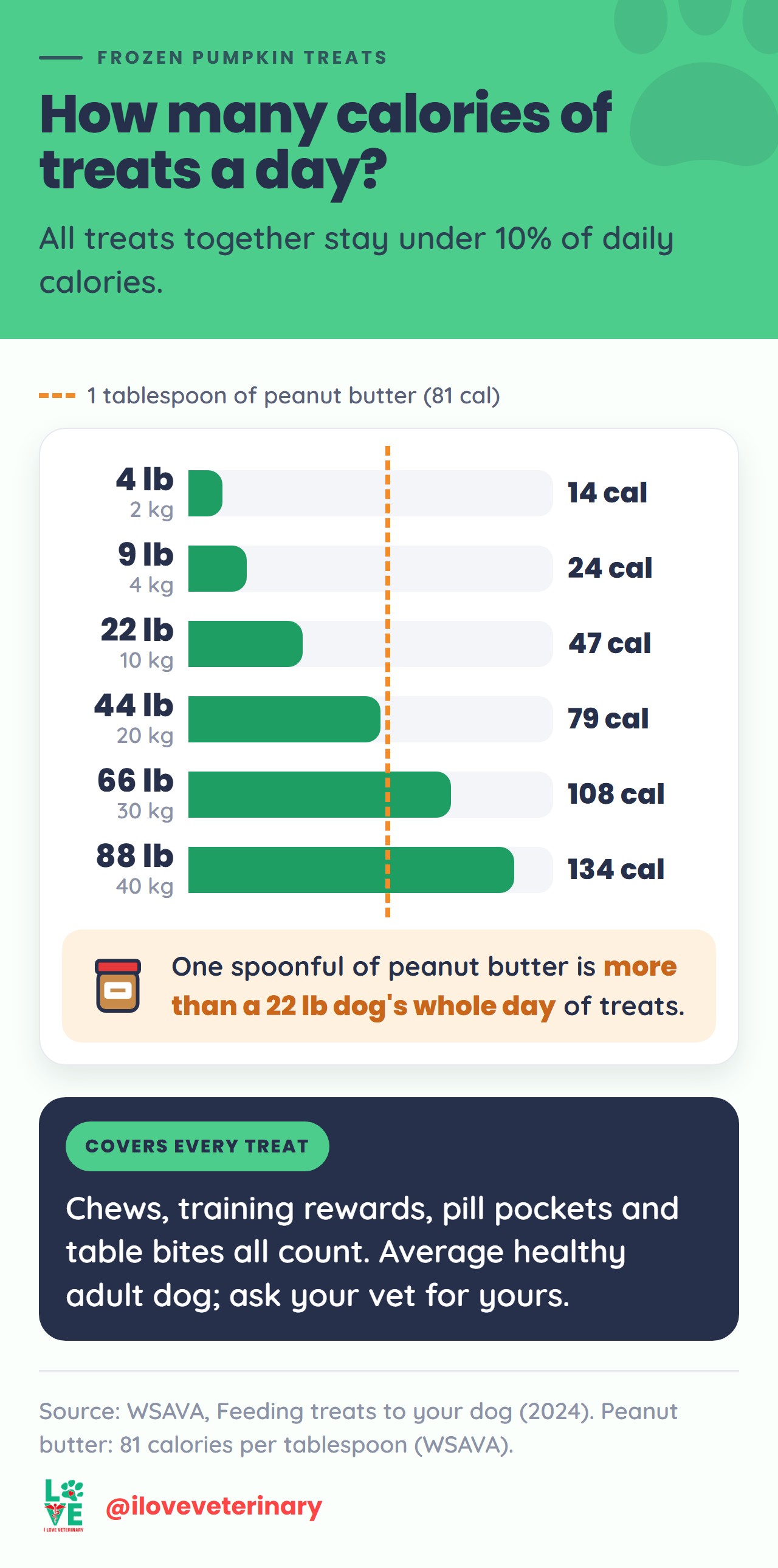
Dog's weight | Daily treat budget (WSAVA) |
|---|---|
4 lb (2 kg) | 14 calories |
9 lb (4 kg) | 24 calories |
22 lb (10 kg) | 47 calories |
44 lb (20 kg) | 79 calories |
66 lb (30 kg) | 108 calories |
88 lb (40 kg) | 134 calories |
That budget covers every treat in the day: training rewards, chews, the pill-hiding cheese, the crust off your sandwich. Peanut butter is where it goes wrong fastest. A single tablespoon licked off the spoon (81 calories) is more than a 22-pound dog's whole day. Your vet can tell you your own dog's daily calorie needs.
Ask your vet before adding new treats if your dog:
- has diabetes
- has had pancreatitis (dogs recovering from it usually go on a low-fat diet and low-fat treats, so skip the peanut butter recipe unless your vet says yes)
- is overweight or on a weight-loss plan
- has heart or kidney disease
- has food allergies or eats a prescription diet
Can You Freeze Canned Pumpkin for Dogs?
Yes, and it's the best way to use up the rest of a can. Once opened, canned pumpkin keeps 3 to 4 days in the fridge, according to Oregon State University Extension. Frozen in airtight containers, plain pumpkin keeps for up to a year.
Move it out of the can first. Pumpkin expands as it freezes, and a can isn't a freezer container.
How to Freeze Canned Pumpkin
Portion it before freezing so you can thaw only what you need:
- Freezer bags: spoon one-cup portions into small zip-top bags and freeze them flat on a baking sheet. Once solid, stack them. A quart-size bag holds a whole 15-ounce can.
- Muffin tin: fill each cup with half a cup of purée, freeze, then pop the pucks into a freezer bag. Silicone muffin cups make release much easier.
- Ice cube tray: a few tablespoons per cube is a handy treat-size portion. Freeze, then move the cubes to a bag.
Serving and Storing Frozen Treats
- Let them soften. The Royal Kennel Club suggests taking frozen treats out of the freezer about five minutes before serving. Hard frozen items can wear enamel, though an occasional frozen treat is unlikely to hurt healthy teeth.
- Keep them small. Small molds make treats easier to chew and lower the choking risk.
- Stay nearby. Hand out frozen treats when you can keep an eye on your dog.
- Store them sealed. Once frozen, move treats into a sealed freezer bag or container, label it with the date, and keep it in the freezer. Toss any treats that smell off.
Why Make Dog Treats at Home?
You know every ingredient that goes in, which is the whole point if your dog has a food allergy or a sensitive stomach. Canned pumpkin and plain yogurt are inexpensive, and a batch takes ten minutes. It's also a good kitchen job for kids: mashing bananas and filling paw-print molds is hard to get wrong.
If your dog loves these, try our homemade probiotic treats with yogurt and kefir, or bake something for the big day from our dog birthday cake recipes.
Frozen Pumpkin Treat FAQ
Can puppies have frozen pumpkin treats?
Ask your vet first. The WSAVA treat table is for adult dogs, and puppies need their calories to come from a complete growth diet. Your vet can say how much room there is for treats.
Will pumpkin settle my dog's upset stomach?
Don't count on it. The fiber in pumpkin is modest, and stomach trouble that lasts, comes with blood, vomiting or lethargy, or shows up in a puppy needs a vet, not a bigger spoonful of pumpkin.
Can I use fresh pumpkin?
Yes, if it's plain cooked pumpkin puréed with nothing added. Scrub the pumpkin before cutting, and keep cut pumpkin wrapped in the fridge for up to a week. Skip the carved jack-o'-lantern that has been sitting on the porch.
Can I add cinnamon or pumpkin spice?
We'd skip it. Pumpkin spice blends usually contain nutmeg, which in larger amounts can cause vomiting, agitation and a racing heart. Even cinnamon can upset a stomach, and the powder can irritate airways if it's inhaled. Your dog won't miss it.
Sources
- WSAVA: Feeding treats to your dog
- Tufts Now (Cummings School veterinary nutrition): People like giving pets pumpkin, but is it good for them?
- FDA: Paws Off Xylitol; It's Dangerous for Dogs
- ASPCA Animal Poison Control: People Foods to Avoid Feeding Your Pets
- ASPCA: When Pumpkin Spice is Not So Nice
- Merck Veterinary Manual: Pancreatitis and Other Disorders of the Pancreas in Dogs
- AKC: Can Pumpkin Help With Dog Diarrhea?
- AKC: Can Dogs Have Pumpkin Spice?
- AKC: Fruits and Vegetables Dogs Can or Can't Eat
- Oregon State University Extension, Food Hero: Pumpkin
- Royal Kennel Club: Can my dog eat ice cubes?
This article is for general information and is not a substitute for advice from your veterinarian.