
Dermatophytosis, better known as ringworm, is a fungal skin infection, and the name gets both halves wrong. There is no worm involved, and the lesions are often not ring-shaped at all.
If you've just heard the word from your vet, or suspect it in a new kitten or shelter adoptee, start with three facts. Ringworm can't be confirmed by looking, it spreads to other pets and to people, and clearing it takes a plan that covers the cat, the coat and the house.
What Is Feline Ringworm?
Feline ringworm, or feline dermatophytosis, is a superficial fungal infection of the skin and hair, and less often of the claws. The fungi that cause it live by digesting keratin, the tough protein that makes up hair, the outer skin and nails.
Microsporum canis is the species behind most cases in cats. Less often the culprit is Nannizzia gypsea (formerly Microsporum gypseum), a fungus that lives in soil, or Trichophyton mentagrophytes.

Any cat can get ringworm, but severe disease is seen mostly in kittens and in adults with a weakened immune system. Long-haired cats and Persians are also more prone to it. Ringworm is zoonotic, which means it can pass between animals and people.
Symptoms of Ringworm in Cats
Signs vary a lot. Some cats have widespread skin disease, some have one small patch, and some show nothing at all while still carrying and spreading the fungus.
Hair loss (alopecia) is the most typical sign. The fungus invades the hair shafts and makes them fragile, so hairs break off and leave stubbly or bald patches. These often appear first on the head, ears and legs.

Patches are often roughly circular, but not always, and shape alone tells your vet little. Other signs include:
- Scaling, dandruff and crusting
- Red, inflamed skin, sometimes with small bumps or darkened skin
- Itching, which is variable: many cats aren't itchy, some are
- Thickened, deformed or infected claws, and infection of the nail folds (paronychia)
- Firm nodular lesions, mainly in Persian cats (a form called pseudomycetoma)
- Secondary skin infections where scratching or broken skin lets bacteria in
Ringworm looks like several other skin problems, including flea allergy dermatitis, bacterial skin infections, mites and allergies. If your cat has bald spots or scaly skin, the useful next step is a vet visit, not a guess based on how the patch looks.
What Causes Ringworm in Cats?
Cats pick up ringworm in two ways:
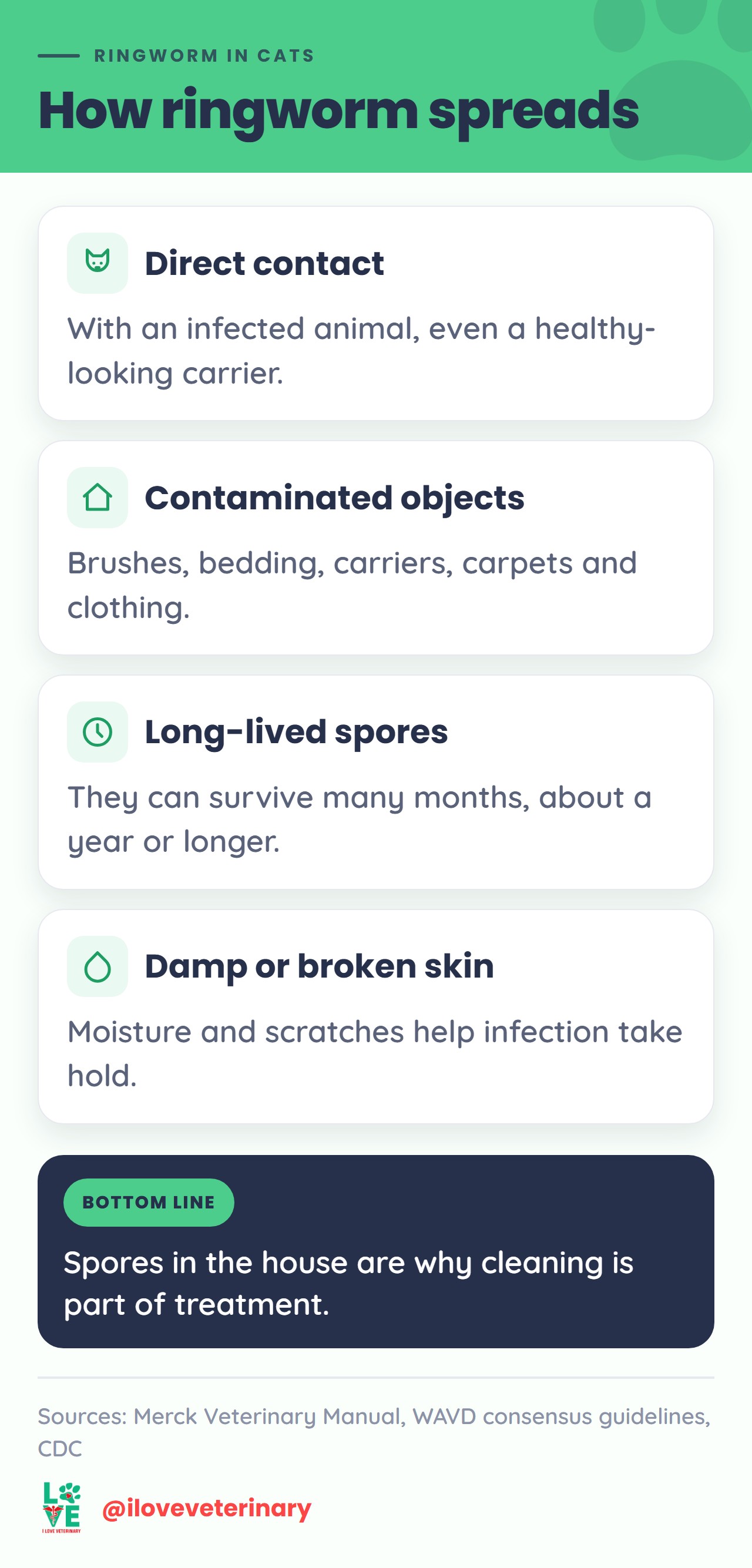
- Direct contact with an infected animal, including healthy-looking carriers.
- Indirect contact with spores on fomites, the objects that can carry infection: brushes, bedding, carriers, furniture, carpets, dust and clothing.
Infected hair sheds spores into the environment. They don't multiply there, but they can survive many months, about a year or longer by some estimates. That is why cleaning is part of treatment.
Contact with spores doesn't always lead to infection. Healthy, intact skin resists the fungus fairly well; moisture and tiny breaks in the skin, such as scratches, make it easier for infection to take hold.
Factors that make infection or more severe disease more likely include:
- Young age (kittens under a year)
- Long hair, and Persian breeding
- Stress, overcrowding and group housing, as in shelters, catteries and multi-cat homes
- Other illness or poor general condition, which can also make treatment harder
Contrary to a common myth, a positive test for feline leukemia virus (FeLV) or feline immunodeficiency virus (FIV) does not, by itself, predispose a cat to ringworm, according to the Merck Veterinary Manual.
How Is Feline Ringworm Diagnosed?
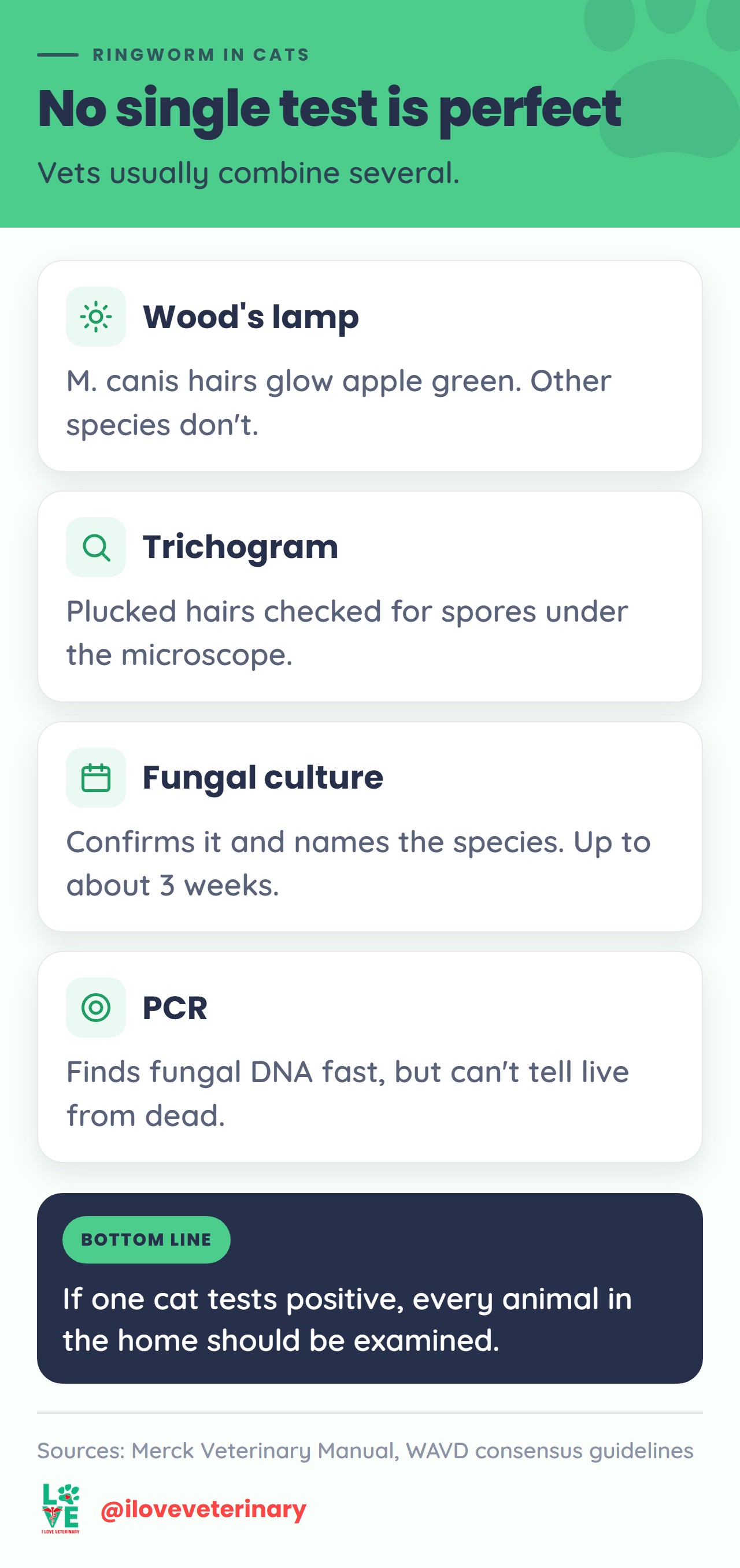
Diagnosis isn't possible from a look alone. No single test is a perfect gold standard, so vets usually combine several.
Wood's lamp examination
A Wood's lamp is a handheld ultraviolet light. In a darkened room, hairs infected with M. canis glow apple green. Most untreated M. canis infections show glowing hairs, so the lamp is a fast screening tool and a good way to pick hairs to sample.
It has limits. Only hair shafts glow, not crusts. Other ringworm species don't fluoresce, some medications and debris glow too, and fluorescence fades as a cat recovers.

Microscopic examination (trichogram)
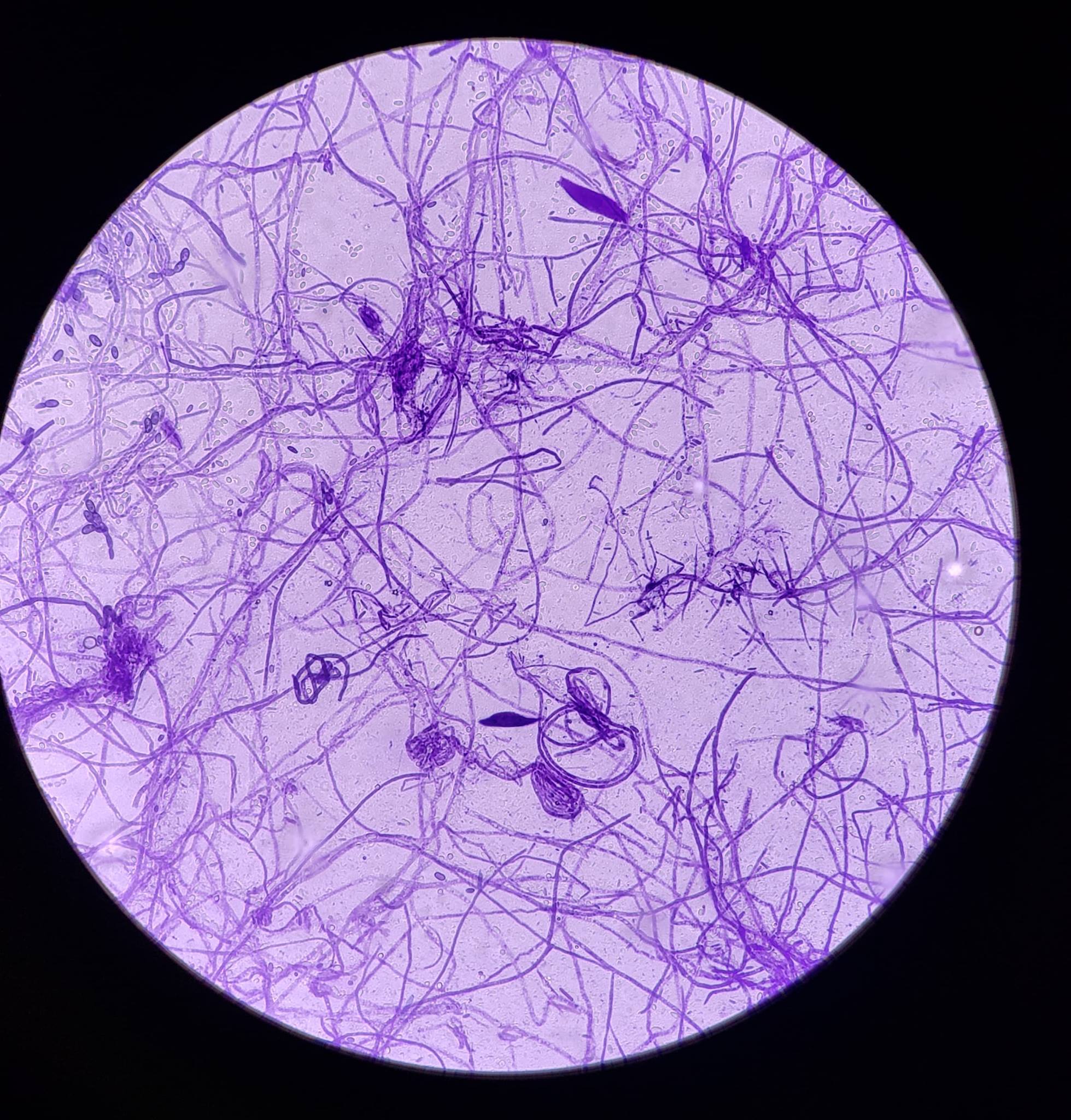
Your vet plucks hairs from the edge of a lesion, especially glowing ones, and looks for fungal spores and elements under the microscope. It is one of the most helpful in-clinic tests, though spores can be hard to spot.
Fungal culture
Hair and scale go on a special growth medium to see whether a dermatophyte grows. Culture confirms the infection and identifies the species. It isn't infallible, and results can take up to about three weeks.
PCR test
PCR (polymerase chain reaction) looks for fungal DNA in the hair and is faster than culture. It can't tell live fungus from dead fungus, so a positive result during or after treatment may simply reflect dead spores. A negative result supports cure.
If one cat tests positive, every animal in the home should be examined, even those without signs. Healthy-looking cats can carry and spread the fungus, so in multi-cat homes the other cats often turn out to be positive too, and your vet may treat them all.
Ringworm in Cats Treatment
In an otherwise healthy cat, ringworm is self-limiting: it eventually clears without treatment. The catch is time. Untreated, it can take many months, and Cornell's Feline Health Center puts it at nine months to a year. All that time the cat sheds spores and can infect other pets and people. Treatment shortens the course and limits the spread.
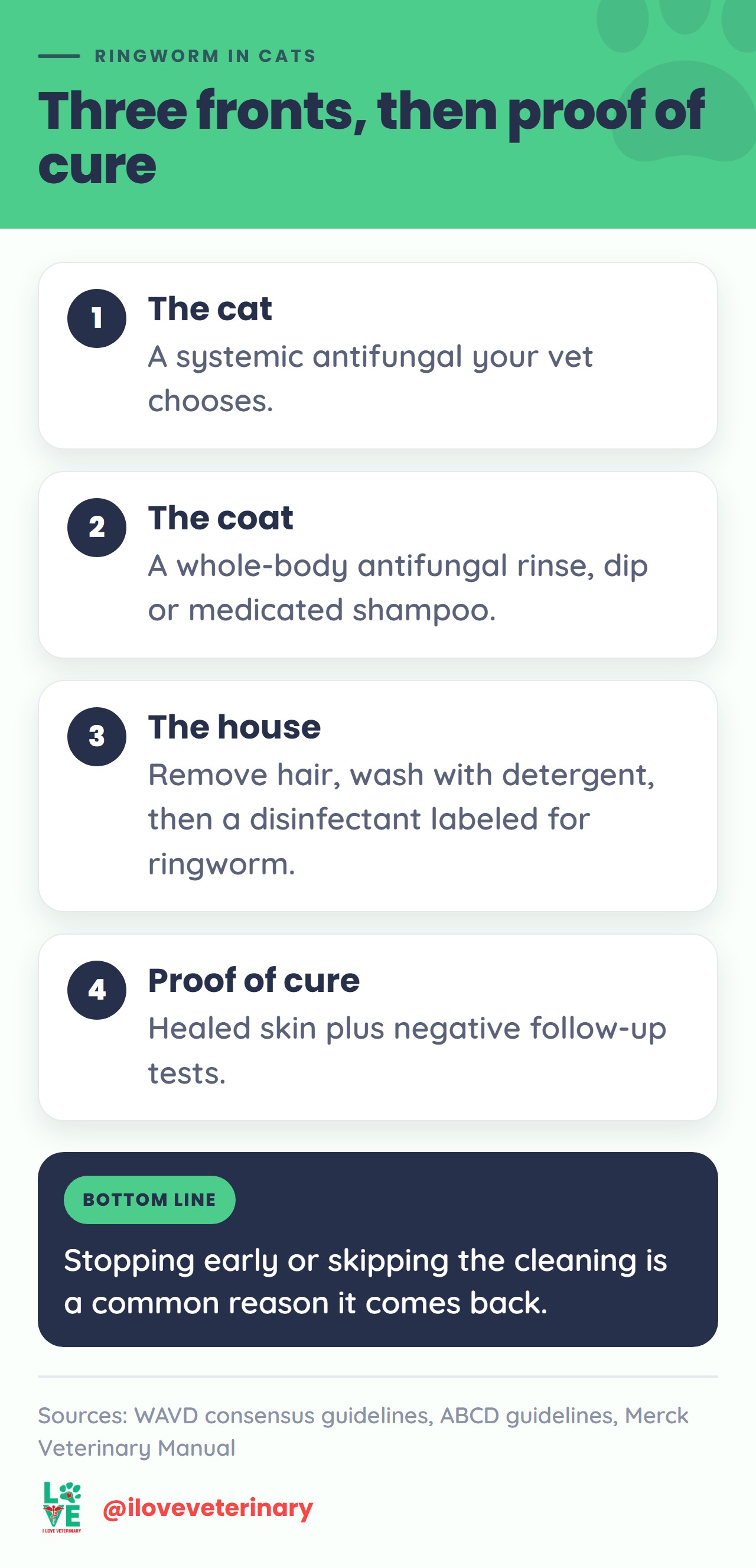
Current guidelines treat ringworm on three fronts at once.
1. The cat: a systemic antifungal
Most infected cats need a systemic antifungal, meaning a medicine given by mouth that works through the whole body. Your veterinarian chooses the product and dose, and will also look at your cat's overall health and living conditions, since a sick or stressed cat is harder to cure.
2. The coat: whole-body topical therapy
Pills alone aren't enough. Infected hair carries spores, so the whole coat needs disinfecting with a topical antifungal rinse, dip or medicated shampoo your veterinarian prescribes. This cuts contagion and environmental contamination and speeds recovery. Antifungal creams are add-ons for hard-to-treat spots such as the face and ears, not a treatment on their own. Whether to clip the coat, and how to treat a pregnant queen or a very young kitten, are questions for your vet.
3. The house: cleaning
Disinfectant alone won't fix a contaminated home. The most important step is physical removal: vacuum or wipe up hair and debris, then wash surfaces with detergent until visibly clean. After that, a household disinfectant labeled as effective against ringworm (Trichophyton) kills remaining spores. Bedding and towels can go through a thorough machine wash; bleach isn't needed for laundry. Collars, beds, toys and grooming tools that can't be disinfected may need to be thrown away.
Keeping the cat in one easily cleaned room makes the job much smaller. Keep going until your vet confirms the cat is cured.
How cure is confirmed
A coat that looks normal is not the finish line. Treatment ends when the cat has both clinical cure (the skin and coat have healed) and mycological cure (follow-up tests, such as a fungal culture or PCR, come back negative). Your veterinarian decides when that point has been reached.
Treatment usually runs for weeks and sometimes months. Stopping early, or skipping the cleaning, is a common reason ringworm comes back.
Why home remedies aren't the answer
Plenty of owners look for ways to treat ringworm without a vet. But ringworm mimics other skin diseases, so it has to be confirmed by tests, and clearing it takes everything above: the right medicine, a treated coat, a clean house and tests to prove cure. A remedy dabbed on one patch does none of that, and meanwhile the cat keeps shedding spores.
There is no vaccine shortcut either. No safe, effective ringworm vaccine is available for cats.
How Long Does Ringworm Last in Cats?
Untreated, often close to a year. Treated, usually weeks to a few months, depending on how widespread the infection is, the cat's overall health, how many animals are infected and how well the home is cleaned. Either way, treat your cat as contagious until your vet confirms cure.
Is Ringworm in Cats Contagious?
Yes. Ringworm spreads to other cats, to dogs and to people, through direct contact and through contaminated objects, and a cat that looks fine can still pass it on.
Children are at higher risk because of their close contact with pets, and so are people with weakened immune systems. Serious complications from animal-to-human spread are very rare, but it is still worth limiting exposure:
- Isolate the cat in one easily cleaned room until your vet says it has clinical cure. Kittens shouldn't be shut away for long periods, though, because they still need handling and socialization. Ask your vet how to balance the two.
- Limit contact between the infected cat and children or anyone with a weakened immune system.
- Wash your hands with soap and water after handling the cat. Gloves help when you apply topical treatment.
- Clean as described above, and wash clothing and fabrics the cat has been on.
- See your doctor if you or anyone in your household develops a skin rash.
How Much Does It Cost to Treat Ringworm in Cats?
Costs vary too much for one figure to be useful. The drivers are the number of tests to diagnose and confirm cure, how long treatment runs, how many cats need treating, and any other health problems. Ask your vet for an estimate that covers the whole course, follow-up tests included.
How Common Is Ringworm in Cats?
It depends on where you look. Ringworm is the most common fungal skin infection of cats, and it is a frequent problem in shelters, catteries and multi-cat homes. Across all cat skin disease, though, Merck's dermatology chapter notes that it is not the most common skin condition, despite what many pet articles say. Healthy carriers are why it moves so easily through groups of cats.
Recap
- See your vet: ringworm needs tests to confirm, and home remedies won't clear it.
- Treat the cat, the coat and the house together, and have every pet checked.
- Keep going until your vet confirms cure with follow-up tests.
Originally written by Diana Wells. Updated by the I Love Veterinary editorial team.
Sources
- Merck Veterinary Manual: Dermatophytosis in Dogs and Cats (professional version)
- Veterinary Dermatology (WAVD): Diagnosis and treatment of dermatophytosis in dogs and cats, clinical consensus guidelines
- Journal of Feline Medicine and Surgery (ABCD): Dermatophytosis in cats, guidelines on prevention and management
- Cornell Feline Health Center: Ringworm, a serious but readily treatable affliction
- CDC: What Causes Ringworm
- CDC: About Ringworm
- International Cat Care: Ringworm in Cats
- Morris Animal Foundation: Gross, My Pet's Got Ringworm! What Do I Do?
This article is for general information and is not a substitute for advice from your veterinarian.