
Discover all you need to know about IBD in cats. Uncover the mysteries behind this condition affecting feline gastrointestinal health. Learn about symptoms, causes, and management strategies.
What is Inflammatory Bowel Disease?
Inflammatory bowel disease, or IBD in cats for short, is a complex condition that baffles pet owners and veterinarians.
This intriguing condition involves the GI or gastrointestinal tract and presents as chronic inflammation that disrupts the standard processing and absorption of vital nutrients.
How Does IBD Affect Cats?
In general, inflammatory bowel disease in cats is a condition in which the lining of the gastrointestinal tract becomes chronically inflamed. This interferes with the cat's ability to digest food properly and absorb nutrients, causing discomfort and many health issues.
What Causes IBD in Cats?
Although the exact cause is yet to be determined, veterinarians believe many factors contribute to developing inflammatory bowel disease in cats.
This situation makes it challenging for pet owners and their vets to distinguish the culprit(s) for the cat's pain and discomfort.
Some of the predispositions for IBD are the following:
Age
Middle-aged and older cats are statistically more commonly affected. This shows that their immune systems change as cats age, and the wear-and-tear of the gastrointestinal lining is crucial [1].
Genetics
There is no evidence for breed predispositions to IBD, but some statistics show that Siamese cats and other Asian cat breeds are more affected than others. Veterinarians believe that a hereditary marker influences the cat's likelihood of IBD [2].
Diet and Allergies
Certain protein intolerances very often trigger an inflammatory response characteristic of IBD. Some cats develop sensitivity to beef protein, some to dairy, and even fish, leading to chronic GI tract inflammation when these proteins are part of their diet.
Infections
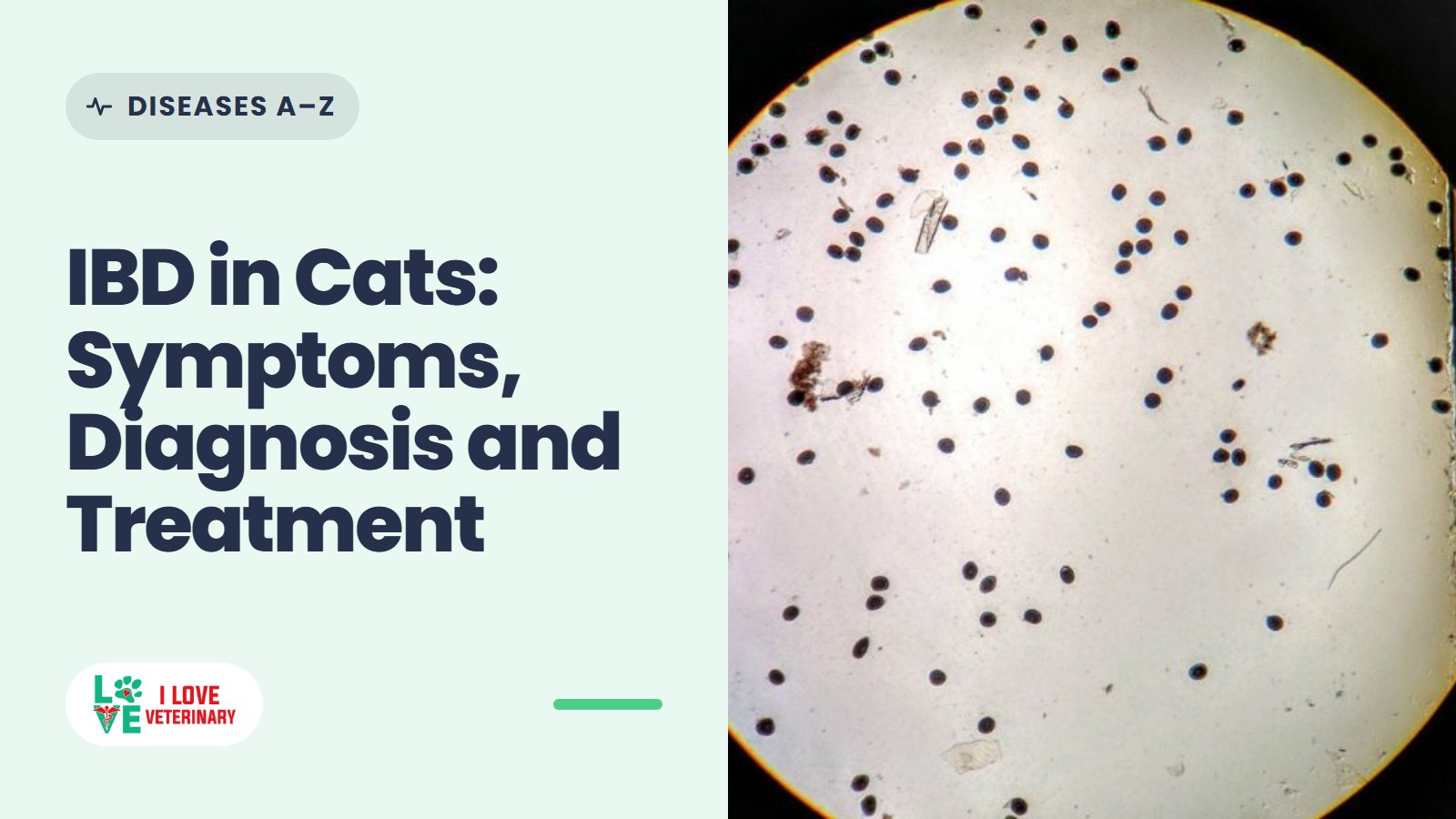
Parasitic and bacterial infections can be crucial in developing IBD in felines. Chronic infections with single-celled parasites, such as Giardia duodenalis or other intestinal worms, can cause severe inflammation and irritation to the intestinal walls.
The same applies to chronic infections with gastrointestinal bacteria.
From Anonymous: "Giardia found in a cat's fecal float."
Posted by I Love Veterinary Medicine on Saturday, February 23, 2019
Clinical Signs and Symptoms of IBD in Cats
IBD, or inflammatory bowel disease in felines, is a complex condition that can drastically impact the quality of life in cats.
The various symptoms of this condition are all over the clinical map, but we can divide them into systemic and gastrointestinal symptoms.
Understanding how this disease manifests is crucial for early detection and successful management of the symptoms.
Gastrointestinal Symptoms
Condition | Description |
|---|---|
Chronic Vomiting | Vomiting in IBD cats is often intermittent but becomes more frequent with time as the condition becomes more severe |
Like the vomiting, it starts intermittently but worsens if left untreated | |
Appetite Changes | Cats with IBD can have periods of inappetence or periods of overeating. In severe IBD cases, PICA disorder can be seen |
Cachexia | Symptoms of IBD in cats can progress to cachexia, or decreasing weight, muscle tone, and fat despite normal or increased appetite |
Hairballs | Very often, an increase in hairballs is evident due to excessive grooming caused by gastrointestinal discomfort |
Flatulence | Cats with inflammatory bowel disease suffer from increased gas buildup, often with a foul odor |
Stomach Upset | Loud gurgling or rumbling sounds from the abdomen are often a familiar background noise for cats with inflammatory bowel disease |
Bright, Bloody Feces | The occurrence of blood is less common in felines with IBD but indicates severe inflammation or other complications |
Systemic Symptoms
- Lethargy: IBD cats lose interest in activities, decreasing their energy levels, but this can vary.
- Skin allergies: In these patients, the cat's skin can become itchy and irritated, leading to overgrooming and/or scratching.
- Concurrent diseases: Cats suffering from IBD can be prone to pancreatitis, liver damage, and other conditions that may complicate diagnosis and treatment.
How Vets Diagnose Feline IBD
Diagnosing feline Inflammatory Disease (IBD) always requires an extensive approach. Veterinarians utilize many procedures, both invasive and non-invasive, to determine and rule out symptoms and their causes and confirm the diagnosis.
Veterinarians use many diagnostic tools to complete the clinical picture and develop a proper and effective treatment plan tailored for each feline patient.
Non-Invasive Diagnostic Procedures
These non-invasive procedures are usually the first step in diagnosing a patient, allowing veterinarians to assess the patient's general health and find and identify any abnormalities that might indicate IBD or other similar conditions.
X-rays
An X-ray of the abdomen helps identify any abnormalities in the size and shape of the stomach and the intestines.
Ultrasound
The ultrasound machines provide a more detailed view of the GI tract and the possibility of identifying any thickenings of the wall of the intestines, which is a common sign of IBD.
Blood Analysis
A simple hematology analysis can show if the cat has any infection or inflammation.
Biochemistry Analysis
A biochemistry profile helps veterinarians evaluate the function of vital organs and rule out other diseases that can mimic the symptoms of IBD.
Fecal Tests
Fecal tests are a method to rule out gastrointestinal parasites that can cause symptoms of IBD.
Urinalysis
This exam helps assess kidney function and possible urinary tract infections (which can occur along with gastrointestinal issues).
Measuring B12 and Folate Levels
It's a critical test because many cats suffering from IBD have difficulty absorbing these vitamins from their food, which leads to deficiencies that can worsen their condition.
Invasive Procedures
When non-invasive procedures fail to provide a definitive diagnosis, veterinarians explore invasive procedures to find an answer.
- Gastric biopsy is the gold standard among veterinarians in diagnosing feline IBD. It allows for the direct examination of the intestinal tissue surgically or with endoscopy.
- Endoscopy is a less invasive option than invasive procedures. It involves inserting a flexible tube through the rectum or mouth, a small camera that visualizes the affected tissue, and a small clamp to take a sample for biopsy.
- An exploratory laparotomy is a tool when vets are facing more complex cases; they perform exploratory abdominal surgery to obtain tissue samples and assess the extent of the condition.
How to Treat IBD in Cats
To successfully treat IBD, it's crucial to treat the underlying inflammation of the gastrointestinal tract and alleviate any symptoms.
This will include a combination of medication, dietary changes, and, in some cases, alternative therapy.
Intestinal Parasite Treatment
Intestinal parasites in cats often mimic symptoms of inflammatory bowel disease, making diagnosis challenging. Symptoms include appetite loss, dull coat, vomiting, diarrhea, coughing, blood or mucus in feces, and a rounded belly.
Cat dewormers are an initial step in IBD treatment, ruling out parasites as the cause of GI issues. Effective commercial deworming pills target common parasites like roundworms, hookworms, and tapeworms.
The most common intestinal parasites in cats are Roundworms (Toxocara cati and Toxocara leonina), which are present in 25% of adults and 75% of kittens. If the infestation with these parasites is too significant, an intestinal blockage may occur [3].

Hookworms (Ancylostoma and Urticaria) are less prevalent, but still at a good 10%-60%. An infestation manifests with dark or tarry feces, as the worms cause bleeding in the intestines [4].
Tapeworms, or cestodes, are very common in cats, who infect themselves by ingesting infected fleas while grooming. However, these intestinal parasites don't cause severe damage to the animal's health.

Deworming medications are generally prescribed and administered by the veterinarian under their supervision to ensure the correct dosage and avoid side effects.
Dietary Changes
Diet plays an essential role in managing inflammatory bowel disease in cats. It always starts with a food trial.
This trial consists of a combination of IBD cat food that is low in fat, high in fiber, and very often hypoallergenic. The goal is to find and eliminate food irritants or allergens.
- Proteins to avoid: The guidelines suggest avoiding feeding the cat proteins that have been tried before and introducing a novel protein source or hydrolyzed protein.
- Food trials: Any food trial usually lasts eight to 12 weeks and requires feeding the cat food for cats with IBD containing only the new protein. Cat owners should avoid giving snacks, treats, and table scraps during the food trial.
The success of the diet change can take several weeks, so it's crucial to be patient and adhere to the rules.
Other Meds
Western Medicine
Sometimes, managing IBD in felines requires the use of other medication to help alleviate symptoms, reduce inflammation, and help with nutrient deficiencies.
Medication | Effect |
|---|---|
Metronidazole | An antibiotic/antiprotozoal medication with anti-inflammatory properties |
Corticosteroids | Powerful anti-inflammatories often used in cats with IBD when other treatments fail to help control symptoms |
Immunosuppressives | In severe cases, it can aid by controling the immune system's response |
Prebiotics and Probiotics | Potent tools for restoring and maintaining a healthy balance of gut bacteria, alleviating some IBD symptoms in cats |
B12 Supplements | Helpful when B12 deficiencies are common in cats with IBD and require oral or injectable supplements |
Alternative Medicine
When Western medicine fails to provide relief for cats suffering from inflammatory bowel disease, alternative medicine can help cat owners how to treat IBS in cats naturally.
Medication | Effect |
Psyllium | A soluble fiber with laxative properties that benefit cats with IBD colitis. It's an extract from Plantago, which grows worldwide but is prevalent in India. |
Omega-3 Fatty Acids | Derived from fish oils. It helps to reduce gastrointestinal inflammation and protects the gut wall. |
Glutamine | An amino acid that lowers the recurrence of colitis by down-regulating pro-inflammatory gene expression and activation. |
Curcumin | A turmeric compound that decreases lipid oxidation, tissue injury, and inflammatory cytokines. |
When to Contact the Vet
If your cat displays symptoms like chronic vomiting, diarrhea, weight loss, or appetite changes, consult your vet immediately.
Watch for persistent signs, as early diagnosis is vital for preventing complications and enhancing your cat's quality of life.
Some mask their pain until they reach end-stage inflammatory bowel disease in cats. Look out for lethargy, dull coat, or other signs of declining health, and seek veterinary attention promptly
What's the Outlook for Cats with IBD
The outlook for cats with IBD can vary from cat to cat, but with proper medical and dietary management, many can lead comfortable and relatively everyday lives.
The key to success in managing IBD in cats is early and accurate diagnosis, individualized treatment plan, and addressing any underlying causes.
Successful Management
The management of IBD in cats revolves around a combination of diet changes, a handful of medications to control the symptoms, and supplements to correct nutrient deficiencies.
Regular follow-ups with your veterinarian are crucial to monitor your cat's health and response to treatment.
Even though IBD is a chronic condition that requires life-long treatment, many cats respond well to a tailored treatment plan and live normal lives.
The cat owner's vigilance and determination to the treatment is crucial and significantly influence positive outcomes.
Final Thoughts
In cats, inflammatory bowel disease (IBD) is a severe condition with potentially fatal consequences if ignored.
It causes pain, intermittent vomiting, diarrhea, lack of grooming, or excessive grooming due to abdominal discomfort, and appetite changes.
Early diagnosis, medical treatment, vigilant care, and dietary adjustments are crucial for managing symptoms and maintaining the cat's well-being
Can IBD in Cats be Cured?
What Food Should Cats With IBD Avoid?
-Dairy products
-Foods with artificial flavors, colors, or preservatives (canned cat food)
-Food allergens that have previously caused GI upset in the cat
-Meat proteins that have previously caused GI upset in the cat
Do Corticosteroids Cause Side Effects in Cats With IBD?
Does My Cat Have to Take Steroids for the Rest of Their Life?
Some cats require long-term therapy; others have half-doses or no steroids. It all depends on the cat’s response.