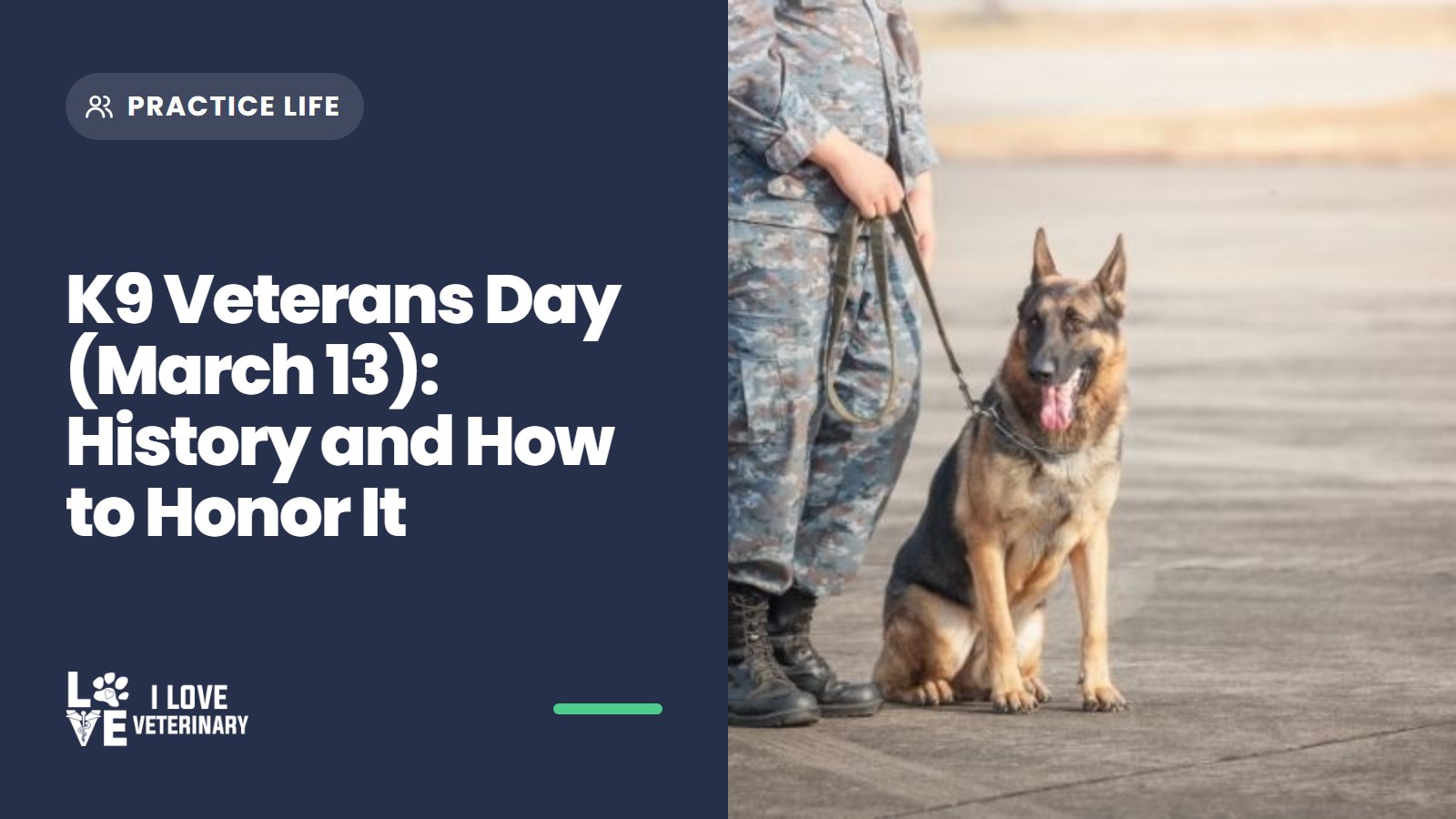
National K9 Veterans Day falls on March 13 every year. It honors the dogs who have served with the US military and the working dogs who protect people at home, along with the handlers beside them. The date marks March 13, 1942, when the US Army approved its War Dog Program, better known as the K-9 Corps.
K9 Veterans Day at a glance
- Date: March 13, every year
- Why that date: the Army created the K-9 Corps on March 13, 1942
- Who it honors: military working dogs, police and other working dogs, and their handlers
- Started by: credited to Joe White, a military working dog trainer
- Official? Not a federal holiday. A presidential message has recognized it and some states mark it by resolution, but no federal law creates it
Why March 13?
After Pearl Harbor, a group of civilian dog people offered their help to the war effort. In January 1942, New York breeder and exhibitor Alene Erlanger launched Dogs for Defense with help from the American Kennel Club and the Professional Handlers Association. The group asked Americans to donate their dogs, so many of the first war dogs were family pets.
On March 13, 1942, Under Secretary of War Robert P. Patterson approved the Army's request for an experimental dog program, and the K-9 Corps was born. The Army's Quartermaster Corps, the branch in charge of supplies, trained both the dogs and their handlers. The first plan was modest: sentry dogs to guard supply depots. On July 16, 1942, the Secretary of War told the Quartermaster Corps' Remount Branch to train dogs for more jobs, and war dogs went on to serve as sentries, scouts, messengers and mine detectors.

About 18,000 dogs reached the Army's training centers, and almost 8,000 of them failed the exams there, so not every donated pet made the cut. One that did was Chips. During the July 1943 landing in Sicily, his unit came under fire from a hidden machine-gun nest. Chips went in, and moments later an Italian soldier came out with Chips attached to his arm.
Who started K9 Veterans Day?
The idea is credited to Joseph "Joe" White, a military working dog trainer known as "Joe the Dog Trainer" and the founder of the K9 Veterans Day organization. He picked March 13 because, as his wife Sally White put it, the US K9 Corps "was born that date in 1942." Veteran.com adds that he was a Vietnam veteran and K9 handler from Jacksonville, Florida.
White died suddenly on October 24, 2009. In a memorial written by Sally White, she said he wanted the day to become an official day, "almost like Veterans Day," and she kept pushing for it after his death.
Is K9 Veterans Day an official holiday?
No, not at the federal level. Here is where it stands:
- Congress: House resolutions "expressing support for the designation of March 13 as K-9 Veterans Day" were introduced in 2012 (H.Res. 740) and 2013 (H.Res. 116). Both were referred to committee and never passed.
- The White House: the President has issued a presidential message for National K-9 Veterans Day, which recognizes the day but does not make it a federal holiday.
- States: some states have marked the day with resolutions or proclamations. New York's State Assembly, for example, has adopted resolutions asking the governor to proclaim March 13 as K9 Veterans Day. These change from year to year, so check your own state's announcements.
So it is a day of recognition, not a day off. The dogs never asked for one anyway.
What do military and police working dogs do?
A military working dog (MWD) is a dog trained and owned by the Department of Defense to work alongside a human handler. Today's MWDs mainly do:
- Detection: finding explosives or illegal drugs
- Patrol and security: guarding bases and protecting their handler
- Search and rescue: finding missing or injured people
- Tracking: following a person's scent trail
Most of them are German Shepherds, Dutch Shepherds and Belgian Malinois. Many are bred through the military's own puppy program at the 341st Training Squadron at Joint Base San Antonio in Texas, and they must finish a 120-day training course before they can serve.
Not every working dog is military, either. Police departments, border and customs agencies, and federal law enforcement all use detection and patrol dogs, and K9 Veterans Day honors them too.

What happens when military dogs retire?
For a long time, the answer was grim. In the Army's own words, "prior to the year 2000 when a Military Working Dog was retired from service it was euthanized."
That changed with Robby's Law, signed on November 6, 2000. It was named after Robby, a military working dog. The law, now section 2583 of Title 10 of the US Code, requires the military to make retired dogs available for transfer or adoption. Today it says:
- Former handlers come first, unless adoption by the handler would not be in the dog's best interest.
- Next come other people or organizations able to care for the dog humanely.
- Then law enforcement agencies.
- The transfer is free to the person or agency taking the dog.
- A dog serving overseas when it retires is brought back to the United States for adoption, unless that would harm the dog medically or someone abroad (a US citizen or service member) is adopting it there.
Not every dog is offered. Every retiring dog gets a behavior assessment, and the Department of Defense will not put a dog up for adoption if it fails.
How to adopt a retired military working dog
Adoptions run through the Military Working Dog Adoption Program of the 341st Training Squadron, part of the 37th Training Wing at Joint Base San Antonio-Lackland. According to Army kennel masters, the process looks like this:
- Apply through the 37th Training Wing adoption program page.
- Background check: the program reviews your application and checks your suitability.
- Interview or home visit: you may be asked for one.
- Matching: the program pairs a retired dog with your home based on compatibility.
- Meet the dog: you may get to visit before the adoption is final.
- Paperwork, then home.

The adoption itself is free, but the Army has said adopters pay to transport the dog home. Waits can be long, so apply early.

What to expect at home
Retired MWDs are not the snarling movie version of a war dog. Kennel masters say the most common misconception is that they are extremely aggressive. In practice, they usually settle into family life, and many do well with children who have been taught to respect a dog. Patience and a steady routine help while the dog learns that its job is now just being a pet.
Expect an older dog, though. Many military dogs retire at around 9 or 10 years old, and years of hard work often leave them with joint problems.
Plan a vet visit early
If you adopt a retired working dog, book a checkup with your own veterinarian soon after the dog comes home. Bring every record the program gives you. Your vet can look at the dog's joints, weight, teeth and overall health and set up a plan for a senior dog with a working past. Our guides on caring for a senior dog and hip dysplasia in dogs are good reading before that first appointment.
A note for vet teams: military dogs on active duty have a hospital of their own. The Lt. Col. Daniel E. Holland Military Working Dog Hospital at Joint Base San Antonio-Lackland, staffed by Army Veterinary Services, has reported about 12,500 wellness and medical visits and 2,500 operative procedures a year, and its rehab facility includes an aquatic therapy room with underwater treadmills. When those dogs retire to civilian homes, their care passes to clinics like yours.
Ways to mark K9 Veterans Day
For pet owners and dog lovers
- Learn one dog's story. Chips, Sergeant Stubby (awarded a gold medal by General John Pershing in 1921) and the dogs at your local police department all have stories worth sharing.
- Visit a war dog memorial if there is one near you, or a local K9 demonstration or ceremony.
- Support the dogs directly. The US War Dogs Association, a 501(c)(3) nonprofit, sends care packages to deployed K9 teams and runs medical-care programs for retired military dogs.
- Thank a K9 handler. Police and sheriff's K9 units often post on social media; a kind comment goes a long way.
- Consider adopting a retired military working dog through the Department of Defense program above, if your home suits an older, well-trained dog.
For vet teams
- Host a K9 event. Leader Heights Animal Hospital in Pennsylvania ran a public K9 Veterans Day event with hero awards for local service animals, a memorial in its K9 garden, K9 demonstrations, free nail trims for service dogs and fundraising for two local police K9 units.
- Offer a small thank-you to local police and sheriff's K9 teams, like a nail trim or a meet-the-team visit.
- Share a post about retired working dogs and what they need as seniors, so future adopters know to bring their dog in early.
- Ask your retired-K9 clients if they would like to share their dog's story for your page.

K9 Veterans Day FAQ
When is K9 Veterans Day? March 13, every year. The date does not move.
Is K9 Veterans Day the same as Veterans Day? No. Veterans Day, on November 11, honors people who served in the US armed forces. K9 Veterans Day, on March 13, honors military and working dogs and their handlers.
Can anyone adopt a retired military dog? Anyone can apply, but former handlers get first preference by law, and the program screens every adopter and every dog before a match.
Do police dogs count? Yes. The day honors military working dogs first, and police, border and other working dogs are widely included.
Thank you for your service
To every dog who has walked point, sniffed out danger or searched the rubble, and to every handler who held the leash: thank you. If you have a retired working dog at home and are not sure whether something is worth a checkup, our quiz Should I take my dog to the vet? can help you decide.
Share how you mark the day with us on Instagram and Facebook using #iloveveterinary and #NationalK9VeteransDay.
Sources
- U.S. Army: War Dogs, The Birth of the K-9 Corps
- The White House: Presidential Message on National K-9 Veterans Day
- US War Dogs Association: World War II
- US War Dogs Association: Everything You Need to Know About K-9 Veterans Day
- US War Dogs Association: programs
- TheDogPress: In Memory of Joseph J. White, by Sally White
- Veteran.com: K9 Veterans Day
- Congress.gov: H.Res. 740 (112th Congress), K-9 Veterans Day
- LegiScan: H.Res. 116 (113th Congress)
- Cornell Law School LII: 10 U.S. Code § 2583, Military animals: transfer and adoption
- U.S. Army: New lives for old dogs
- DVIDS (89th Military Police Brigade): Adopting the country's MWD heroes
- 37th Training Wing: Military Working Dog Adoption Program
- DVIDS (Connecticut National Guard): K-9 Veterans Day
- U.S. Army: Military Working Dog care even better with opening of rehab facility and recovery kennels
- Veterinary Practice News: Pennsylvania clinic to host second K9 Veterans Day event
- New York State Senate: Assembly Resolution K176, K9 Veterans Day
- New York State Senate: Assembly Resolution K196, K9 Veterans Day
This article is for general information and is not a substitute for advice from your veterinarian.