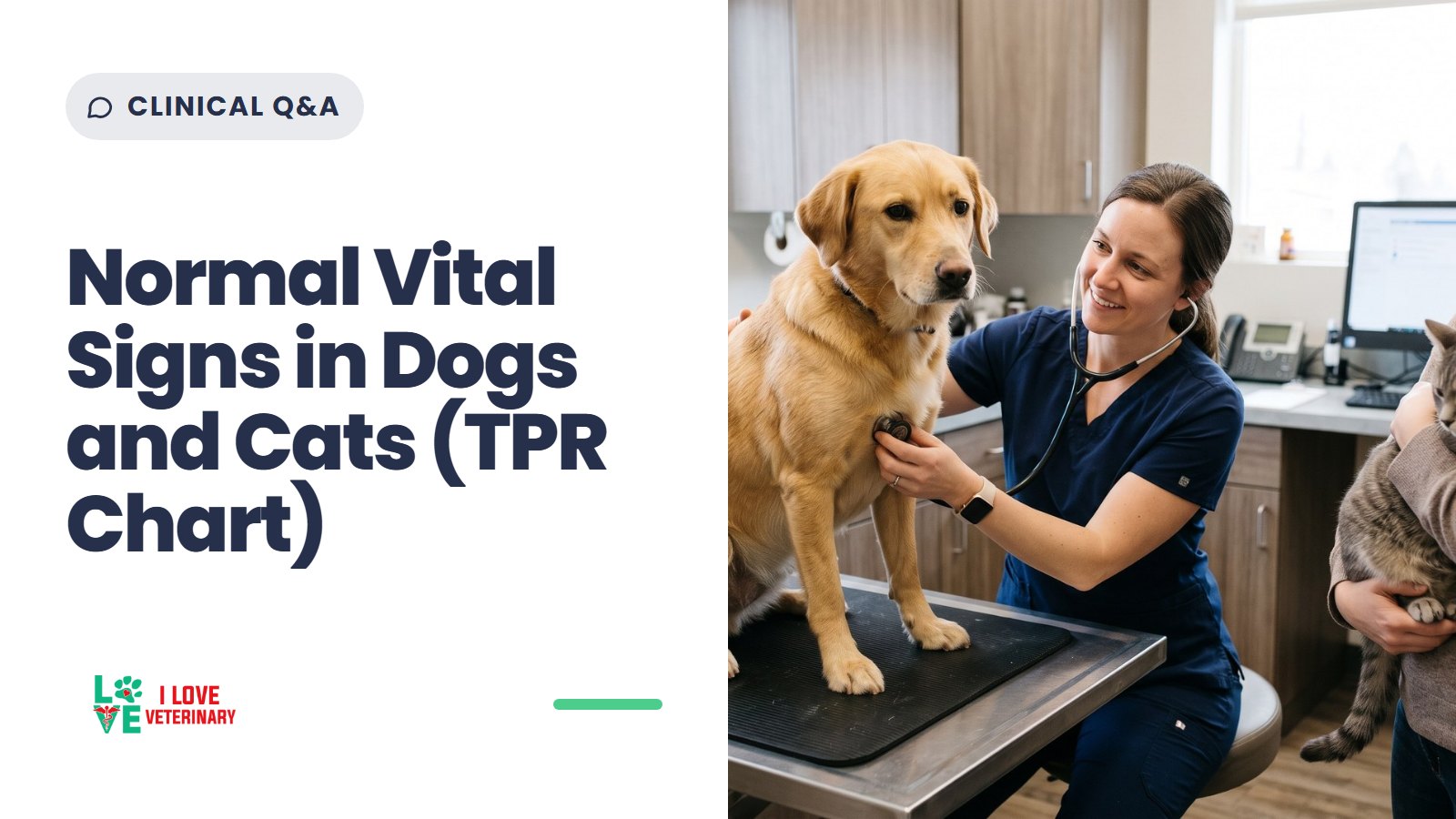
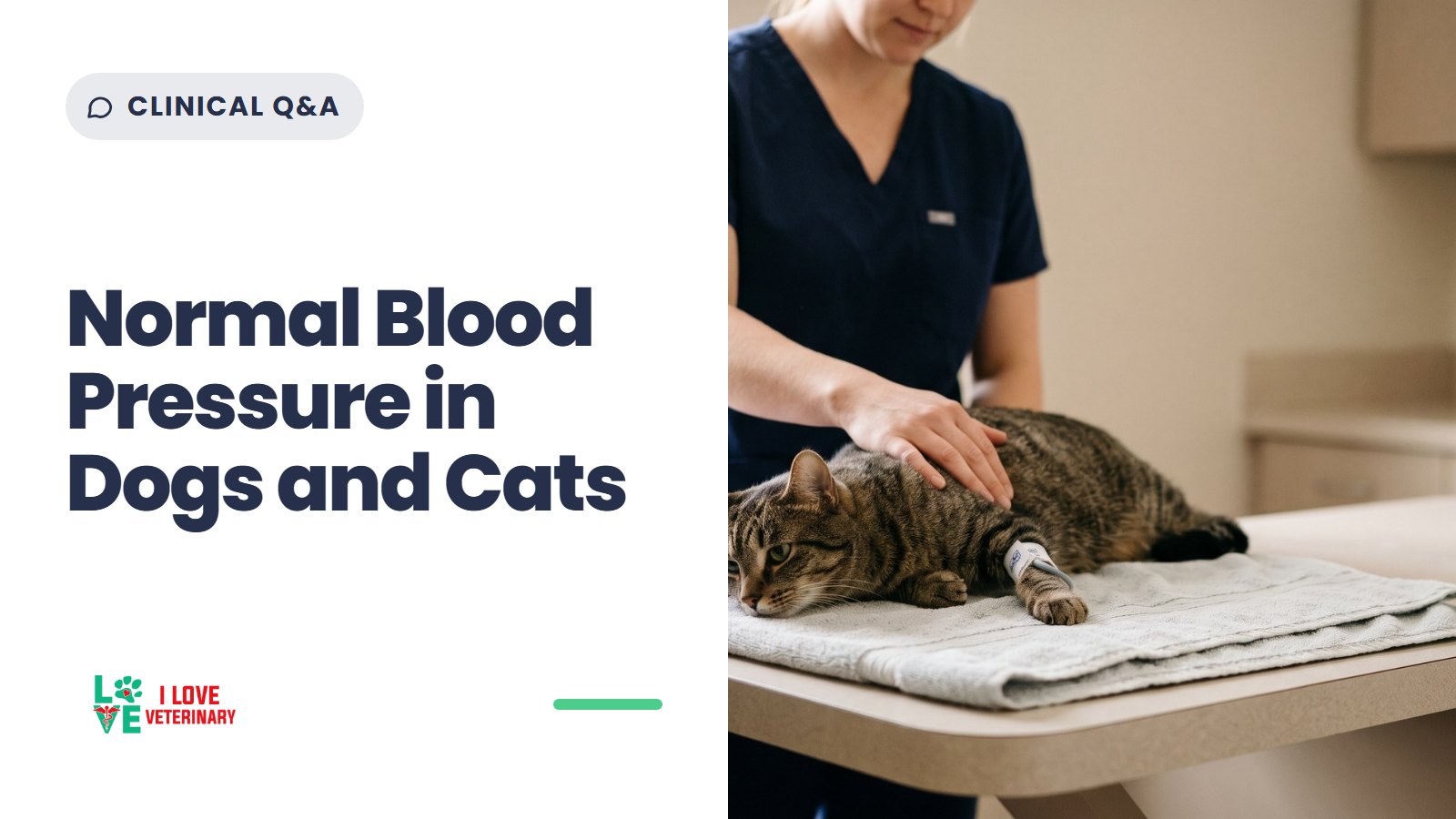
Normal blood pressure in dogs and cats is a systolic reading below 140 mmHg. That is the "normotensive" band in the veterinary specialists' guidelines, and it applies to both species.
Vets judge blood pressure mainly on the systolic number, the pressure in the arteries while the heart contracts. The rest of this page covers the full risk chart, why a healthy pet can read high at the clinic, which pets need checks, and how vet techs get a reading worth trusting. For temperature, heart rate and breathing too, see all normal vital signs in one chart.
Signs that mean go to a vet now
High blood pressure is usually silent until it damages something. Go to your vet or an emergency clinic now if your dog or cat has:
- Sudden blindness, such as bumping into furniture or seeming lost in a familiar room
- Blood inside the eye
- A seizure, sudden confusion or disorientation
- A head tilt, wobbling or loss of balance that comes on suddenly
- Pale gums with a fast heart rate and weak pulses, which can be signs of shock
The American College of Veterinary Internal Medicine (ACVIM) treats a severely high reading (180 mmHg or above) with eye or brain signs as an emergency that needs immediate treatment, often in a hospital with 24-hour care.
Why there's no single "normal" number
Other pages quote a single "normal" figure with total confidence. The ACVIM consensus statement on hypertension, the guideline vets use, deliberately gives none. It says blood pressure is "highly variable based on breed, temperament, patient position, measurement method."
Studies of healthy, awake animals show why. ACVIM reports these figures:
- In dogs, normal systolic means of about 131-150 mmHg with an oscillometric machine, and 145-151 mmHg by Doppler.
- In cats, a Doppler median of 121 mmHg (IQR 110-132) in a 2017 study, and about 111-160 mmHg measured directly inside the artery.
Some groups of healthy dogs averaged above 140, the line where ACVIM's "prehypertensive" band starts. So instead of chasing a perfect normal, the guideline sorts readings by how likely they are to cause damage.
Blood pressure chart for dogs and cats (ACVIM)
ACVIM classifies systolic blood pressure by the risk of target-organ damage, meaning harm to the organs high pressure injures first (eyes, kidneys, brain and heart).
Category | Systolic blood pressure | Risk of target-organ damage |
|---|---|---|
Normotensive | below 140 mmHg | Minimal |
Prehypertensive | 140-159 mmHg | Low |
Hypertensive | 160-179 mmHg | Moderate |
Severely hypertensive | 180 mmHg or above | High |

The same bands apply to dogs and cats, with one breed exception:
- Sight hounds (Greyhounds, Deerhounds and similar) normally run higher in the hospital. For them, ACVIM's proposed risk threshold is an in-hospital systolic above 180 mmHg.
One high number is not a diagnosis. ACVIM asks for reliable readings repeated on more than two occasions before calling a pet hypertensive. A pet that already shows target-organ damage, such as eye changes, is the exception: one careful measuring session can be enough.
Why your pet's reading may be high at the vet
The clinic itself can raise blood pressure. ACVIM calls this situational hypertension: a rise caused by excitement or anxiety during measurement in an otherwise healthy animal. It's the veterinary version of "white coat" hypertension.
It isn't predictable. Some pets jump a lot, some barely change, and a few even read lower. It isn't treated, but it can lead to a wrong diagnosis, so ACVIM says high readings in healthy, especially young, animals should be assumed situational until repeat measurements on several occasions confirm them.
That is usually why a vet rechecks a borderline number instead of starting treatment.
Which dogs and cats should have their blood pressure checked
ACVIM does not recommend routine blood pressure screening for every pet, because screening healthy animals risks false diagnoses. It points to three groups instead.
1. Pets with signs of target-organ damage. Unexplained eye changes (retinal problems, blood in the eye), brain signs such as seizures or confusion, kidney changes such as protein in the urine, or heart findings such as a new murmur or gallop sound.
2. Pets with a condition linked to high blood pressure. In most dogs and cats with hypertension, it is secondary, meaning another disease drives it. ACVIM lists:
Dogs | Cats |
|---|---|
Chronic kidney disease | Chronic kidney disease |
Acute kidney disease | Hyperthyroidism (before and after treatment) |
Cushing's disease (hyperadrenocorticism) | Primary hyperaldosteronism |
Diabetes mellitus | Pheochromocytoma (rare) |
Primary hyperaldosteronism | Hyperadrenocorticism |
Pheochromocytoma |
Some medicines and toxins can raise blood pressure too, so pets on certain treatments may need checks. Your vet knows which ones.
3. Older pets. ACVIM says annual screening of dogs and cats 9 years or older is reasonable.
If your cat has kidney disease, our guide to kidney disease in cats explains the condition behind many of those checks. For dogs, see the signs of kidney failure in dogs and Cushing's disease in dogs.
What high blood pressure does to the body
ACVIM is blunt about it: hypertension matters because sustained high pressure injures tissue, and treatment exists to prevent that injury. Four organs take most of the damage.

- Eyes. The retina can swell, bleed or detach, and some pets go blind suddenly. Risk rises sharply once systolic pressure passes 180 mmHg.
- Kidneys. High pressure pushes protein into the urine and can speed up existing kidney disease. Kidney disease can also cause high blood pressure, so the two often travel together.
- Brain. Swelling from high pressure (hypertensive encephalopathy) and strokes cause seizures, confusion, behavior changes, head tilt and balance problems, more often after a sudden rise or above 180 mmHg.
- Heart and blood vessels. The heart muscle thickens from pumping against higher pressure, and a vet may hear a murmur or gallop sound. Heart failure is uncommon. Nosebleeds occasionally happen.
What owners notice is often vague. ACVIM notes early signs are subtle and easy to miss; in cats, inactivity and lethargy have been reported. Your vet looks for damage with an eye exam, urine and blood tests, a neurologic exam and listening to the heart. Treatment means managing the underlying disease, and your vet may prescribe medicine to bring the pressure down; the vet chooses the medicine and dose.
How to measure blood pressure in dogs and cats (for vet techs)
ACVIM's protocol is about removing everything that pushes a reading up or down except the pet's real blood pressure. The guideline notes the person best at this is often a well-trained technician.
- Pick the room. Quiet, away from other animals, and before other procedures. Generally the owner should be present, and restraint kept to a minimum.
- Let the pet settle. Allow 5-10 minutes in the measuring room before you start. No sedation.
- Position. Gently restrain in a comfortable position, ideally lying on the chest or side, so the cuff sits close to heart level.
- Size the cuff. Cuff width about 30-40% of the circumference of the cuff site. Limb or tail both work; choose by the pet's build and tolerance.
- Measure only when the pet is calm and still.
- Discard the first reading. Then record 5-7 consecutive consistent readings and average them. If the numbers keep drifting down, keep going until they level off.
- Repeat if needed. Move the cuff if you can't get consistent values; if in doubt, measure again later.
- Write it all down. Who measured, cuff size and site, every value, why any were thrown out, and the final average. The same trained person should measure each time, following the same protocol.

Doppler or oscillometric?
ACVIM states no preference between the two. The more useful point: no device has yet met validation standards in conscious dogs or cats, and devices that haven't been tested in conscious animals "should not be used." Whichever your clinic uses, the protocol above is what makes the number trustworthy.
Low-stress handling pays off here more than in almost any other procedure. If your team is working on it, Fear Free certification covers the same principles.
What about low blood pressure?
Low blood pressure (hypotension) is a separate question, and for awake pets ACVIM gives no general cut-off. Two numbers get quoted, and both come with conditions:
- In emergency care, the Merck Veterinary Manual gives treatment goals of a systolic above 90 mmHg and a mean arterial pressure (MAP) above 60 mmHg. These are targets for a pet being stabilized, not a definition of normal.
- For a pet already on blood pressure medicine, ACVIM says a systolic below 120 mmHg together with weakness, fainting or a fast heart rate means the treatment needs adjusting. It is not a general rule that "normal is above 120."
At home, the shock signs in the go-now box (pale gums, a fast heart rate, weak pulses) are what to act on. Under anesthesia the thresholds are different again; see normal vitals under anesthesia.
Quick answers
Is 150 high blood pressure for a dog? A systolic of 150 mmHg is in ACVIM's prehypertensive band (140-159), which carries a low risk of organ damage. Your vet will usually recheck it on another day before deciding anything, especially if the dog was nervous. In a sight hound it may be normal for the clinic.
Why was my cat's blood pressure high at the vet but fine later? Most likely situational hypertension, meaning stress during the visit. It's why ACVIM wants careful readings on more than two occasions before diagnosing high blood pressure.
Can I check my pet's blood pressure at home? Not reliably. ACVIM's protocol needs the right cuff size, a trained person, several averaged readings and a validated device. Watch for the go-now signs instead, and keep up with the checks your vet recommends, especially once your pet is 9 or older.
Sources
- ACVIM: Consensus statement on the identification, evaluation, and management of systemic hypertension in dogs and cats (Acierno et al., J Vet Intern Med 2018)
- Merck Veterinary Manual: Monitoring the Critically Ill Small Animal Using the Rule of 20
- Merck Veterinary Manual: Initial Triage and Resuscitation of Small Animal Emergency Patients
- Merck Veterinary Manual: Evaluation and Initial Treatment of Dog and Cat Emergencies
This article is for general information and is not a substitute for advice from your veterinarian.