
A normal cat heart rate is 120 to 140 beats per minute (bpm) when a healthy adult cat is resting at home, according to the Merck Veterinary Manual. At the vet the same cat often reads 180 to 220, and that higher number is usually stress, not a heart problem.
So the setting matters as much as the number. A count taken on your sofa and a count taken on an exam table measure two different situations, and both can be normal. For temperature, breathing and heart rate together, see all normal vital signs in one chart.
Go to a vet now if your cat has any of these:
- Trouble breathing, or breathing with its mouth open
- Blue, gray or very pale gums
- Sudden weakness or collapse, especially with pale gums and a weak pulse
- Sudden crying out or dragging the back legs, which can mean a blood clot has blocked blood flow to the hind legs
Sleeping breaths that stay above about 30 a minute after you recount a few times over the next couple of hours are a reason to call your vet. These signs tell you more than any single heart-rate number you count at home.
Normal cat heart rate chart
Setting | Heart rate (bpm) | Source |
|---|---|---|
Healthy adult cat, resting | 120-140 | Merck Veterinary Manual |
At home, measured with a heart monitor | about 132 on average | Abbott, 2005 (16 healthy cats) |
Quiet room at a veterinary hospital | about 150 on average | Abbott, 2005 |
Being held for a heart ultrasound | about 187 on average | Abbott, 2005 |
In a hospital, typical | 180-220 | Merck Veterinary Manual |
Kittens | faster than adults; ask your vet for your kitten's normal |

For comparison, Merck puts a resting dog at 70 to 120 bpm (our normal dog heart rate guide breaks that down by size), and a resting adult person sits at 60 to 100. A relaxed cat's heart beats roughly twice as fast as yours, so a pulse that feels like it's racing under your hand is usually just a cat being a cat.
Why is a cat's heart rate so fast?
Body size is a big part of it. Heart rate tracks metabolic rate, the speed at which the body burns energy, and across species the larger the animal, the slower its heart. Merck lists a resting horse at 28 to 40 bpm and a dog at 70 to 120, so the cat's 120 to 140 fits its size. Our animal heart rates chart lines up 20 species, from the shrew to the blue whale.
The second reason is the white-coat effect: a heart rate that rises because the cat is stressed by the car ride, the smells and the handling at the clinic. A 2005 study recorded 16 healthy cats with telemetry heart monitors in three places. The same cats averaged 132 bpm at home, 150 in a quiet room at the hospital and 187 while being held for a heart ultrasound. Their hearts were the same; only the setting changed.
That is why your vet may tell you a reading of 200 is fine in the clinic, and why a calm count from home is worth bringing along. The Animal Medical Center in New York notes that stress and the environment both move vital signs, and that any change from your pet's usual baseline is worth a call.
How to check your cat's heart rate
Pick a moment when your cat is relaxed, lying down or asleep. A count right after play, a burst of zoomies or a stressful event will be high and tells you little.

- Let your cat settle. Wait until it has been resting quietly for a few minutes. A dozing cat on your lap is ideal.
- Find the heartbeat. With your cat lying on its right side, place your hand on the left side of the chest, where the left elbow touches it. You'll feel the beat against your palm or fingertips.
- Or find the pulse. Rest two fingers as high as you can on the inside of a back leg, where the leg meets the body. The femoral artery runs there, in a small groove about halfway between the front and back of the thigh.
- Count for 15 seconds and multiply by 4. Use a phone timer so you're not guessing. Thirty beats in 15 seconds is 120 bpm; 35 beats is 140.
- Repeat and write it down. Count on a few different days at rest. Those numbers are your cat's own normal, which is more useful to your vet than any chart.
If your cat squirms, growls or walks off, stop and try another time. A cat that fights the count will give you a stress reading anyway.
Is it normal for a cat's heart to beat fast while sleeping?
Usually, yes. Even at rest, 120 to 140 beats a minute is roughly twice a person's resting rate, so a sleeping cat's heart can feel quick under your hand. Kittens run faster than adult cats, so ask your vet what is normal for your kitten's age.
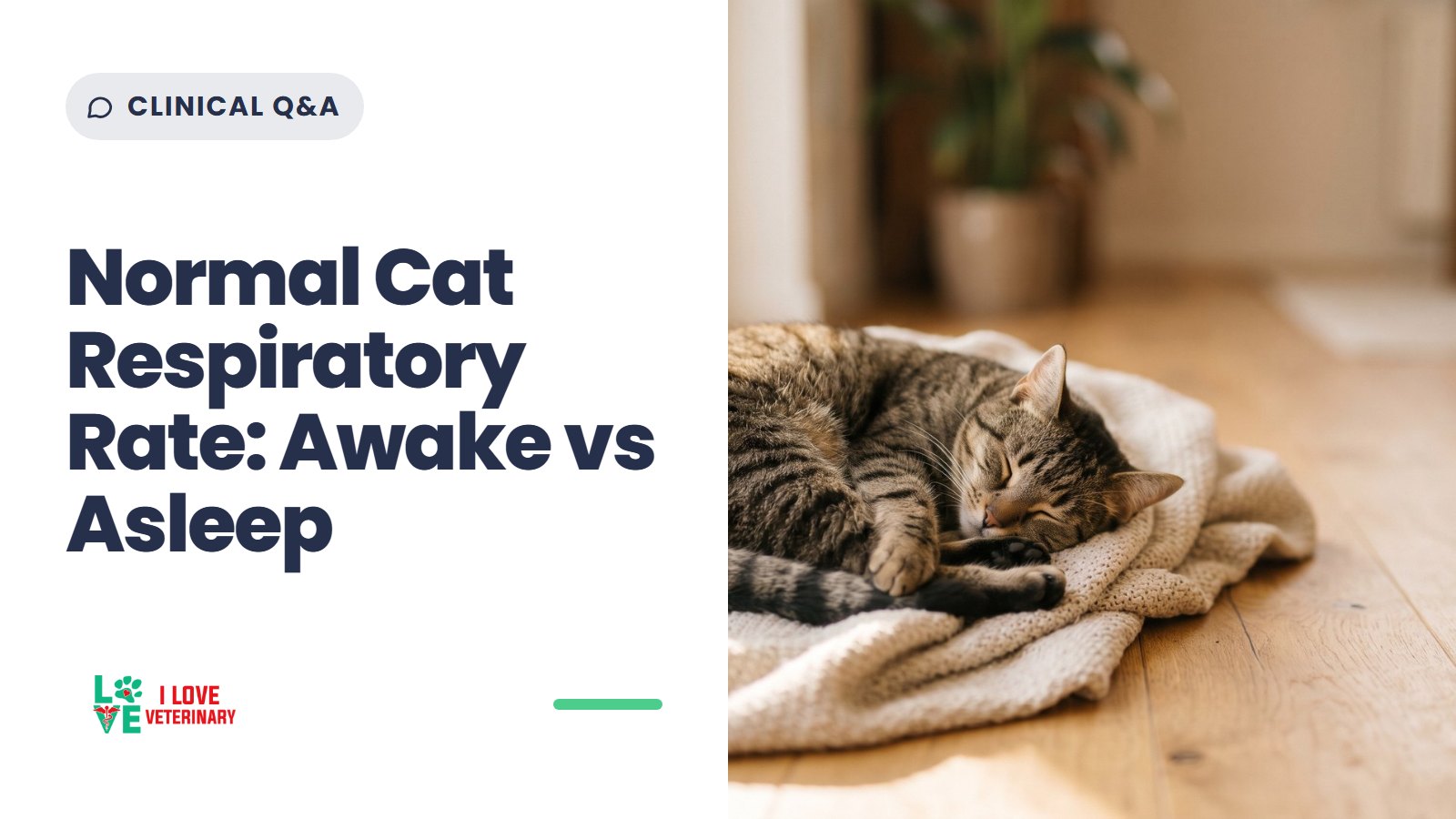
Rather than a sleeping heart rate, veterinary cardiologists give owners a breathing check. Texas A&M's cardiology service suggests counting breaths while your pet sleeps: 15 to 30 a minute is normal, and a rate that stays above about 30 after you recount a few times over the next couple of hours is a reason to call your vet. A study of healthy cats found median sleeping rates around 19 to 21 breaths a minute. Our guide to normal cat respiratory rate walks through how to count.
When a heart rate is a warning sign
One fast count at home rarely means much by itself. Watch for a pattern, or a fast or slow heart together with other signs:
- Fast at rest, again and again. If your calm, resting cat keeps reading well above its usual numbers, mention it to your vet, and call sooner if you also notice faster breathing, hiding or not eating.
- Too slow with weakness. A slow, weak heartbeat in a cat that is lethargic or collapsed is a warning sign. In emergency triage, Merck notes that cats in shock often drop below 120 bpm, which is why a weak cat with a slow pulse needs to be seen immediately rather than watched.
- Heart disease signs. The American Red Cross lists difficulty breathing, open-mouth breathing, pale or blue gums, not wanting to move around, loss of appetite and a heart rate that is too fast or too slow. Our guide to congestive heart failure in cats explains what the vet looks for next.
How to sort it:
- Go now: any sign in the box at the top of this page.
- Call today: resting counts well above your cat's usual for more than a day, sleeping breaths that stay above about 30, or a fast heart rate with less eating or more hiding.
- Mention at your next visit: your home baseline numbers, so your vet can compare them with what they hear in the clinic.

Sources
- Merck Veterinary Manual: Resting Heart Rates
- Merck Veterinary Manual: The Cardiovascular System in Animals
- Merck Veterinary Manual: Initial Triage and Resuscitation of Small Animal Emergency Patients
- Merck Veterinary Manual: Evaluation and Initial Treatment of Dog and Cat Emergencies
- Abbott JA, 2005: Heart rate and heart rate variability of healthy cats in home and hospital environments (Journal of Feline Medicine and Surgery)
- The Animal Medical Center: Vital Signs, Know What's Normal for Your Pet
- American Red Cross: Heart Emergencies in Cats
- Texas A&M University Cardiology Service: Measuring Your Pet's Breathing Rate
- Ljungvall I et al., 2014: Sleeping and resting respiratory rates in healthy adult cats and cats with subclinical heart disease (Journal of Feline Medicine and Surgery)
- Levine HJ, 1997: Rest heart rate and life expectancy (Journal of the American College of Cardiology)
- MedlinePlus: Pulse
This article is for general information and is not a substitute for advice from your veterinarian.