
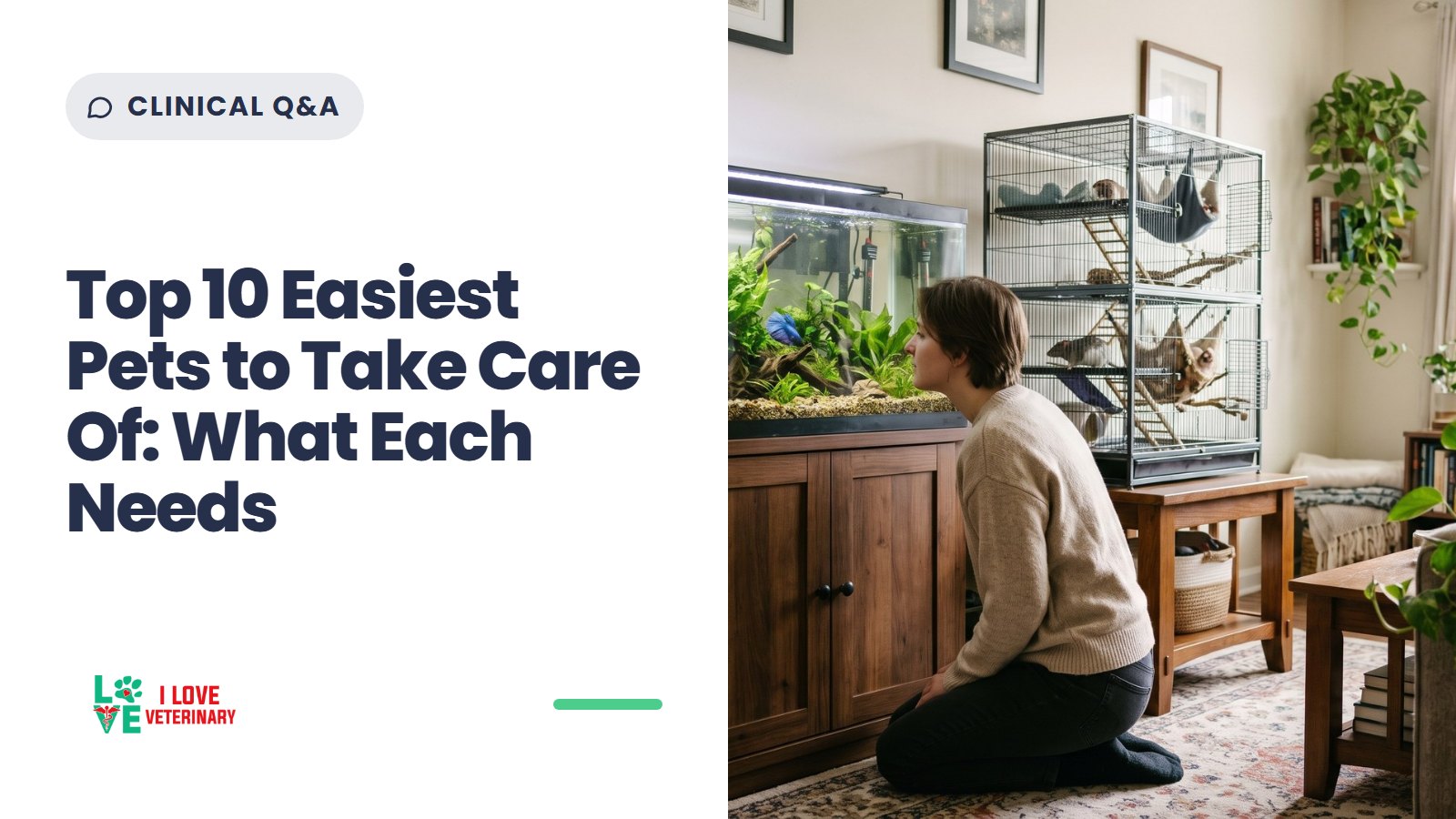
Life is busy, the apartment is small, and this is not the moment for a dog that needs walks three times a day. Plenty of pets ask for far less of your daily time. None of them asks for nothing, though: most of the trouble with "easy" pets starts with a tank or cage that is too small, a diet that is too simple, or a child left in charge.
We ranked these ten for a first-time owner by hands-on time each day once the setup is right, how tricky that setup is, how many years they live, and how easy it is to find vet care.
Quick answer:
- Least daily time: a betta fish or a leopard gecko.
- A small pet you can actually handle: rats, then guinea pigs.
- Shortest commitment (2 to 4 years): gerbils, hamsters, rats.
- Want low effort? Skip: rabbits and chinchillas. They are lovely, and they are more work than they look.
What "Low Maintenance" Really Means
A low maintenance pet saves you hours, not responsibility. The American Veterinary Medical Association (AVMA) notes that unfulfilled expectations are a leading reason pets get given up. Five things decide how easy a pet will be for you:
- Daily time. Fish and reptiles need minutes a day. AVMA advises spending time with pet rodents every day.
- Space. AVMA notes that many cages sold in pet stores are too small.
- Years. A hamster lives 2 to 3 years. A chinchilla can live 20. A female tarantula can pass 30.
- Company. Most small mammals need a friend of their own species. Syrian hamsters must live alone.
- Vet care. Reptiles, fish and small mammals need a veterinarian who treats that species. AVMA advises making sure one practices near you before you buy.
One rule applies to every pet here: an adult is the main carer. Kids can help, but AVMA calls it unrealistic to expect a child to be solely responsible for any pet.
The 10 Easiest Pets at a Glance

Pet | Lives about | Minimum home | Daily care | Company |
|---|---|---|---|---|
Betta fish | Varies | Heated, filtered tank, about 10 gallons | Feed, check water temperature | Alone (males fight) |
Leopard gecko | Up to 20 years | 36 x 18 x 18 in vivarium with heat and UVB | Spot clean; dusted live insects | Alone |
Corn snake | Up to 20 years | 48 x 24 x 24 in vivarium with heat and UVB | Fresh water; adults eat every 1 to 2 weeks | Alone |
Tarantula | Males up to 10, females 30+ years | 20-gallon tank, locking lid | Refill a shallow water dish; insects a few times a week | Alone |
Gerbils | 2 to 4 years | About 40 x 16 in, 16 in tall, deep bedding | Food, water, time with you | Pair or small group |
Rats | 2 to 3 years, sometimes 4 | About 3 x 2 ft, 4 ft tall, for 2 to 5 rats | Daily handling and out-of-cage time | Same-sex pair or group |
Hamsters | 2 to 3 years | About 40 x 20 in, 20 in tall, 8 in of bedding | Food, water, quiet days | Syrians live alone |
Guinea pigs | 5 to 7 years | About 10 sq ft for a pair | Hay, fresh vegetables, vitamin C | Pair or trio |
Chinchillas | 10 to 20 years | About 3 x 2 ft, 4 ft tall, for a pair | Hay, dust baths, a cool room | Pair or small group |
Rabbits | Often 8 to 10 years, up to 15 | About 10 x 6.5 ft of space for two | Hay, greens, daily exercise | Bonded pair recommended |
Sizes come from the veterinary and welfare sources listed at the end, converted to US units and rounded. Bigger is better for every pet on this list.
The Top 10 Easiest Pets to Take Care Of, Ranked
1. Betta Fish
Bettas are colorful, curious and happy to live alone. Daily care takes a minute or two: feed, check the thermometer, look at your fish.

The work is in the setup. Bettas are tropical fish, so they need a thermostat-controlled heater and a filter. The RSPCA says no fish should live without a working filter and recommends a tank of about 40 liters (roughly 10 gallons) or more, since a bigger volume stays more stable. "Cycle" the tank for at least two weeks before the fish arrives, so the bacteria that break down waste can grow, then test for ammonia and nitrite regularly. Clear water is not proof of clean water; that is what the test kit is for.
Male bettas fight, so keep one per tank. AVMA notes that fish can benefit from veterinary care too, so find a vet who sees fish.
2. Leopard Geckos
Leopard geckos are calm lizards that grow to about 10 inches. Once their home is right, the daily routine is short: spot clean, check temperatures, offer insects.

The Royal Veterinary College (RVC) recommends a vivarium of at least 36 x 18 x 18 inches with a warm end and a cool end (a "thermal gradient"), heat on a thermostat, hides at both ends and a low-output UVB lamp. They eat live insects such as crickets and roaches, dusted with calcium and vitamin supplements; waxworms are an occasional treat only.
The catch is the commitment: up to 20 years in captivity, according to the RVC. Like all reptiles, they benefit from routine checkups with a reptile vet; Reptile Awareness Day is a good reminder to book one.
3. Corn Snakes
Corn snakes are a common first snake: usually docile, and adults often eat only every one to two weeks.

They also grow. The RVC describes hatchlings of about 8 inches reaching up to 5 feet and living up to 20 years, so its minimum enclosure is 48 x 24 x 24 inches, with a warm and a cool end, thermostat-controlled heat, low-level UVB, hides and a water bowl big enough to soak in.
Feeding means frozen rodents, thawed and warmed before each meal. If you are not comfortable with that, AVMA's advice is simple: don't get a snake. The CDC adds that feeder rodents can carry Salmonella even when frozen, so keep them out of the kitchen and wash your hands after.
4. Tarantulas
Tarantulas are quiet and fascinating. Dr. Krista Keller, a zoological medicine specialist at the University of Illinois Veterinary Teaching Hospital, calls them "pretty easy keepers", with the caveat that they still need care:
- Home: a 20-gallon tank or larger with a locking screen lid, coconut coir substrate and a hide, kept at 70°F to 85°F.
- Food: live insects a few times a week; remove leftovers after about 10 minutes.
- Water: a shallow dish refilled daily. A deep dish can drown them.
- Molting: a tarantula that stops eating and lies on its back may be about to molt. Leave it alone.

They are pets to watch, not hold: a DVM-written guide at The Spruce Pets compares the venom to a bee sting and still advises against handling. The bigger catch is time. Males may live 10 years and females past 30.
5. Gerbils
Gerbils are active during the day and fun to watch digging tunnels, which suits families whose kids are awake when the pets are. Plan on a pair or small group, and a lifespan of 2 to 3 years (AVMA) or 3 to 4 (Blue Cross). Blue Cross recommends a gerbilarium or large tank with a secure wire lid, at least about 40 x 16 inches of floor and 16 inches tall for two to four gerbils, with deep bedding.
Two cautions. Never pick a gerbil up by the tip of its tail: the Merck Veterinary Manual explains the skin can slip off and cause a serious injury. And AVMA notes gerbils may be illegal to keep in some states, so check local rules first. More surprising facts about gerbils.
6. Rats
Pet rats are our pick for anyone who wants a small pet to hold. AVMA describes them as social and easy to handle, and says they rarely bite. (Wild rats are a different story: never try to catch or keep one.)

So why number six? They live in same-sex pairs or groups, and AVMA notes they need a larger cage and more attention than smaller rodents. Blue Cross recommends a tall wire cage of at least about 3 x 2 feet and 4 feet high for two to five rats. Skip glass tanks: Merck says ammonia builds up in them.
Health is the other catch: according to Merck, respiratory disease is the most common health problem in pet rats, and mammary tumors are common. They live about 2 to 3 years, sometimes 4. Noisy breathing or a new lump is a reason to see a vet who treats rodents.
7. Hamsters
Hamsters are small, quiet and happy alone. Syrian hamsters must live solo; the Merck Veterinary Manual notes they are aggressive toward other hamsters.

The common mistake is the cage. Blue Cross recommends at least about 40 x 20 inches of floor and 20 inches of height, with at least 8 inches of bedding for digging.
Hamsters are mostly active in the evening and at night, and they can nip if startled, woken or handled roughly, so they suit an older child with an adult in charge better than a toddler. They live about 2 to 3 years. Diarrhea ("wet tail") in a young hamster can be serious, so call the vet promptly.
8. Guinea Pigs
Guinea pigs are gentle and social, a good family pet with a bit more work than the rodents above.

Keep them in pairs or trios, as same-sex groups or neutered, because they breed readily. Floor area matters. The Merck Veterinary Manual recommends at least 7.5 square feet for one guinea pig plus 2 to 4 more per extra animal, on a solid floor, so about 10 square feet or more for a pair. They need grass hay at all times, plus guinea pig pellets and fresh vegetables every day.
Guinea pigs also cannot make their own vitamin C and must get it from their diet; ask your vet how to cover it. They live about 5 to 7 years, longer than many people expect from a "starter" pet.
9. Chinchillas
Chinchillas are soft, lively and fun to watch, and on the demanding end of this list.

They live up to 20 years, according to the Merck Veterinary Manual, and they handle cold well but overheat easily. Merck notes they are adapted to roughly 65°F to 80°F, and higher temperatures, especially with humidity, can cause heatstroke. They must live indoors.
They also need company (a pair or small group), a tall cage of at least about 3 x 2 feet and 4 feet high, regular dust baths for their coat, and a diet built mainly on grass hay. Dental problems are common, so regular exotics vet checkups matter. Most don't enjoy being held.
10. Rabbits
Rabbits are playful and full of character. They are also the most work on this list, and we would rather say so up front.

AVMA calls rabbits "more delicate and fragile than other pets". Many don't like being picked up and can injure their backs if held wrong, so small children shouldn't carry them. They need space: Blue Cross recommends at least about 10 x 6.5 feet, about 3 feet high, for two rabbits, plus daily exercise. Their diet is mostly hay, with daily greens; pellets alone are not enough.
Rabbits are social, and welfare and veterinary sources such as Blue Cross and the Merck Veterinary Manual recommend a bonded pair of neutered rabbits. AVMA frames it differently: its guide suggests a single rabbit is probably best for a first-time owner. Talk it through with your vet. Either way, spaying or neutering prevents litters and, per AVMA, reduces behavior problems and health risks.
Watch their appetite closely. Rabbits hide pain, and gut slowdown (gastric stasis) is one of the most common problems vets see in them. A rabbit that stops eating or stops passing droppings needs a vet promptly. With good care they often live 8 to 10 years, and AVMA says indoor rabbits can reach 15. Rabbit fans even have their own International Rabbit Day.
"Easy" Pets That Aren't
A few animals get sold as starter pets but don't belong here.
Goldfish in a bowl. Goldfish can live up to 25 years and grow to about a foot long, according to the RSPCA, which says no fish should be kept without a filter. A small unfiltered bowl can't give them that.
Tortoises and turtles. They need the right heat and lighting, the CDC notes some reptiles live for a very long time, and reptiles can carry Salmonella.

Sea-Monkeys. These are brine shrimp sold as a hatch-at-home kit, closer to a science project than a pet.
Questions to Ask Before You Get One
- Is there a vet nearby who treats this species? Call before you buy.
- Who is the main carer? It has to be an adult, even if the pet is "for the kids".
- Any children under 5, adults over 65 or anyone with a weakened immune system at home? The CDC does not recommend reptiles or amphibians for these households. Small mammals carry germs too, so everyone washes their hands after handling.
- Is anyone pregnant? The CDC advises pregnant women to avoid handling pet rodents when possible.
- Does your lease, building or state allow it? AVMA advises checking landlord and local rules first.
- Can you set up the home first? Tanks need cycling and vivariums need stable heat before the animal arrives.
- Can you commit for the whole lifespan? From 2 years for a hamster to 20 or more for a gecko, snake or chinchilla.

The Bottom Line
The easiest pet is the one whose needs you can meet for its whole life. For the least daily work, put your effort into the setup for a betta or a leopard gecko. For a pet to hold, plan on daily time with rats or guinea pigs. And if your heart is set on a rabbit or chinchilla, go for it, knowing they are not low maintenance pets.
Whatever you choose, talk to a veterinarian who sees that species before you bring it home.
Originally written by Dr. Catharina Hjorth. Updated by the I Love Veterinary editorial team.
Sources
- AVMA: Selecting a pet for your family
- AVMA: Selecting a pet rodent
- AVMA: Selecting a pet rabbit
- AVMA: Selecting a pet reptile
- AVMA: Selecting a pet fish
- CDC: Reptiles and Amphibians
- CDC: Small Mammals
- Merck Veterinary Manual: Mice and Rats as Pets
- Merck Veterinary Manual: Hamsters
- Merck Veterinary Manual: Gerbils
- Merck Veterinary Manual: Chinchillas
- Merck Veterinary Manual: Housing and Nutrition of Guinea Pigs
- Merck Veterinary Manual: Housing of Rabbits
- Merck Veterinary Manual: Noninfectious Diseases of Rabbits
- Royal Veterinary College: Leopard gecko care
- Royal Veterinary College: Corn snake care
- University of Illinois Veterinary Teaching Hospital: Caring for pet tarantulas
- RSPCA: Keeping fish as pets
- RSPCA: Fish environment
- Blue Cross: Choosing the right small pet
- The Spruce Pets: Best small exotic pets for apartment living
- Wikipedia: Sea-Monkeys
This article is for general information and is not a substitute for advice from your veterinarian.