
World Pet Memorial Day is a quiet day to remember the pets who have died: the dog who waited at the door, the cat who claimed your chair, the rabbit, bird or horse who was simply family. It falls on the second Tuesday in June. The next one is Tuesday, June 8, 2027.
There is no right way to mark it. Some people share a photo and a story. Others light a candle, plant something, or spend ten minutes with old pictures. If the grief still feels heavy, there is help for that too, and it's further down this page.
When is World Pet Memorial Day?
World Pet Memorial Day is observed on the second Tuesday in June. That is the rule listed by National Day Calendar and Days of the Year. No organizer is named, and where the day started is unclear: National Day Calendar says it is still researching the origins.
Year | World Pet Memorial Day |
|---|---|
2027 | Tuesday, June 8 |
2028 | Tuesday, June 13 |
A few websites list other June dates, such as the second Sunday. If you're planning something with friends or a local group, agree on the date ahead of time. The day itself matters less than taking the time.
Not the same as National Pet Memorial Day
The US also has National Pet Memorial Day on the second Sunday in September. National Day Calendar credits it to the International Association of Pet Cemeteries and Crematories, which started it in 1972. That puts it on September 12 in 2027 and September 10 in 2028. Social media often mixes the two up. Mark either one, or both.
Ways to remember your pet
Pick one idea that feels right. Nothing here has to be big, public or finished in a day.

Write them a letter
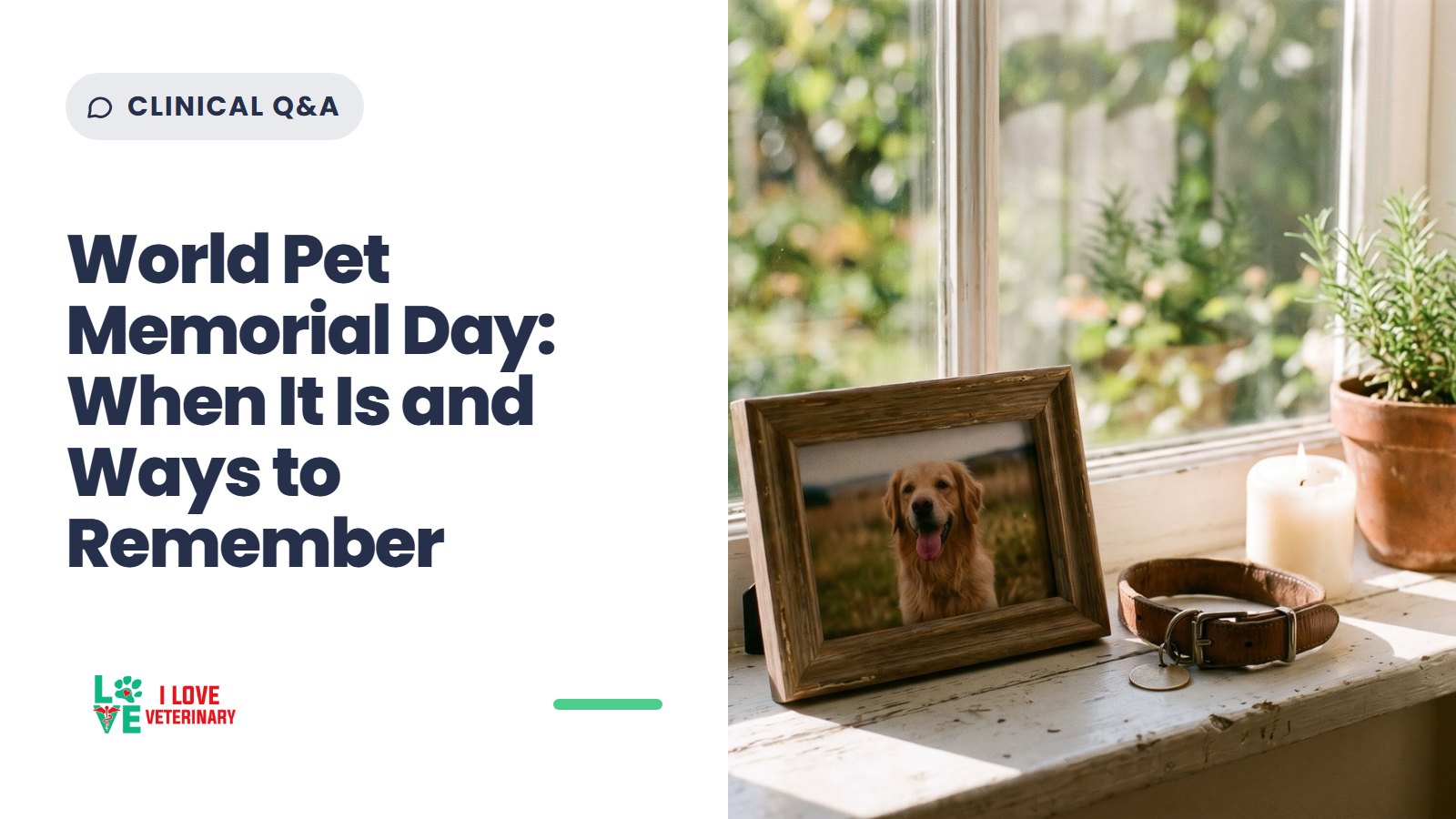
Write to your pet as if they could read it. Tell them what you miss, the moment you think of most, or the thing you didn't get to say. Cornell's pet loss team suggests exactly this kind of letter. Keep it, read it next year, or tuck it in with their collar.
Make a photo album or memory box
Go through your photos, from the first day home to the gray-muzzle years. Print a small album, or make a digital one to share with family. A box can hold the things that are hard to put away: their collar, a favorite toy, a few notes about their quirks.
Keep something close
Some people want something small they can carry or see every day. Cornell's ideas include keeping their ID tag in your wallet or on your key chain, a piece of jewelry or an ornament that holds some of their ashes, hair or whiskers, or their urn in a special place with a favorite photo beside it.
Plant a memorial garden
A tree, a shrub or a patch of flowers in their favorite sunny spot comes back every spring. A painted or engraved stone with their name works too. If you'd rather not plant at home, ask your local parks department about dedicating a tree.
If other pets share the yard, choose plants that are safe for them. Lilies are the big one for cat homes: according to the FDA, true lilies and daylilies can cause kidney failure in cats, and even pollen licked off the fur or water from the vase is enough. Our guides to plants toxic to cats and yard plants poisonous to dogs help you pick safely.
Make art, or wear it
Draw or paint your pet from a photo you love, or ask a local artist. It doesn't need to be good, and the whole family can join in. Some people go further with a memorial tattoo: a portrait, a paw print, their name. That one is permanent, so give it time and pick an artist whose portrait work you like.
Walk their favorite route
Take the walk you used to take together, or sit on the bench where you watched them play. A familiar place can bring back the good memories along with the sad ones, and that's fine.
Give something in their name
Donate blankets, food or money to a local shelter or rescue, or volunteer your time, in your pet's name. Helping another animal find a home is a way of passing on what your pet gave you.
Share their story
Post a favorite photo and a few lines about who they were: their name, what kind of animal they were, what made them yours. Use #WorldPetMemorialDay so other people remembering their pets can find it. Reading other people's posts can help too: you are not the only one who still misses a pet years later.
When grief feels heavy
Losing a pet is a real loss. Cornell's veterinary college says there is no "normal" way to grieve a pet and no set timeline. Grief can show up in your body (tiredness, poor sleep, changes in appetite), in your focus, and in your mood (sadness, guilt, anger, numbness). It rarely moves in a straight line, and setbacks are part of it.
You don't have to handle it alone. Two veterinary schools run free pet loss support lines:
- Cornell Pet Loss Support Hotline: 607-218-7457. Answered by veterinary students trained by professional grief counselors. Hours change with the season and with volunteer availability, so check the page or call to hear the current times.
- Tufts Pet Loss Support Helpline: 508-839-7966. Staffed Monday to Thursday, 6 to 9 pm Eastern, with 24-hour voicemail. Messages are returned on the next scheduled shift.

If the sadness isn't easing over time, or it's getting in the way of sleep, work or daily life, talk to your doctor or a grief counselor. Grief after a pet's death is a good reason to ask for that help.
If you are having thoughts of harming yourself, call or text 988 to reach the 988 Suicide & Crisis Lifeline. It is free, confidential and open 24/7 in the US.
Helping children and other pets
Children understand death differently from adults, and how they react depends on their age. Cornell's advice is to be honest, let them ask questions even when you don't have every answer, and listen. It's okay for them to see you sad. Inviting them into the remembering, with a drawing, a story or a favorite memory, can help the whole family.
Other pets may act differently after a companion dies. They may want more attention, seem anxious or withdrawn, or change how they eat, sleep or play. Keep their routine steady and spend time doing things they enjoy. One caution from Cornell: a change that persists needs a checkup with your veterinarian, so don't assume it's grief. Not eating or drinking, or changes in urination or defecation, are the ones to act on first.

Supporting a friend who lost a pet
The day is also a good reason to check in on someone else. A few things that help:
- Say the pet's name and share a memory if you knew them.
- Listen more than you talk, and skip "it was just a pet."
- Offer practical help on a hard week.
- Check in again later. Grief often lasts longer than the sympathy does.
If you send flowers and they have a cat, leave out lilies.
Famous pet memorials
People have marked the loss of animals for a very long time.
- Peritas, Alexander the Great's dog. Plutarch writes that when Alexander lost Peritas, a dog he had raised and loved, he founded a city and named it after him.
- Balto, the sled dog. In 1925, dog teams relayed diphtheria serum almost 700 miles to Nome, Alaska. Balto led the last team, and his statue in New York's Central Park was unveiled on December 17, 1925. You can still visit it.
- Towser, the distillery cat. A female tortoiseshell at the Glenturret Distillery near Crieff, Scotland, Towser is listed by Guinness World Records as the greatest mouser, with an estimated 28,899 mice before she died in 1987.
- Hartsdale Pet Cemetery. Founded in 1896 in Hartsdale, New York, just north of New York City, it was added to the National Register of Historic Places in 2012.
However you remember your pet, on the second Tuesday in June or on an ordinary Wednesday, the point is the same: they mattered, and they still do.
Sources
- National Day Calendar: World Pet Memorial Day
- Days of the Year: World Pet Memorial Day
- National Day Calendar: National Pet Memorial Day
- Cornell University College of Veterinary Medicine: Pet Loss Resources and Support
- Tufts Cummings School of Veterinary Medicine: Pet Loss Support Helpline
- 988 Suicide & Crisis Lifeline
- FDA: Lovely Lilies and Curious Cats, a Dangerous Combination
- Plutarch: Life of Alexander, 62 (Perrin translation)
- Central Park Conservancy: Balto
- Guinness World Records: Greatest mouser
- Hartsdale Pet Cemetery: History