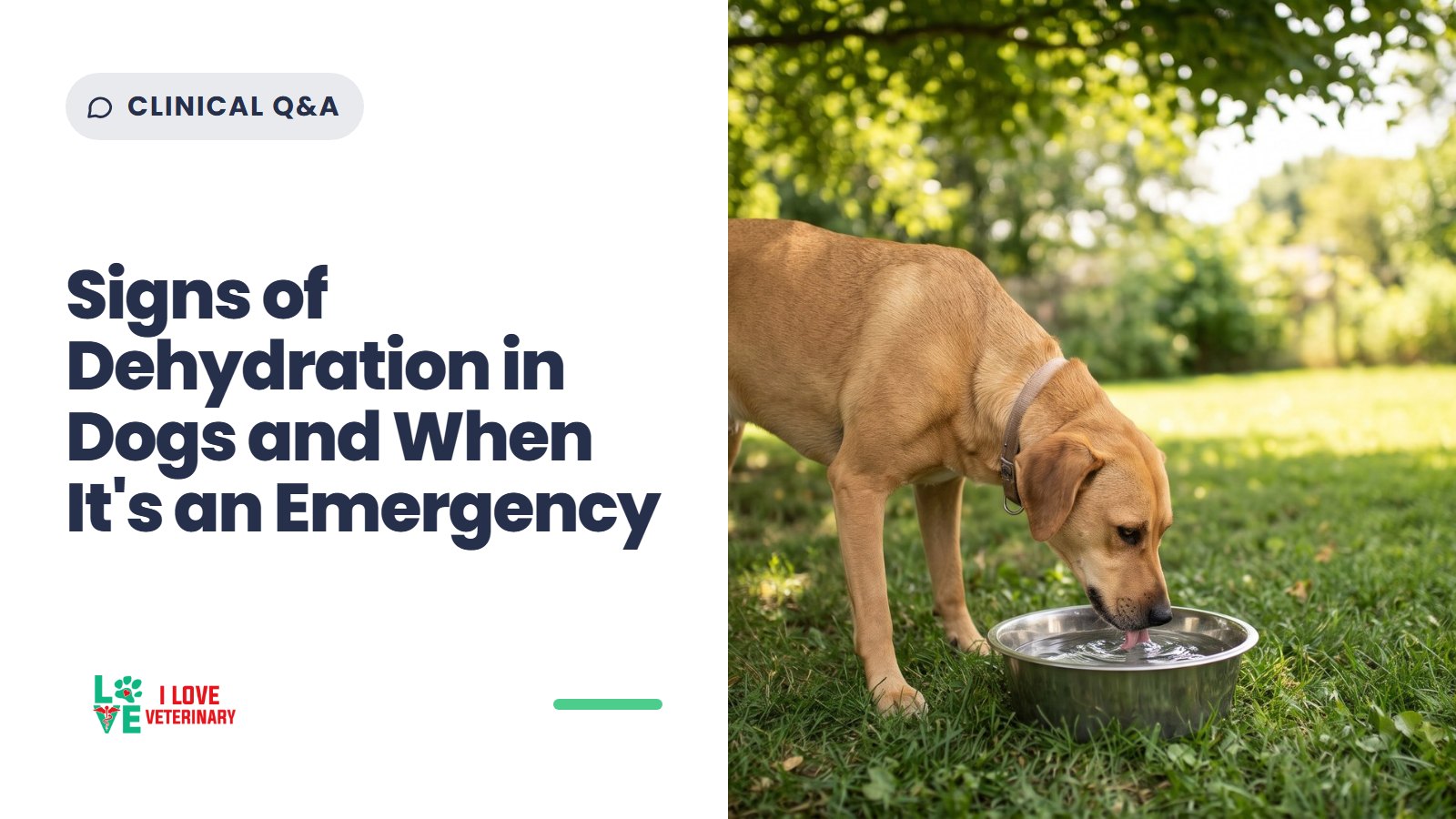
The main signs of dehydration in dogs are dry, sticky gums, thick saliva, skin that is slow to fall back when you lift it, sunken eyes, low energy and peeing less than usual. In severe cases a dog becomes weak, its gums turn pale and it can collapse.
Mild dehydration often shows nothing you can see. According to the 2024 AAHA Fluid Therapy Guidelines, a dog that has lost less than about 5% of its body weight in fluid usually looks normal on an exam. So if you can see the signs, your dog has already lost a real amount of fluid, and it is time to call your veterinarian. The Call now list below tells you when not to wait.
Signs of Dehydration in Dogs
Watch for these signs, especially in a dog that has been vomiting, has diarrhea, isn't eating or drinking, or has been out in the heat:
- Dry, sticky gums. Healthy gums feel moist. Tacky or dry gums are one of the earliest signs a vet looks for.
- Thick saliva and a dry mouth.
- Skin that is slow to fall back when you gently lift it over the shoulders. In severe dehydration the skin stays up in a ridge (a "skin tent").
- Sunken, dry-looking eyes.
- Low energy. Listlessness, less interest in play or food, and lethargy.
- Loss of appetite.
- Peeing less. The urine is more concentrated, so it often looks darker. A dog that produces no urine at all needs a vet right away.
- Panting and a dry nose. AKC's chief veterinarian lists both among the signs, though panting often has more to do with heat than with fluid loss.
- Weakness, wobbliness or collapse in severe cases. These are signs of shock: the body can no longer get enough blood to its organs.
How the signs build
Veterinarians estimate how dehydrated a dog is from the exam. The stages below are based on the AAHA guidelines and the Merck Veterinary Manual. Both stress that these are estimates, and real dogs don't always follow the table.
Approximate fluid loss | What a vet may find |
|---|---|
Under about 5% | Little or nothing visible |
About 5-8% | Gums tacky to dry, skin slightly slow to fall back |
About 8-10% | Skin clearly slow to fall back, eyes sunken, pulse fast and weak |
10-12% or more | Skin stays tented, eyes dull and sunken, signs of shock, collapse |
Dark urine fits the picture too. When a dog is short on water, its kidneys hold on to it and make smaller amounts of more concentrated urine. Very dark, orange or brown urine can also point to other problems, so it is worth a vet check either way.

How to Check Your Dog for Dehydration
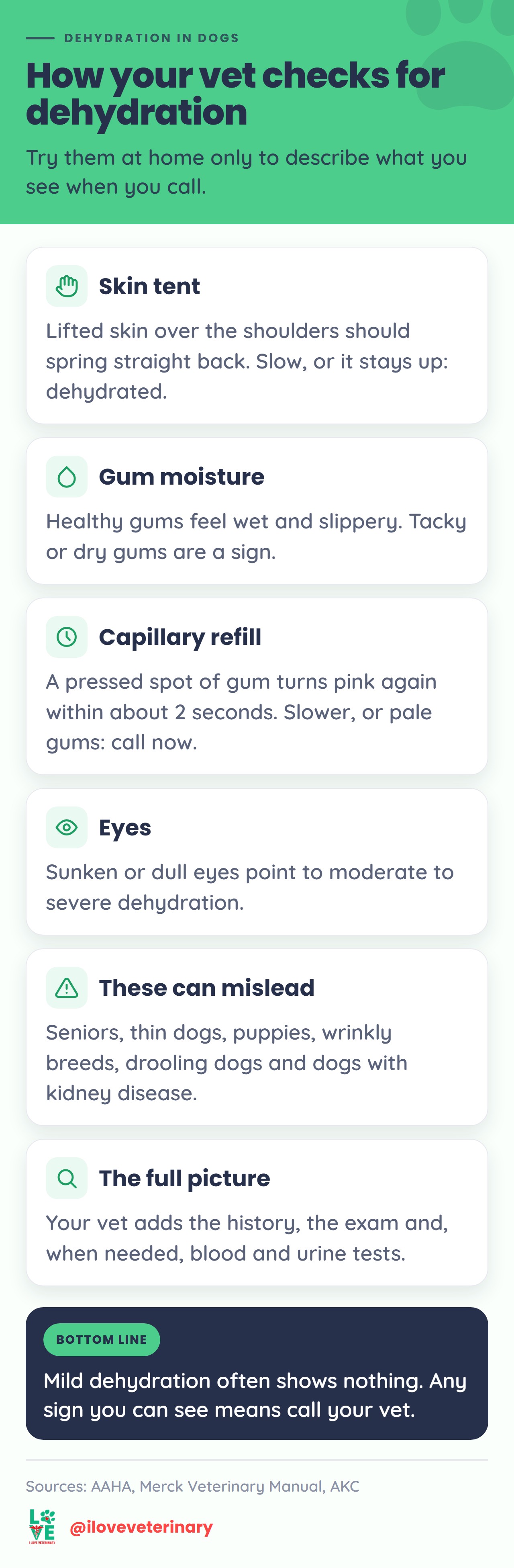
These quick checks help you describe what you see when you call your vet. They don't replace an exam, and a dog with any of these findings should be seen.
Skin Elasticity Test
Gently lift a fold of skin between the shoulder blades, then let it go. In a well-hydrated dog the skin springs straight back into place. In a dehydrated dog it falls back slowly, and in severe cases it stays up in a tent.
AKC's chief veterinarian, Dr. Jerry Klein, suggests trying this once while your dog is healthy, so you know what normal feels like for your dog.
Gum Check
Touch your dog's gums with a clean finger. They should feel moist, not tacky or dry.
Then press gently on a pink area of gum and let go. The spot turns pale and should go back to pink within about 2 seconds. This is called capillary refill. Gums that stay pale for longer, or gums that look pale, white or bluish to begin with, are an emergency. Our guide to pale gums in dogs explains what gum color can tell you.
Eyes
Look at your dog's eyes from the side. Eyes that look sunken back into their sockets, or dull and dry, suggest moderate to severe dehydration.
When the Checks Can Fool You
Home checks are rough guides. The Merck Veterinary Manual notes that even for vets, estimating dehydration is partly subjective. Be careful with:
- Senior and very thin dogs. Loss of fat around the eyes and less elastic skin can make them look sunken-eyed and slow to "tent back" even when they are well hydrated.
- Puppies. Young dogs have extra-elastic skin, so the skin test can look normal when it isn't.
- Wrinkly breeds such as Bulldogs and Neapolitan Mastiffs, whose skin is less elastic to begin with (per AKC's Dr. Klein).
- Nauseous dogs. A dog that feels sick often drools, which can make the gums feel wet even when the dog is dehydrated.
- Dogs with kidney disease. They can have a dry mouth without being dehydrated, the AAHA guidelines note.
That is why your vet looks at the whole dog: the history, the exam and, when needed, blood and urine tests.
What Is Dehydration in Dogs?
Dehydration happens when a dog's body loses more fluid than it takes in. Along with water, the body loses electrolytes: minerals such as sodium, potassium and chloride that keep nerves, muscles and organs working.
When the fluid loss gets large enough, the blood volume drops too. That is when a dog can go into shock, which Merck describes as a fast heart rate, pale gums, weak pulses and low urine output. Untreated, shock can lead to organ failure and death.
Treatment is your veterinarian's call. Depending on how dehydrated the dog is and why, the vet may replace fluids by mouth, under the skin or through an IV, and will look for and treat the cause. A dog in shock needs IV fluids.
What Causes Dehydration in Dogs?
Dehydration comes down to two things: not enough fluid going in, or too much going out. Common causes include:
- Vomiting and diarrhea, which can drain fluid quickly.
- Not drinking or eating, whether because the dog feels unwell or because water wasn't available.
- Heat and hard exercise. Dogs cool themselves mostly by panting. In hot or humid weather, or after strenuous exercise, they can overheat, and heatstroke is a medical emergency that can lead to kidney injury and shock (Cornell). Short-muzzled, older and overweight dogs are at higher risk. Read more on why dogs pant and when it's serious.
- Fever and blood loss.
- Kidney disease. In chronic kidney disease, dogs usually drink and pee more than usual at first. Dehydration, vomiting and poor appetite tend to come later. See our guide to the signs of kidney failure in dogs.
- Diabetes. Diabetes mellitus also makes dogs thirsty and makes them pee more. If it tips into diabetic ketoacidosis (DKA), dogs vomit, stop eating and become dehydrated.
- Parvovirus in puppies. Young, unvaccinated or incompletely vaccinated dogs are the most likely to get parvovirus, which causes vomiting, often bloody diarrhea and dehydration.
When Is Dehydration an Emergency?
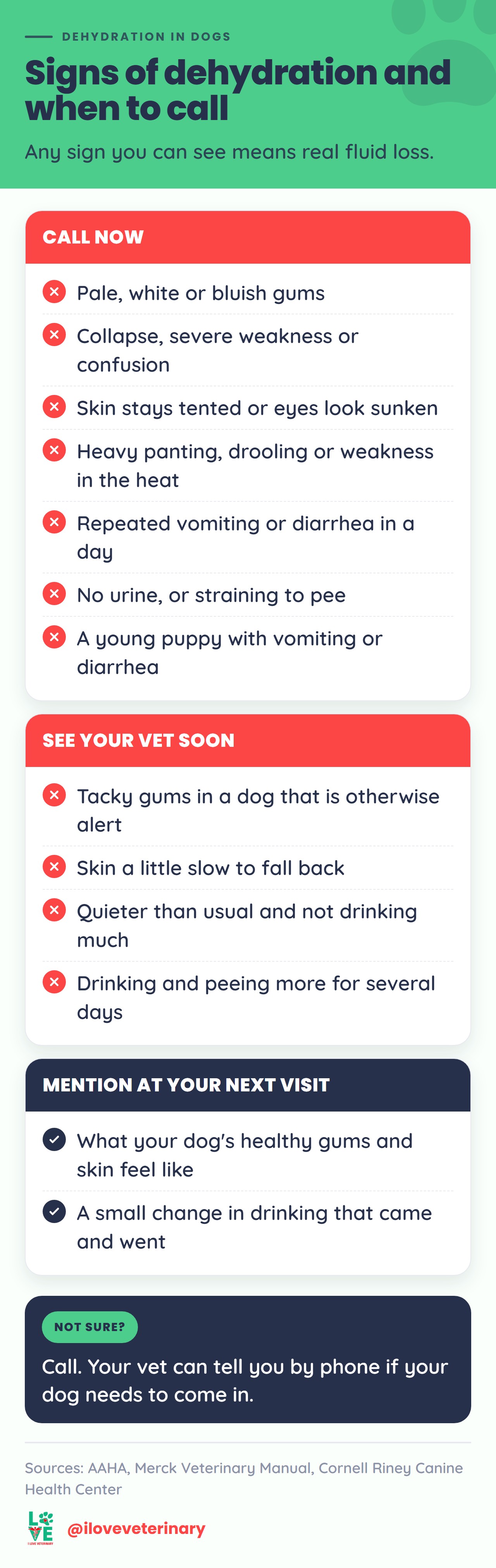
Call now
Call your vet or the nearest emergency clinic and head in if your dog has any of these:
- Pale, white or bluish gums, or gums that stay pale after you press them
- Collapse, severe weakness, wobbliness or confusion
- Skin that stays tented, or eyes that look sunken
- Heavy panting, drooling, vomiting or weakness during or after time in the heat
- Repeated vomiting or diarrhea within a day, especially with blood, lethargy or refusal to eat (Cornell)
- No urine, or straining to pee without producing any
- A young puppy with vomiting or diarrhea
See your vet soon (call today)
- Tacky gums or skin that falls back a little slowly, in a dog that is otherwise alert
- A dog that is quieter than usual and not drinking much
- Drinking and peeing more than usual for several days, which can point to kidney disease or diabetes
Mention at your next visit
- Ask your vet to show you what your dog's gums and skin look and feel like when healthy, so a change stands out later.
- Any small change in how much your dog drinks that came and went.
If you aren't sure which list your dog fits, call. Your vet or an emergency clinic can tell you over the phone whether your dog needs to come in now.
Help! My Dog Won't Drink Water
A dog that refuses water while it is also vomiting, has diarrhea or seems lethargic is losing fluid with no way to replace it. Call your vet. That dog needs to be seen.
Don't try to force water into your dog or give homemade fluid mixes unless your vet tells you to. Your vet needs to find out why your dog stopped drinking and decide how to replace the fluid.
If you are worried about the kidneys, early chronic kidney disease usually works the other way: dogs tend to drink and pee more than usual, not less. If your dog's drinking changes in either direction and stays changed, book a checkup.
How to Prevent Dehydration in Dogs

- Keep fresh, clean water available all the time and check the bowl during the day.
- Bring water and a bowl on walks and outings, and offer frequent water breaks (Cornell).
- Give outdoor dogs shade, and walk in the cooler morning or evening hours on hot days.
- Skip strenuous exercise in heat and humidity, and take extra care with short-muzzled, older and overweight dogs.
- Never leave your dog alone in a car.
- Keep puppies on their vaccination schedule, since unvaccinated puppies are most at risk of parvovirus.
- Learn what your dog's gums and skin feel like when healthy, so you notice a change.
- Call your vet early when vomiting, diarrhea or a change in drinking or peeing starts, rather than waiting for dehydration to show.
Sources
- AAHA: 2024 Fluid Therapy Guidelines for Dogs and Cats, Section 1: Introduction and Definitions
- AAHA: 2024 Fluid Therapy Guidelines for Dogs and Cats, Section 2: General Fluid Therapy Principles
- Merck Veterinary Manual: The Fluid Resuscitation Plan in Animals
- Merck Veterinary Manual: Evaluation and Initial Treatment of Dog and Cat Emergencies
- Merck Veterinary Manual: Chronic Kidney Disease in Dogs
- Merck Veterinary Manual: Diabetes Mellitus in Dogs and Cats
- Merck Veterinary Manual: Canine Parvovirus Infection
- Cornell Riney Canine Health Center: Heatstroke, a Medical Emergency
- Cornell Riney Canine Health Center: Summer Heat Safety Tips for Dogs
- Cornell Riney Canine Health Center: When to Go to the ER
- American Kennel Club: Dehydration in Dogs, Signs and Symptoms
This article is for general information and is not a substitute for advice from your veterinarian.