

Fleas and ticks tend to come to mind on the first warm spring afternoon outdoors. The parasites don't keep that calendar. Much of the flea life cycle plays out inside the home, veterinary guidelines recommend tick control all year, and the harm goes well beyond an itchy coat: fleas pass on tapeworms and bacteria, and ticks carry diseases that can make a dog seriously ill.
The short answer from the veterinary parasite guidelines: every dog should be on flea and tick control all year, for life, with the product chosen by your veterinarian for your dog's risk, health and household. This guide covers which external parasites matter for dogs, how prevention works, the main product types in plain terms, the safety points to know before using any of them, and what to ask at your next visit.
Fleas: what they do to dogs (and the home)
The flea on most dogs is not a "dog flea" at all. The cat flea, Ctenocephalides felis, is by far the most common flea on both dogs and cats.
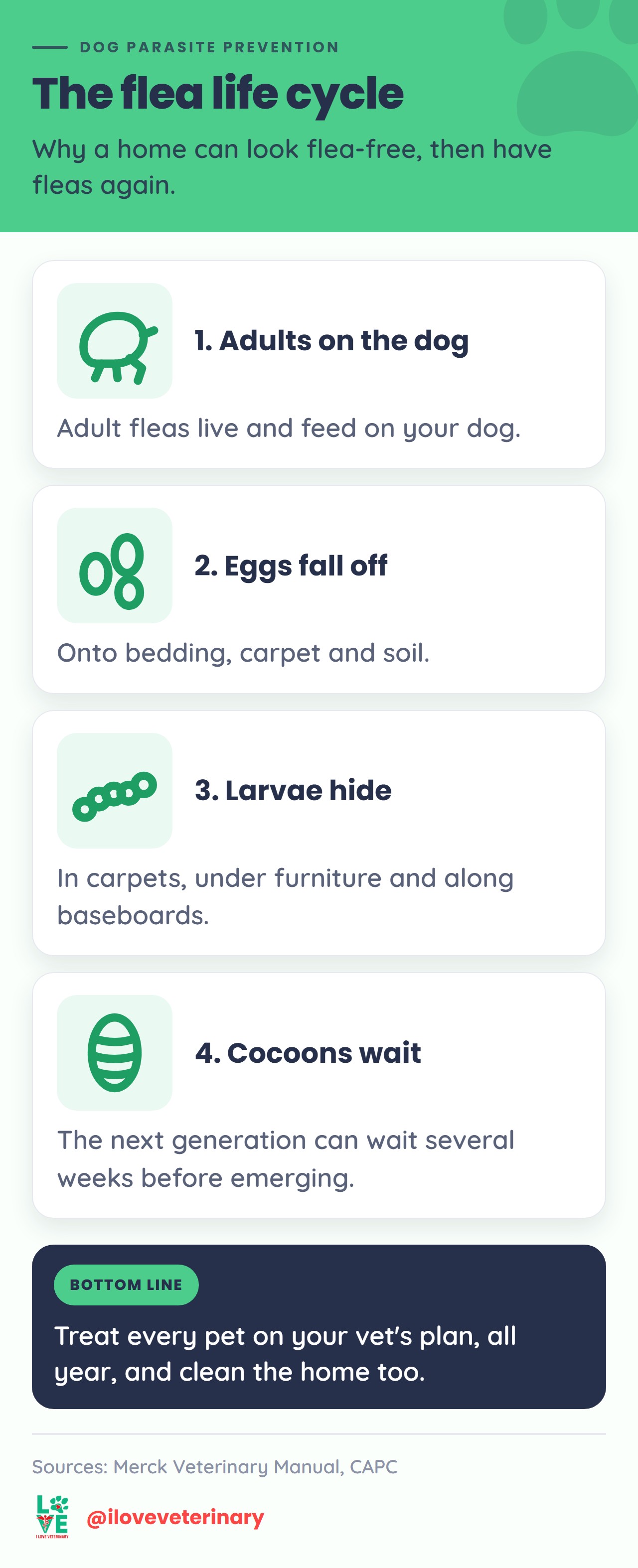
Adult fleas live and feed on the dog, but their eggs fall off the coat onto bedding, carpet and soil. The larvae develop in carpets, under furniture and along baseboards, and the next generation can wait in its cocoon for several weeks before emerging. That is why a home can seem flea-free and then have a problem again, and why treating only the dog you see scratching rarely settles it.
Fleas cause more than itching:
- Flea allergy dermatitis (FAD): an allergic reaction to flea saliva that makes some dogs intensely itchy. See our guide to flea allergy dermatitis.
- Anemia: heavy infestations can cause iron-deficiency anemia, which can be fatal, particularly in young animals.
- Tapeworm: fleas carry Dipylidium caninum, a tapeworm dogs pick up by swallowing an infected flea while grooming.
- Bacterial infections: fleas can carry Bartonella henselae and Rickettsia species (R. typhi, R. felis), which also matter for people.
Ticks and tick-borne disease
Ticks feed on blood, and while they feed they can pass on infections. Tick-borne diseases of dogs in the US include Lyme disease (spread by Ixodes ticks), ehrlichiosis, anaplasmosis, Rocky Mountain spotted fever, babesiosis and hepatozoonosis. Some ticks also cause tick paralysis, a toxin-related condition in which weakness starts in the back legs and moves forward.
Infections don't all pass at the same speed. Some can be transmitted within hours of a tick attaching, others only after a longer feed. Either way, prompt tick control and a check of your dog's coat after time outdoors reduce the chance of disease. Our article on dog ticks covers the common species and what they look like.

If you find an attached tick, avoid crushing, twisting or jerking it out of the skin. If you are not confident removing it cleanly, your veterinary team can remove it and show you how.
Mites and lice
Mites and lice cause real skin disease, and some of them spread easily.
- Sarcoptic mange (scabies): Sarcoptes mites cause intense itching and spread readily between dogs by direct contact. The disease is zoonotic, meaning people can be affected too. See our article on scabies in dogs.
- Demodex: these mites live in small numbers on normal canine skin. Demodicosis happens when they overgrow, and it is not considered contagious. It is a different problem from scabies, and your veterinarian manages it differently.
- Cheyletiella: very contagious, especially where many animals live together, and people in the household are often affected.
- Ear mites: Otodectes mites are a common cause of outer ear inflammation (otitis externa), more often in cats but in dogs too.
Lice are highly host-specific: dog lice live on dogs and pose virtually no risk to people. They spread by direct contact and through shared brushes and combs, are more common in young, old or debilitated animals, and are rare in dogs kept on regular flea and tick prevention.
Why prevention is year-round
The Companion Animal Parasite Council (CAPC) says every dog should be on flea and tick control year-round and throughout life, not only in summer. The Merck Veterinary Manual likewise describes lifelong flea control as necessary to prevent reinfestation. CAPC recommends broad-spectrum, year-round control that covers heartworm, intestinal parasites, fleas and ticks, matched to the parasites common where you live and to your dog's lifestyle. A dog that hikes in tick country has different needs from one that mostly walks city sidewalks, and your veterinarian weighs both at regular checkups.
Two household rules make prevention work:
- Treat every pet in the home. Every dog and cat needs to be on a plan your veterinarian sets, because an untreated pet can keep the flea life cycle going in the house.
- Deal with the environment too. Merck describes clearing the infestation in the pet's surroundings as the second step of flea control. Washing bedding and vacuuming help; ask your veterinarian before using any household or yard pesticide.
Mosquitoes are not coat parasites, but they carry heartworm, which is why heartworm prevention belongs in the same conversation. Read more about heartworm in dogs.
Prevention products: forms and ingredient classes
Flea and tick products for dogs come in several forms:
- chewables or tablets given by mouth
- spot-on liquids applied to the skin
- collars that release active ingredient over time
- sprays and shampoos
- long-acting injections, given only by a veterinarian
Common ingredient classes include isoxazolines (a class of flea and tick drugs), macrocyclic lactones, fipronil, imidacloprid, amitraz, pyrethrins and pyrethroids such as permethrin, and insect growth regulators that stop flea eggs and larvae from developing.
Products also differ in how they act. Some pyrethroids, such as permethrin, repel ticks as well as killing them; other products kill fleas and ticks once they start to feed. Some protect for a short time and others for much longer, and some need a prescription while others are sold over the counter. Your veterinarian can explain these label features for a specific product.
If you want to combine an oral product with a topical one, check with your veterinarian first.
Safety: what to know before you use a product
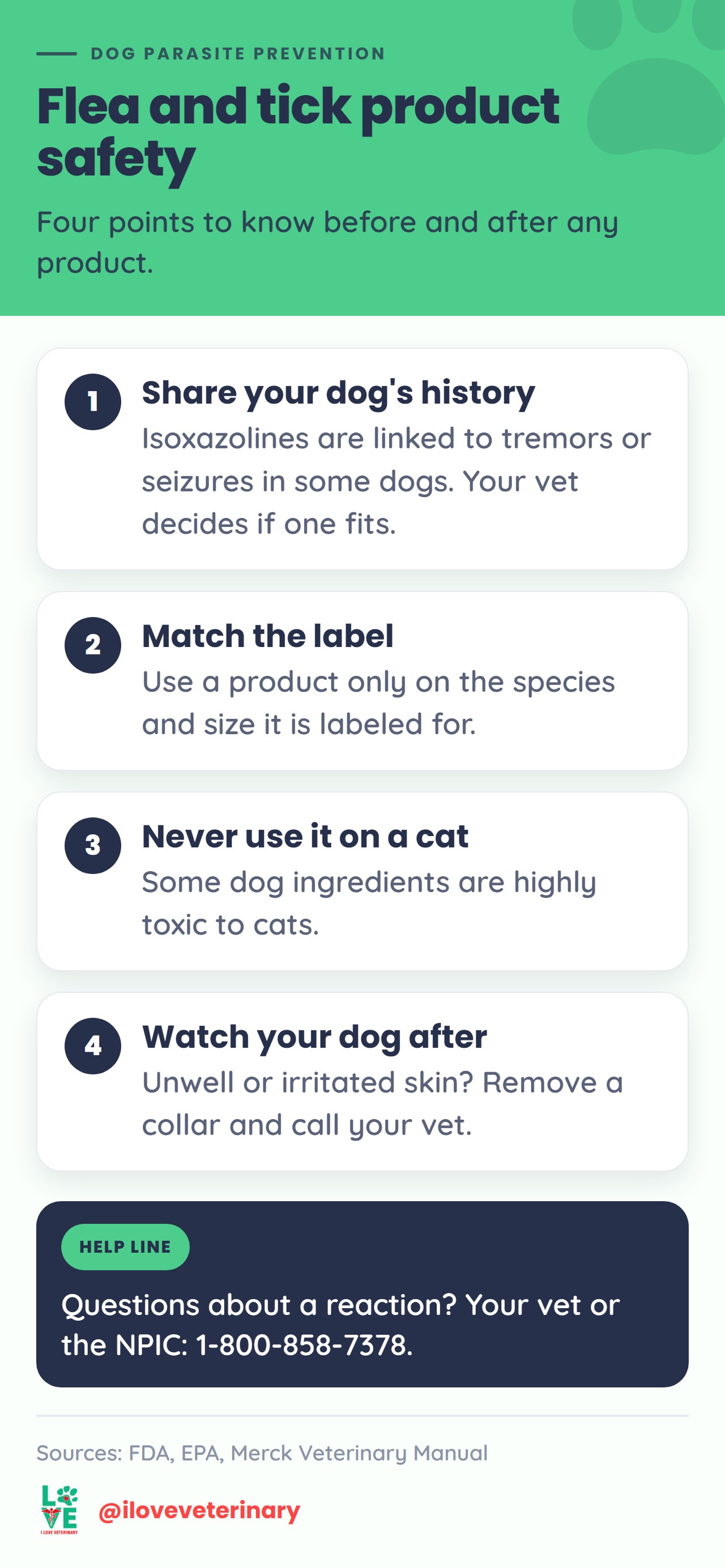
Isoxazolines and neurologic reactions. The US Food and Drug Administration (FDA) considers isoxazoline products safe and effective for dogs and cats. It also states that they "have been associated with neurologic adverse reactions, including muscle tremors, ataxia, and seizures in some dogs and cats" (ataxia means wobbly, uncoordinated movement). Most pets have no such reaction, but FDA notes seizures may occur in animals with no prior history. Its advice is to talk with your veterinarian, who reviews your dog's medical history and decides whether an isoxazoline product is appropriate. Read the full FDA fact sheet on isoxazoline flea and tick products.
Use a product only on the species and size on its label. The US Environmental Protection Agency (EPA) gives this as a basic rule. Pesticides on your dog's coat can also transfer to children, so follow the label on handling.
Never put a dog product on a cat. Some ingredients are far more toxic to one species than another. Merck notes that some pyrethroids, such as permethrin, can be highly toxic to cats, causing muscle twitching (fasciculations) and seizures. If a cat lives with you, tell your veterinarian before choosing a product for your dog; our guide to external parasite prevention for cats covers the cat side. A cat exposed to a dog product, especially one containing permethrin, is an emergency: call your veterinarian or the National Pesticide Information Center (1-800-858-7378) now.
Watch your dog after any product. If your dog seems unwell, is irritated at the application site, or acts differently, contact your veterinarian or the National Pesticide Information Center. Remove a collar right away if it causes a reaction. Depending on the label, reactions can be reported to EPA or FDA.
What to ask your vet
- Which parasites does this product cover, and does it kill, repel, or both?
- Is it prevention, treatment of a current infestation, or both?
- Which form suits my dog and my household: chewable, spot-on, collar or injection?
- Does swimming or bathing affect how well it works?
- Does anything in my dog's health history, including seizures, change the choice?
- I have a cat (or children) at home. Is this product safe around them?
- Which parasites are common where we live and travel?
- What does it cost, and what are the options if cost is a concern?
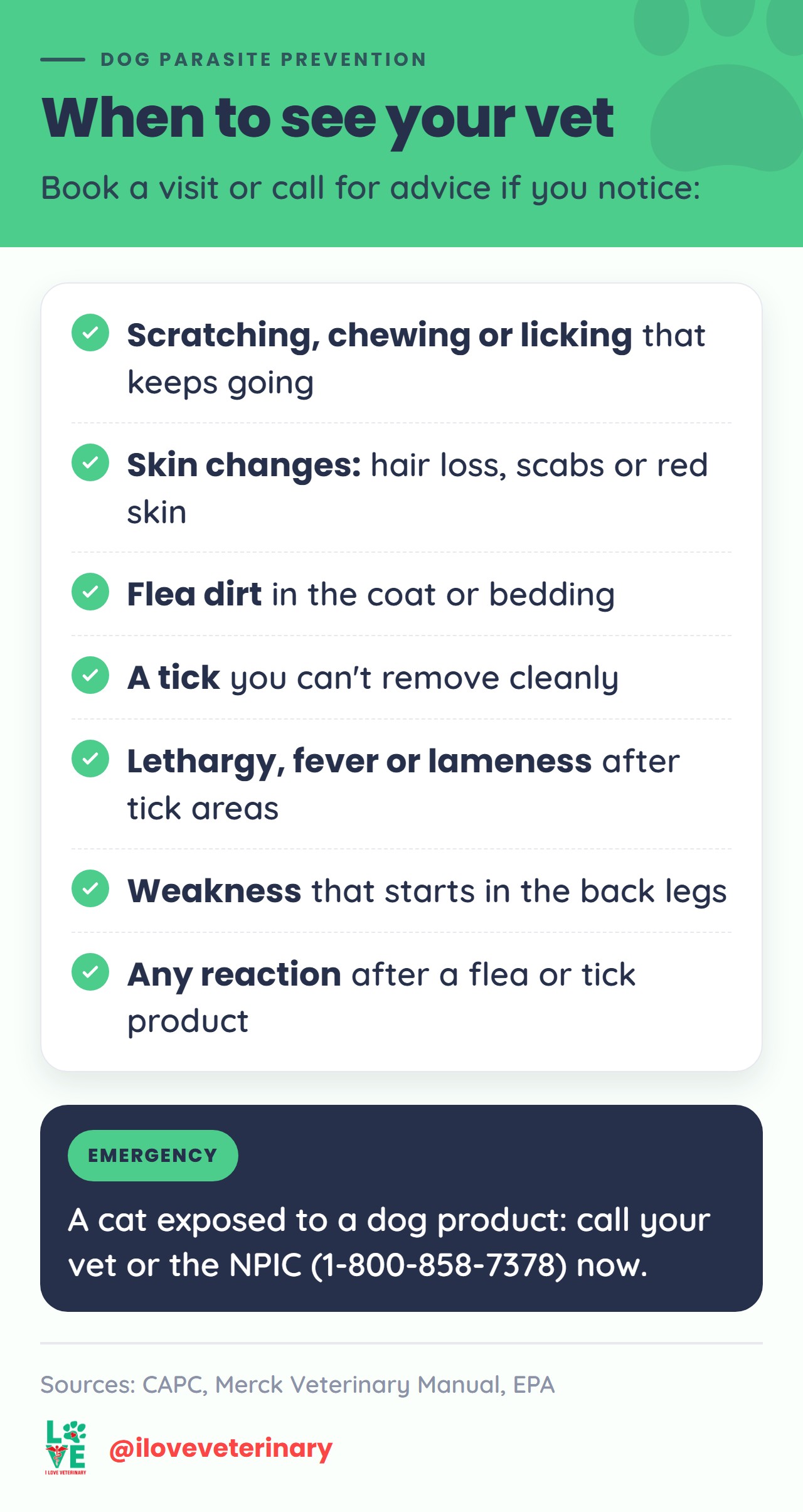
When to see your vet
Book a visit, or call for advice, if you notice:
- persistent scratching, chewing or licking
- hair loss, scabs or red, irritated skin
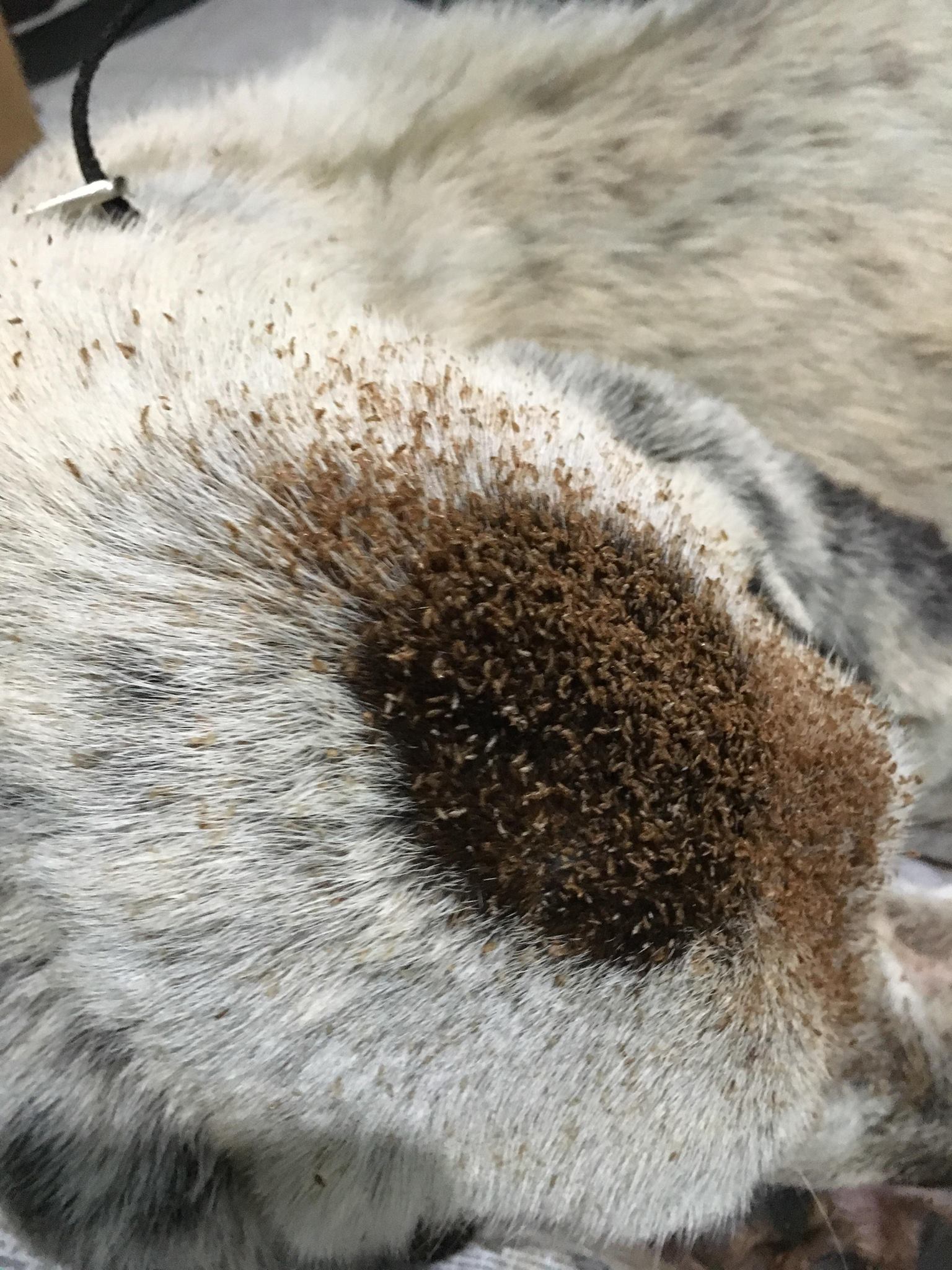
- flea dirt (small dark specks) in the coat or bedding
- a tick you can't remove cleanly
- lethargy, fever or lameness after time in tick areas
- weakness that starts in the back legs
- any reaction after a flea or tick product
- a cat exposed to a dog product: treat it as an emergency and call your veterinarian or the National Pesticide Information Center now
Whenever you are in doubt about a product or a skin problem, contact your veterinarian.
Sources
- FDA: Fact Sheet for Pet Owners and Veterinarians about Potential Adverse Events Associated with Isoxazoline Flea and Tick Products
- FDA: FDA approves first long-acting flea and tick treatment for dogs
- EPA: Controlling Fleas and Ticks on Your Pet
- Merck Veterinary Manual: Ectoparasiticides Used in Small Animals
- Merck Veterinary Manual: Fleas in Dogs and Cats
- Merck Veterinary Manual: Mange in Dogs and Cats
- Merck Veterinary Manual: Lice in Dogs and Cats
- CAPC: Fleas
- CAPC: Ticks
- CAPC: Lice
- CAPC: General Guidelines
This article is for general information and is not a substitute for advice from your veterinarian.