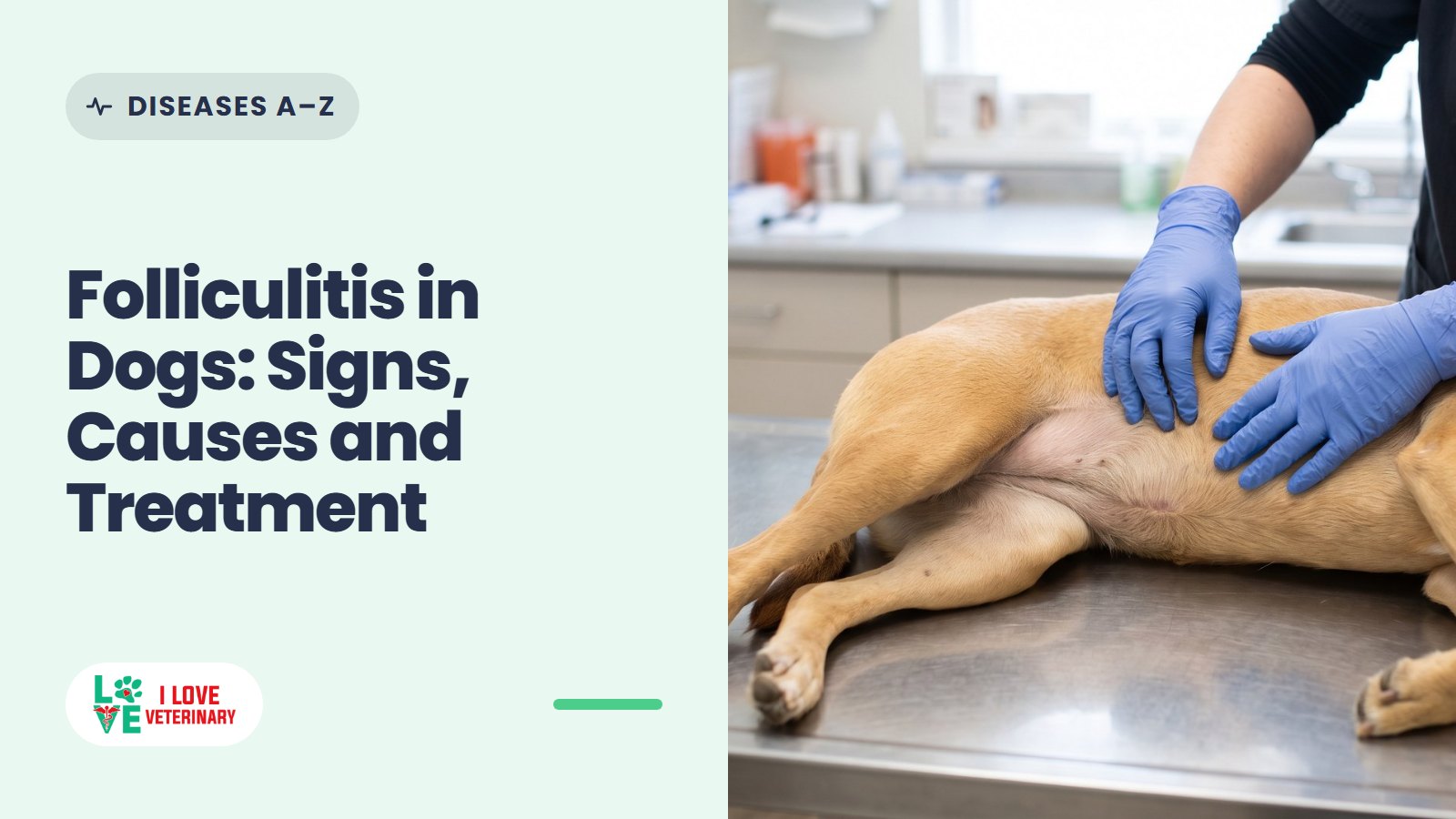
Folliculitis in dogs is inflammation of the hair follicles, the tiny pockets in the skin that each hair grows from. It usually shows up as small red bumps, pimples, scabs and patchy hair loss, most often on the belly and trunk. In most dogs the cause is a bacterial infection with Staphylococcus pseudintermedius, a staph that normally lives on dog skin and only causes trouble when something else has weakened the skin.
That "something else" is the key to the whole condition. Folliculitis is almost always a sign of another problem, most often allergies, so treating the bumps without finding the trigger tends to buy a few quiet weeks before they come back. Your veterinarian's job is to confirm the infection and track down the cause. Yours is to spot the signs early and see the plan through.

What Folliculitis Looks Like in Dogs
The signs start small. You may first notice a dull, coarser coat, more shedding or flaky skin, and short-coated dogs can show little raised tufts of hair where bumps sit underneath. In long coats the same bumps hide well, so you may only find mats or crusted tufts when you brush.
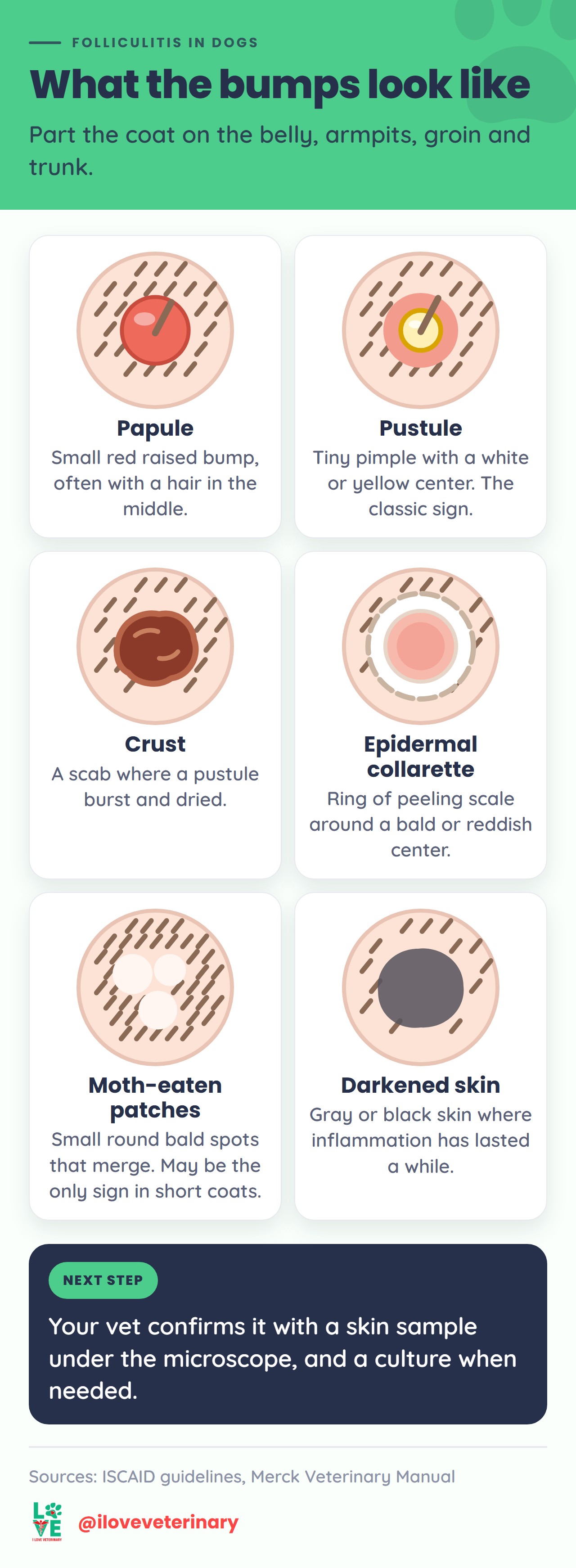
Part the hair over the belly, armpits, groin and trunk, where folliculitis most often appears, and look for these lesions:
Lesion | What you see | What it means |
|---|---|---|
Papule | A small, red, raised bump, often with a hair in the middle | Inflammation inside or around one follicle |
Pustule | A tiny pimple with a white or yellow center | Pus in the follicle; the classic sign of bacterial folliculitis |
Crust | A scab, thin or thick, where pustules have burst and dried | An older lesion; the pustule stage may already be gone |
Epidermal collarette | A ring of peeling scale with a bald or reddish center | What is left when a pustule opens and spreads outward; sometimes the most obvious sign |
"Moth-eaten" patches | Many small, round bald spots that merge, giving a nibbled look | In some short-coated dogs, the only sign you will see |
Darkened skin | Gray or black skin in areas that have been inflamed for a while | Long-standing inflammation (hyperpigmentation) |
The ISCAID guidelines on canine superficial bacterial folliculitis describe all of these, including the moth-eaten hair loss that can be the only clue in short-coated breeds. If the terms are new, our veterinary dermatology terms guide explains more of them.
Itch varies. Some dogs scratch and lick a lot, which damages the skin further and lets more bacteria in. Others barely seem bothered. Blackheads can appear too. Resist the urge to squeeze bumps, pimples or blackheads: squeezing causes more inflammation and can spread the infection.
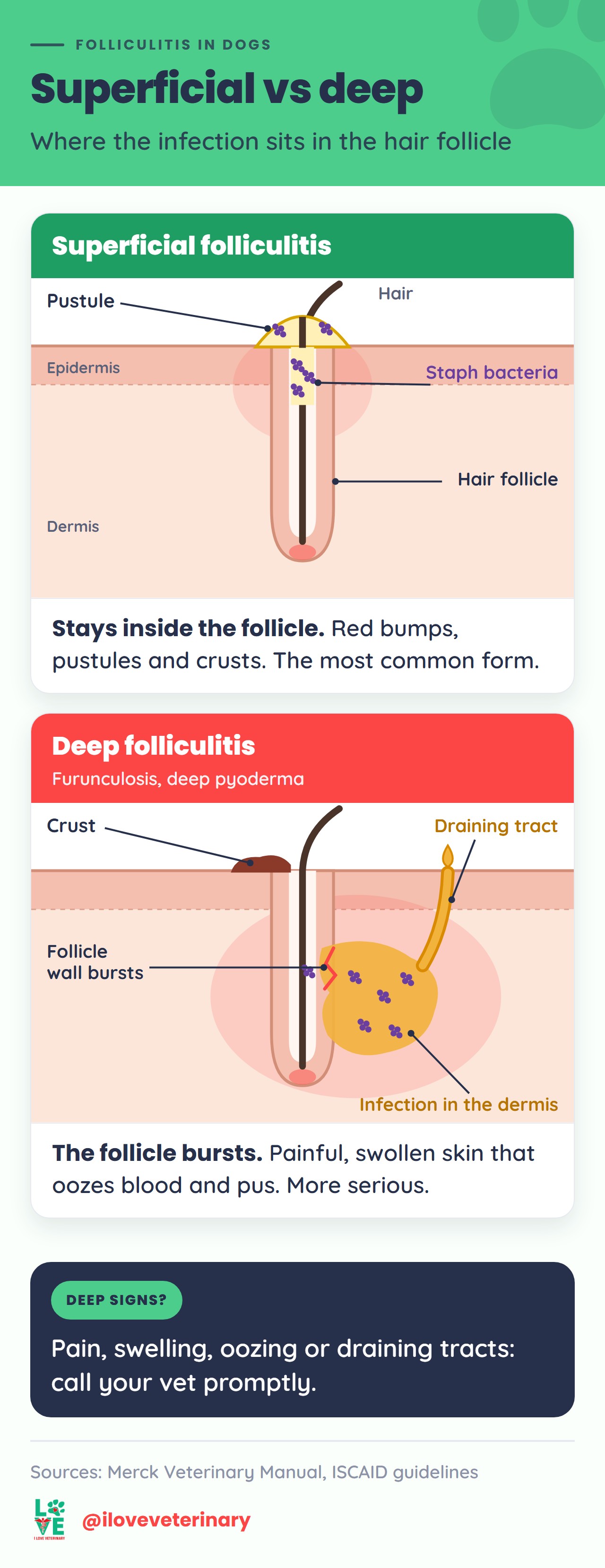
Superficial vs deep folliculitis
Most cases are superficial: the infection stays inside the follicle, in the upper skin. Vets call this superficial bacterial folliculitis, a form of pyoderma (bacterial skin infection).
When an infected follicle ruptures, bacteria and debris spill into the deeper skin (the dermis). That is furunculosis, or deep pyoderma, and it looks and feels different. The Merck Veterinary Manual lists its hallmarks as pain, crusting, odor and oozing blood and pus. Swelling, open sores and draining tracts (small channels that leak fluid) can follow. Deep infection is more serious, so call your vet promptly rather than waiting for a routine slot.
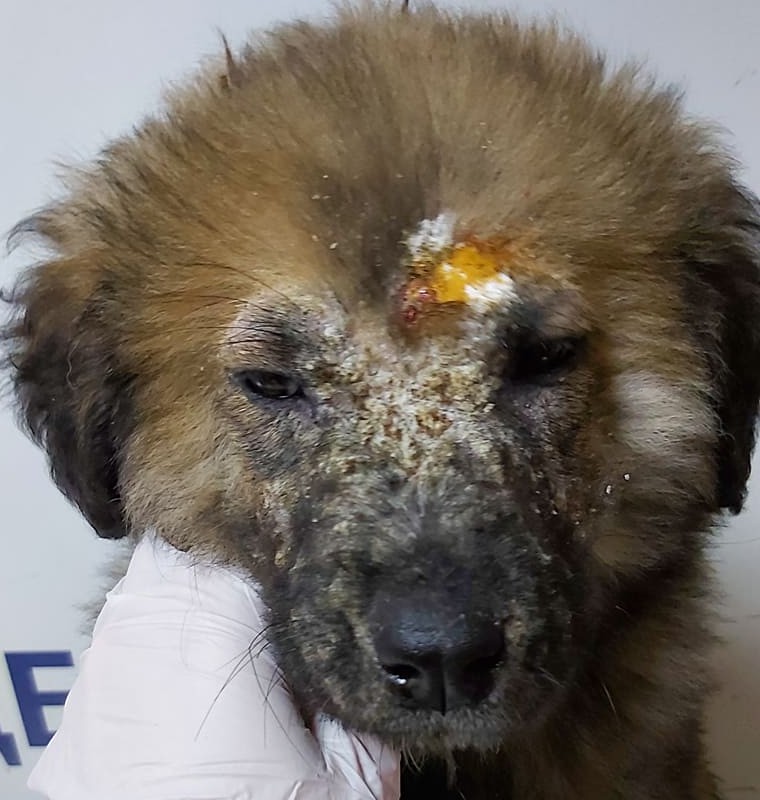
Muzzle folliculitis (chin acne)
Some young, short-coated dogs get bumps and redness under the chin and on the lips. According to Veterinary Partner, play and chin rubbing break short hairs and push them under the skin, which sets off inflammation and infection. It can also become deep (muzzle furunculosis). Because itching dogs rub their faces, your vet may also look for allergies.
What Causes Folliculitis in Dogs?
A healthy follicle doesn't get infected out of the blue. Staph bacteria live on every dog's skin, and they take over a follicle when the skin barrier is damaged or the local defenses are down. The usual triggers fall into a few groups.
Allergies. The most common culprit. Atopic dermatitis (environmental allergies), food allergy and flea allergy dermatitis all inflame the skin and make dogs scratch, and the infection follows. Allergies can't be cured, so these dogs often have repeat bouts unless the allergy is managed.
Parasites. Fleas, sarcoptic mange mites and other biting parasites cause itch and skin damage. Demodex mites live in the hair follicles themselves, and when they multiply out of control (demodicosis), bacterial infection on top is common.
Hormonal (endocrine) disease. Hypothyroidism and Cushing's disease weaken the skin and its defenses. Suspect one of these when skin infections keep returning, especially if you also notice increased thirst or urination, a pot-bellied look, slow healing, thinning hair on both sides of the body, or a dog that seeks out warm spots. Mention every one of these to your vet, even if they seem unrelated to the skin.
Fungal infections. Ringworm (dermatophytosis) infects hair and follicles and can look a lot like bacterial folliculitis. Rarely, a deep fungal disease such as blastomycosis causes skin lesions as part of a body-wide illness.
Other causes. Skin that doesn't renew itself normally (keratinization disorders), immune-mediated and autoimmune skin disease such as pemphigus foliaceus, problems with the follicles themselves, and poor grooming that leaves matted, damp coat against the skin can all set the stage.
How Vets Diagnose Folliculitis
Most of the time a vet can recognize folliculitis from the lesions. The harder part is confirming the infection, ruling out look-alikes and finding the cause. Expect questions about when it started, itch, diet, flea and tick prevention, other pets, recent medicines and any past skin infections. Then come some or all of these tests.
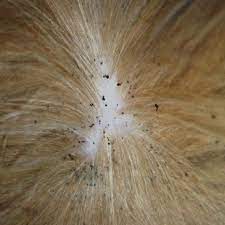
- Flea check. A look and a comb through the coat for fleas and flea dirt, the black specks fleas leave behind.
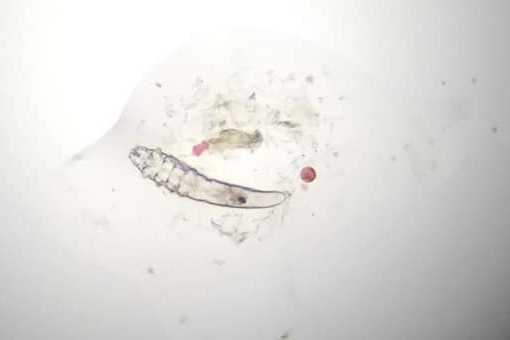
- Skin scrapings. Gentle scrapes of the skin, looked at under the microscope for mites. A negative deep scraping rules out Demodex in most dogs; sarcoptic mites are harder to find.
- Skin cytology. A sample from a pustule, a crust or a piece of tape pressed on the skin, stained and examined under the microscope. Finding round bacteria (cocci) with inflammatory cells supports bacterial infection, and cytology also shows yeast, which often rides along. Guidelines strongly encourage it.
- Tests for ringworm. A fungal culture, an ultraviolet Wood's lamp check or a look at plucked hairs under the microscope.
- Bacterial culture and sensitivity. A sample from an intact pustule or a collarette is grown in a lab to identify the bacteria and show which antibiotics will work. It is never the wrong choice, and it matters most when resistance is possible: the infection isn't improving as expected, new spots keep appearing during treatment, cytology shows rod-shaped bacteria, the dog or another pet at home has had a resistant infection, the dog has had repeated antibiotic courses, or the infection keeps coming back.
- Blood and hormone tests. When the history or exam points to hypothyroidism or Cushing's disease.
- Biopsy. A small piece of skin sent to a pathologist, used when the picture is unusual, autoimmune disease is suspected or treatment isn't working.
How Folliculitis Is Treated
Treatment has three parts, and all three matter: kill the infection on the skin, use antibiotics only when they are really needed, and control whatever caused it. Your veterinarian chooses the products, the plan and how long it runs.
Topical therapy comes first
For superficial folliculitis, your vet will often start with a medicated shampoo or spray rather than pills. These products (shampoos, sprays, rinses, gels and creams with antiseptic ingredients) treat the infection right where it lives. Chlorhexidine is the best-studied antiseptic for dog skin, and other ingredients are also used. The Merck Veterinary Manual says topical therapy should be the only treatment for nearly all superficial pyoderma, and the 2025 update of the ISCAID pyoderma guidelines makes it the first choice whenever the dog and owner can manage it. It works, and it avoids feeding antibiotic resistance.
A medicated bath is real treatment, not a stopgap. Follow your vet's instructions exactly, including how often to bathe and how long to leave the lather on, because those details are what make it work.
Antibiotics when they are needed
Antibiotic pills are kept for deep infection (furunculosis) and for stubborn superficial cases, where topical care isn't possible or hasn't worked. Your vet picks the drug, ideally after a culture shows which antibiotics will work. The rise of methicillin-resistant Staphylococcus pseudintermedius (MRSP), a staph that shrugs off many common antibiotics, is the reason vets are careful here, and previous antibiotic use is a known risk factor for it. More on why in our post on antibiotics in veterinary medicine.
If your dog is prescribed antibiotics, give every dose for as long as your vet says, even when the skin looks better within days. The infection lingers after the bumps fade, and stopping early is one of the main reasons folliculitis comes back. Go to the recheck: that is where your vet decides whether treatment can stop.
Treating the underlying cause
This is the part that keeps folliculitis from returning. Depending on what the tests found, it may mean year-round flea and parasite control, an allergy plan (which can include a strict diet trial), mite treatment, or long-term treatment and monitoring for hypothyroidism or Cushing's disease. Some causes take time and a few tries to pin down, which is frustrating, but it is how lasting control happens.
What You Can Do While You Wait for the Appointment
There is no home remedy that treats folliculitis, and some products irritate the skin or hide the lesions your vet needs to see. While you wait:
- Don't squeeze, pick or scrub the bumps.
- Don't use leftover antibiotics, steroids or creams from another pet or a past illness, or human products. They can mask the signs, spoil a culture and feed resistance.
- Gently stop your dog licking or chewing the area, and ask your vet whether a cone (Elizabethan collar) makes sense.
- Note when the bumps started, where they are, whether your dog is itchy, and any change in thirst, urination, appetite or energy.
- Take a clear photo in good light so you can show how it changes.
When to Call the Vet
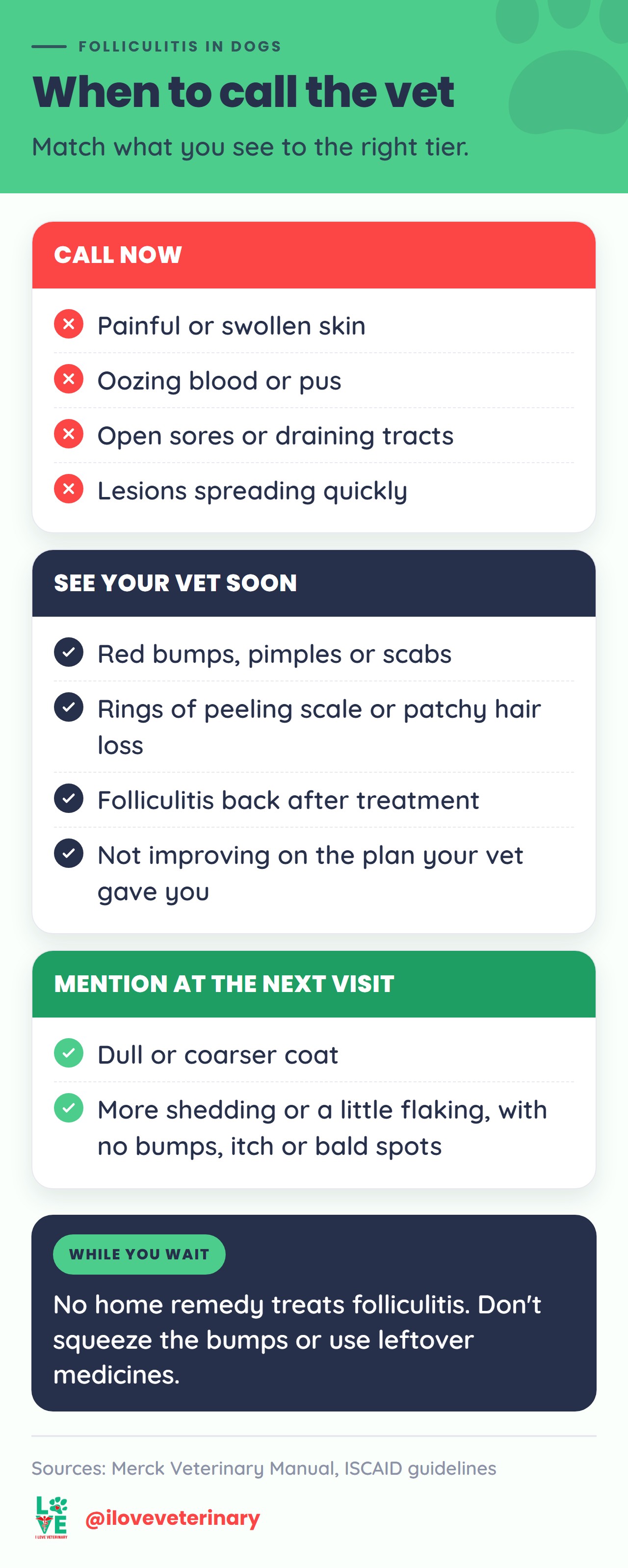
- Mention it at your next visit: a dull or coarser coat, more shedding or a bit of flaking with no bumps, itch or bald spots.
- See your vet soon (within a few days): any red bumps, pimples, scabs, rings of peeling scale or patchy hair loss; folliculitis that comes back after treatment; skin that isn't improving on the plan your vet gave you.
- Call now: painful or swollen skin, oozing blood or pus, open sores or draining tracts, or lesions spreading quickly. These point to deep infection.
Preventing Flare-Ups
You can't prevent every case, but you can stack the odds:
- Control the trigger. Stick with the allergy plan, diet or medicine your vet set up, and keep follow-up visits.
- Use parasite prevention your vet recommends, all year. Our guide to external parasite prevention for dogs covers the options to discuss.
- Check the coat. Regular brushing lets you spot bumps early and keeps mats and damp hair off the skin.
- Don't stop treatment early, and avoid steroid shots or tablets during an active skin infection unless your vet specifically wants them. Steroids can make the skin look better while the infection hangs on, and they are a known reason infections recur.
Breeds Prone to Folliculitis
Any dog can get folliculitis. Breeds prone to allergies, the most common trigger, see more of it. The Merck Veterinary Manual lists these as predisposed to allergies:
- Boston Terriers
- Boxers
- Chinese Shar-Peis
- Dalmatians
- Golden Retrievers
- Labrador Retrievers
- Lhasa Apsos
- Scottish Terriers
- Shih Tzus
- West Highland White Terriers
- Wirehaired Fox Terriers

Mixed breeds can be allergic too. Young short-coated dogs are the typical patients for muzzle folliculitis, and any dog with hypothyroidism or Cushing's disease is at higher risk whatever its breed.
Is Folliculitis in Dogs Contagious to People?
Folliculitis itself isn't contagious, but some of its causes are:
- Ringworm spreads from pets to people and other animals.
- Sarcoptic mange mites can infest people and other pets that have contact with an affected dog, according to the Merck Veterinary Manual.
- Fleas bite people as well as pets.
- *Staphylococcus pseudintermedius*, the usual folliculitis bacterium, only rarely infects people. The ISCAID guidelines note that the risk is higher with methicillin-resistant strains (MRSP).
Wash your hands after handling the skin or giving baths, and ask your vet about extra precautions if your dog has ringworm, mange or a resistant staph infection, especially if anyone at home has a weak immune system.
Outlook for Dogs With Folliculitis
The outlook is good when the cause is found and controlled. Superficial infections usually clear with the right treatment. Dogs with allergies, endocrine disease or resistant bacteria may need longer treatment and lifelong management of the underlying problem to keep flare-ups rare.
Folliculitis FAQs
How long does folliculitis in dogs take to clear up?
It depends on the cause and the depth of the infection. Your vet sets the treatment length and rechecks the skin before stopping. Deep infections take longer than superficial ones.
Why did my vet prescribe a shampoo instead of antibiotics?
Because for superficial folliculitis, medicated topical therapy alone is now the preferred first approach when it is practical. It treats the infection where it lives and helps prevent antibiotic resistance.
Why does my dog's folliculitis keep coming back?
Usually because the underlying cause, most often an allergy, isn't fully controlled yet. Stopping treatment too early and steroid use can also play a part. Repeat infections are the time to ask about a culture and a deeper look for the cause.
Is folliculitis contagious to other dogs?
Folliculitis itself isn't, but fleas, sarcoptic mange and ringworm spread between pets. If one of those is the cause, your vet will advise on treating or protecting the other animals at home.
For a wider look at what else causes bumps, bald spots and itch, see our guide to common dog skin problems with pictures. And don't split hairs over a few bumps: a quick vet check now is far easier than chasing a flare that has had months to spread.
Originally written by Dr. Kaylee Ferreira. Updated by the I Love Veterinary editorial team.
Sources
- Merck Veterinary Manual: Pyoderma in Dogs and Cats (professional version)
- Merck Veterinary Manual: Pyoderma in Dogs (pet owner version)
- Hillier A, et al. Guidelines for the diagnosis and antimicrobial therapy of canine superficial bacterial folliculitis (ISCAID). Veterinary Dermatology, 2014
- Loeffler A, et al. Antimicrobial use guidelines for canine pyoderma (ISCAID). Veterinary Dermatology, 2025
- Worms & Germs Blog: ISCAID canine pyoderma guidelines update, superficial bacterial folliculitis
- Merck Veterinary Manual: Allergies in Dogs
- Merck Veterinary Manual: Mite Infestation (Mange, Acariasis, Scabies) in Dogs
- Veterinary Partner (VIN): Muzzle Folliculitis and Furunculosis (Chin Acne, Muzzle Acne) in Dogs
- CDC: Ringworm causes
This article is for general information and is not a substitute for advice from your veterinarian.