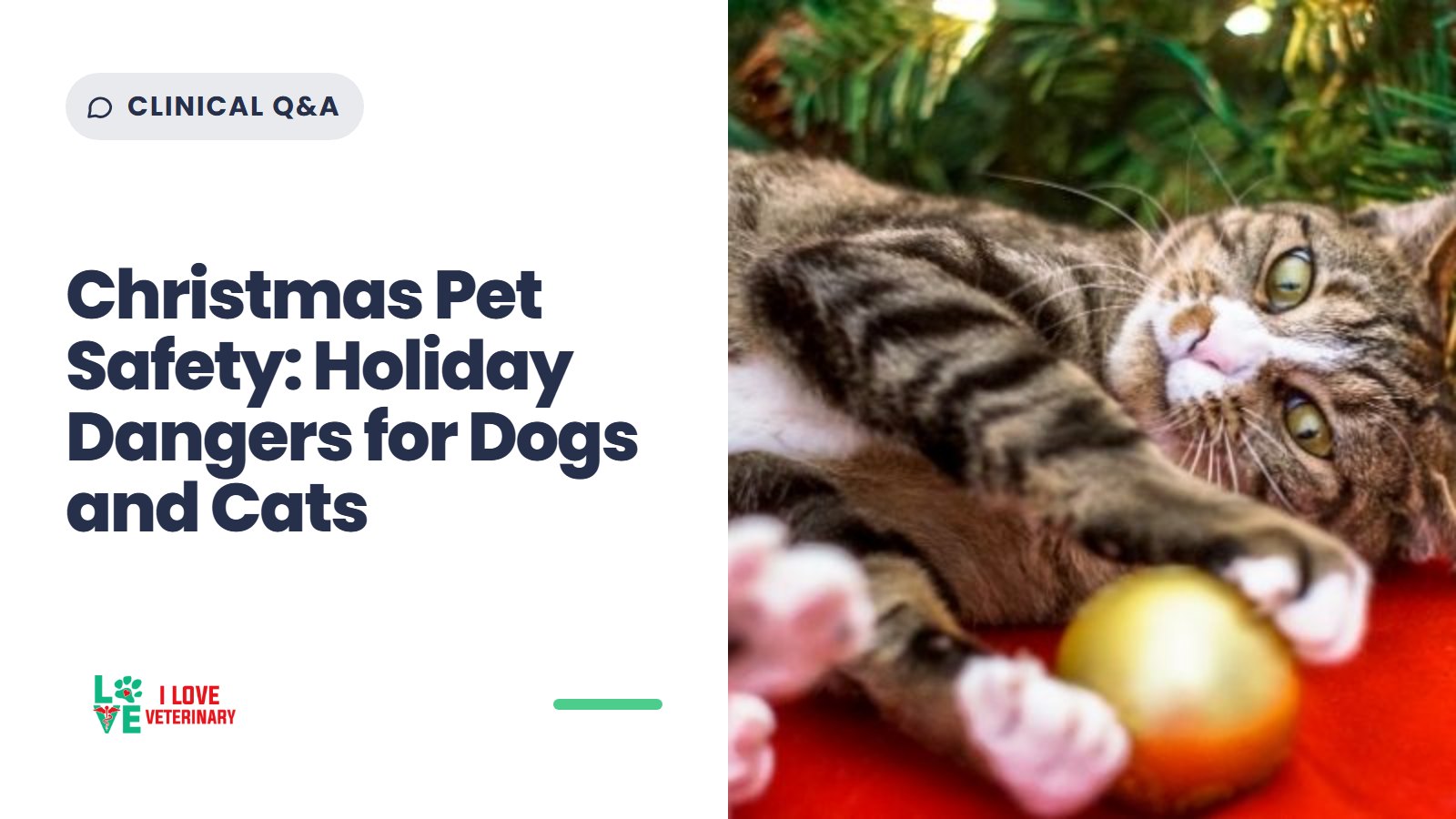
Most Christmas emergencies in pets come from a short list: tinsel, ribbon and string swallowed by cats, lilies in a holiday bouquet, chocolate, sugar-free sweets with xylitol, grapes and raisins, fatty scraps and bones from the table, and chewed batteries. The tree itself and the poinsettia, the two things people tend to worry about most, are usually the smaller problems.
You don't need to cancel Christmas. Set up the tree and the table with that list in mind, and save your vet, a poison line and your nearest 24-hour emergency clinic in your phone before the holidays start.
The holiday emergencies: call your vet now
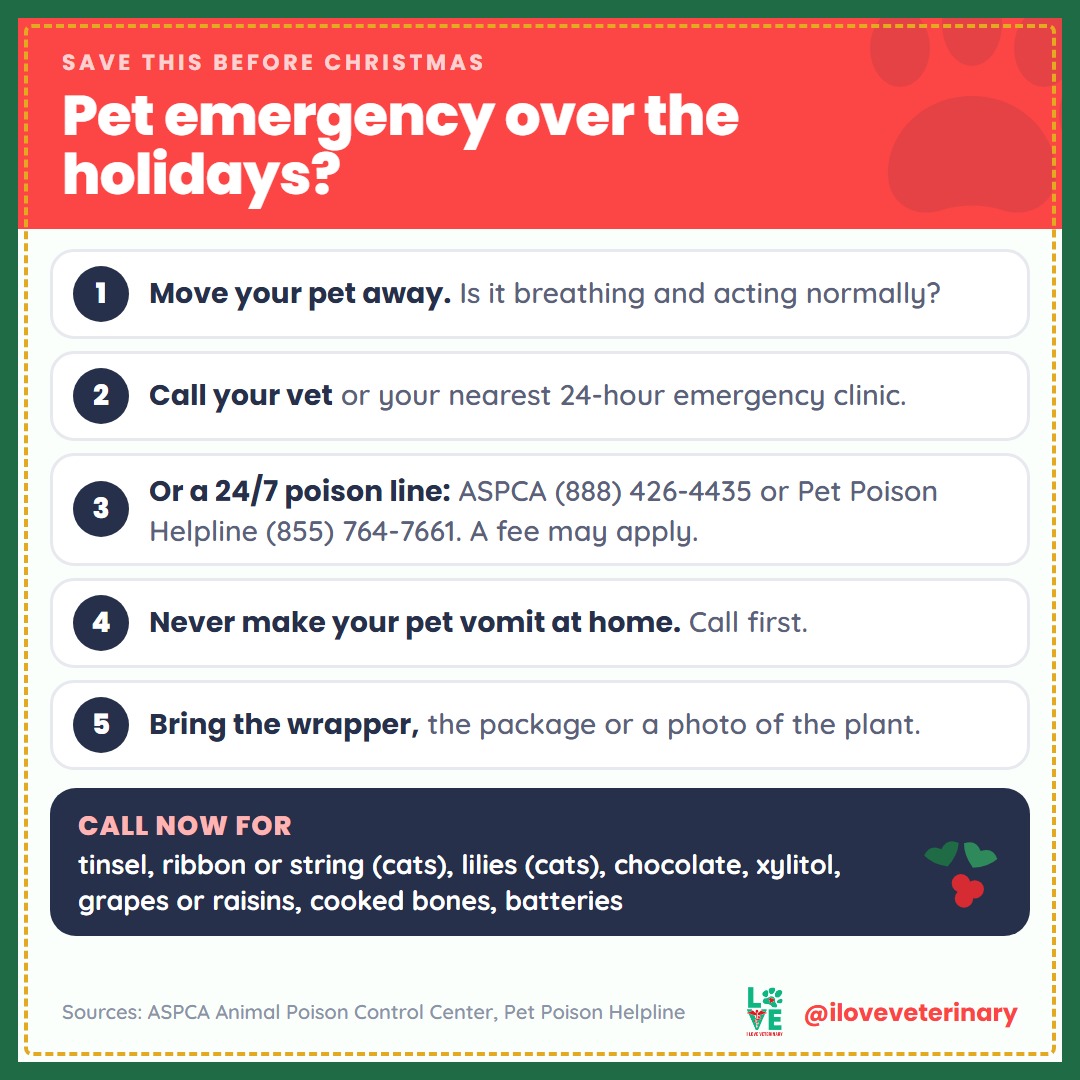
If your pet gets into any of these, call your veterinarian or an animal poison control line right away, even if your pet seems fine. Some of them cause no signs for hours.
Hazard | Why it is serious | Who is most at risk |
|---|---|---|
Tinsel, ribbon, string, gift ties | Can bunch up the intestines and cut through them | Cats |
Lilies (true lilies and daylilies), including pollen and vase water | Can cause fatal kidney failure; treatment needs to start early | Cats |
Chocolate, especially dark or baking chocolate | Vomiting, racing heart, tremors, seizures | Dogs and cats |
Xylitol (birch sugar) in sugar-free gum, mints, candy, baked goods, some peanut butters | Sudden drop in blood sugar; liver damage | Dogs |
Grapes, raisins (fruitcake, stollen, raisin bread) | Kidney damage, even from small amounts | Dogs |
Cooked bones, turkey skin and fat | Blockage or tears in the gut; pancreatitis | Dogs |
Batteries (gadgets, ornaments, flameless candles) | Burns to the mouth, esophagus and stomach | Dogs and cats |
Alcohol, raw yeast dough | Vomiting, wobbliness, breathing trouble; dough keeps rising in the stomach | Dogs and cats |
If your pet ate something it shouldn't have
- Move your pet away from the item and check that it is breathing and acting normally.
- Call your veterinarian, your nearest 24-hour emergency clinic, or an animal poison line: ASPCA Animal Poison Control Center, (888) 426-4435, or Pet Poison Helpline, (855) 764-7661. Both answer 24/7; a consultation fee may apply.
- Never make your pet vomit at home. Call first, and do only what the vet or poison line tells you.
- Bring the wrapper, the package or a photo of the plant with you.
Your regular clinic may be closed on Christmas Day or New Year's Day. Look up your nearest 24-hour emergency hospital now, while it is a calm search and not a panicked one.
How to pet-proof your Christmas tree (for cats and dogs)
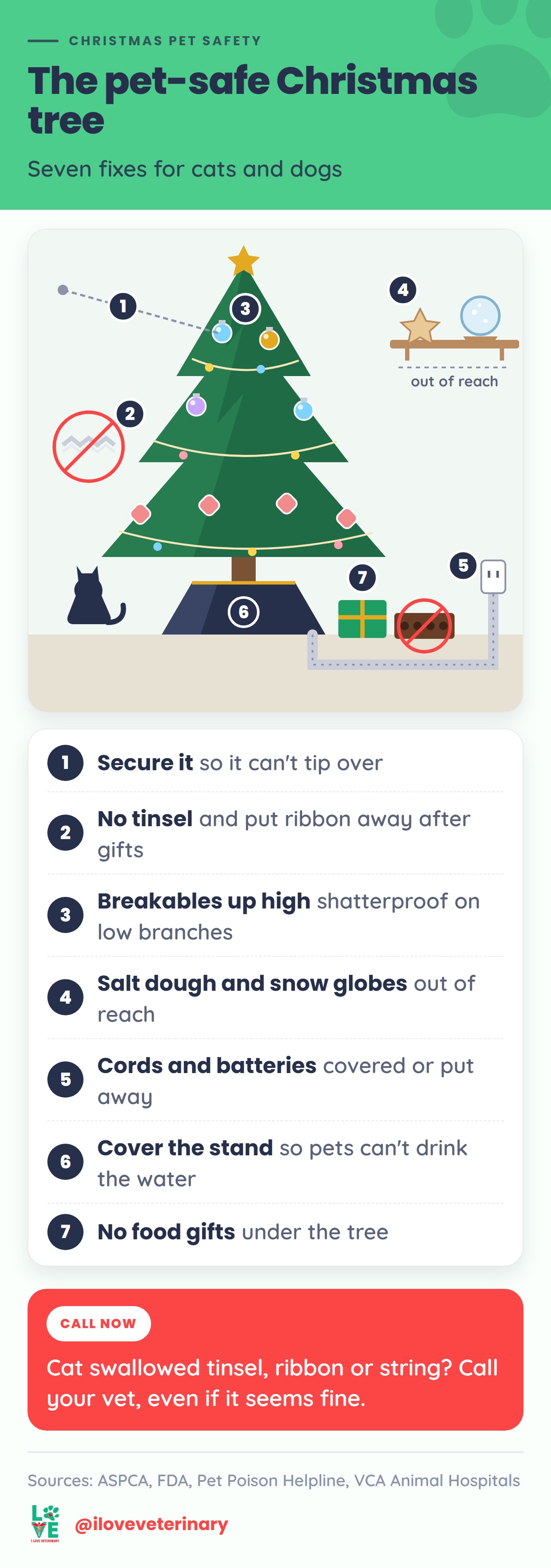
A tree is a climbing frame for a young cat and a giant chew toy for a puppy. Seven steps cover the main hazards:
- Secure the tree so it can't tip. A climbing cat or a dog that bumps it can bring the whole thing down. Use a sturdy stand and anchor the tree firmly.
- Skip the tinsel. For cats it is a serious hazard (more on why below). Put ribbon and gift ties away once presents are open.
- Hang breakables high. Glass ornaments shatter into shards that cut mouths and paws and can damage the gut if swallowed. Keep the lower branches for shatterproof decorations.
- Keep salt-dough ornaments and snow globes out of reach. Salt dough holds enough salt to cause a dangerous salt imbalance, even when dry. Snow globes can contain ethylene glycol, the same sweet-tasting poison found in antifreeze, so clean up a broken globe right away.
- Tuck away cords and batteries. A chewed light cord can give a serious electric shock. A battery punctured by teeth can burn the mouth and esophagus.
- Cover the tree stand. Pets love drinking from it. Water with freshness additives (usually fertilizer, sugar and sometimes a fungicide) isn't very toxic once diluted, but it, or stale water that has grown bacteria, can cause vomiting and diarrhea. A stand cover or tree skirt that blocks access solves it.
- Keep food gifts out from under the tree. Dogs will find the box of chocolates or the fruitcake long before Christmas morning.
Candles belong in the same plan. A wagging tail or a curious cat can knock one over and cause burns or a fire, so never leave a lit candle alone in a room with pets.

Are Christmas trees toxic to dogs and cats?
Not really. Pet Poison Helpline says Christmas trees themselves are not generally a concern; most of its tree calls are about pets drinking the stand water. Needles are a different issue: they are sharp, and swallowed needles can lodge in the intestines. If your pet keeps chewing the branches, block access or keep the tree in a room you can close.
Why tinsel and ribbon are so dangerous for cats
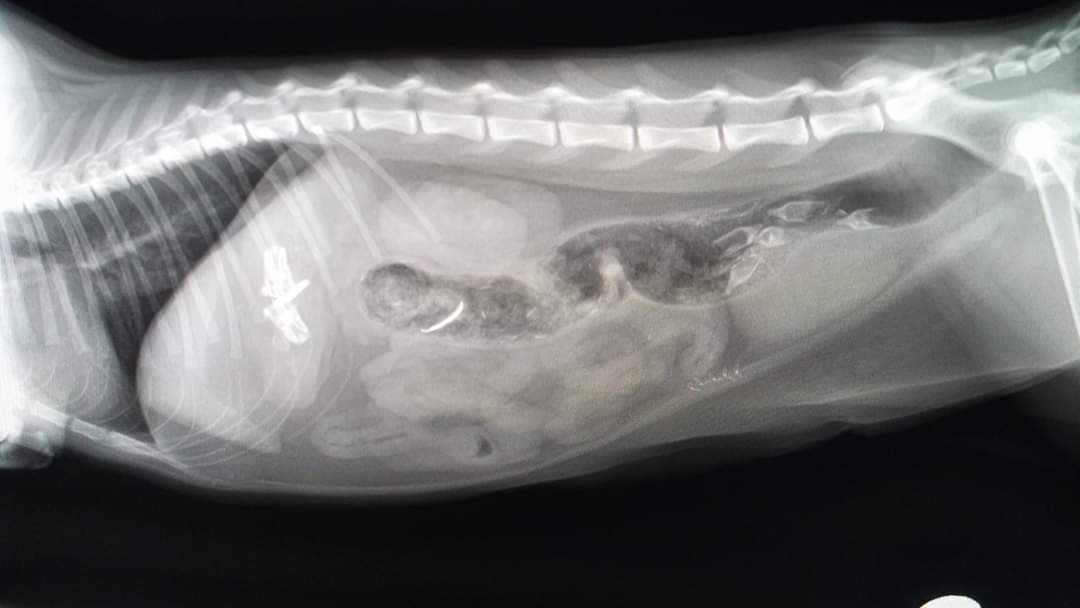
Vets call this a linear foreign body: something long and thin, like tinsel, ribbon, yarn or string. One end often gets caught, under the tongue or in the stomach, while the rest trails into the intestines. The gut keeps trying to move it along and bunches up on it like fabric on a drawstring. The string can then saw through the intestinal wall and leak gut contents into the belly, which is life-threatening.
Watch for vomiting, not eating, lethargy, hiding, or a belly that seems painful. Diagnosis usually needs X-rays or an ultrasound, and the treatment is surgery. If you saw your cat swallow tinsel, ribbon or string, call your vet before any signs appear.

Holiday food: what's dangerous on the Christmas table
The safest Christmas dinner for your pet is its usual food; the ASPCA recommends keeping a pet's diet the same over the holidays. Our list of human foods that are toxic to dogs covers the rest of the year. These are the ones that turn up at Christmas:
- Chocolate. Theobromine and caffeine make it toxic to dogs and cats, and the darker the chocolate, the higher the risk. Watch for vomiting, diarrhea, restlessness, panting, extra thirst and urination, a racing heart, tremors and seizures. Signs can take hours to show.
- Xylitol. Also sold as birch sugar, it hides in sugar-free gum, mints, candy, some peanut butters, baked goods and toothpaste. In dogs it can bring on weakness, staggering, collapse and seizures, so check labels on anything sugar-free.
- Grapes and raisins. Fruitcake, stollen and raisin bread all count, and wrapped food gifts are a common way dogs find them.
- Onions, garlic, leeks and chives. Stuffing, gravy and many side dishes carry them. They can upset the stomach and damage red blood cells, leading to anemia. Cats are even more sensitive than dogs.
- Fatty scraps. Turkey or chicken skin, fat trimmings, gravy and buttery leftovers can trigger pancreatitis, a painful and potentially life-threatening inflammation of the pancreas. In dogs, watch for vomiting, belly pain, restlessness, shaking, diarrhea, fever and weakness. In cats the signs are vaguer, such as eating less.
- Bones. Cooked bones splinter and can get stuck in the esophagus, stomach or intestines. Signs of a blockage can show up hours or days later. If your dog already raided the carcass, here is what to do if your dog ate chicken bones.
- Macadamia nuts. In dogs they can cause weakness, vomiting, tremors and overheating.
- Raw yeast dough and alcohol. Dough keeps rising in the stomach and the yeast makes alcohol as it ferments. Eggnog, rum cake and unattended glasses can cause vomiting, poor coordination, breathing problems and, in severe cases, coma. Keep drinks off low tables.
Two easy wins: ask guests not to feed your pets from the table, and take the trash out (or lock the lid) once the meal is done. A turkey carcass in an open bin is an invitation.
Christmas plants: poinsettia, lilies, holly, mistletoe and amaryllis
Is poinsettia poisonous to cats and dogs?
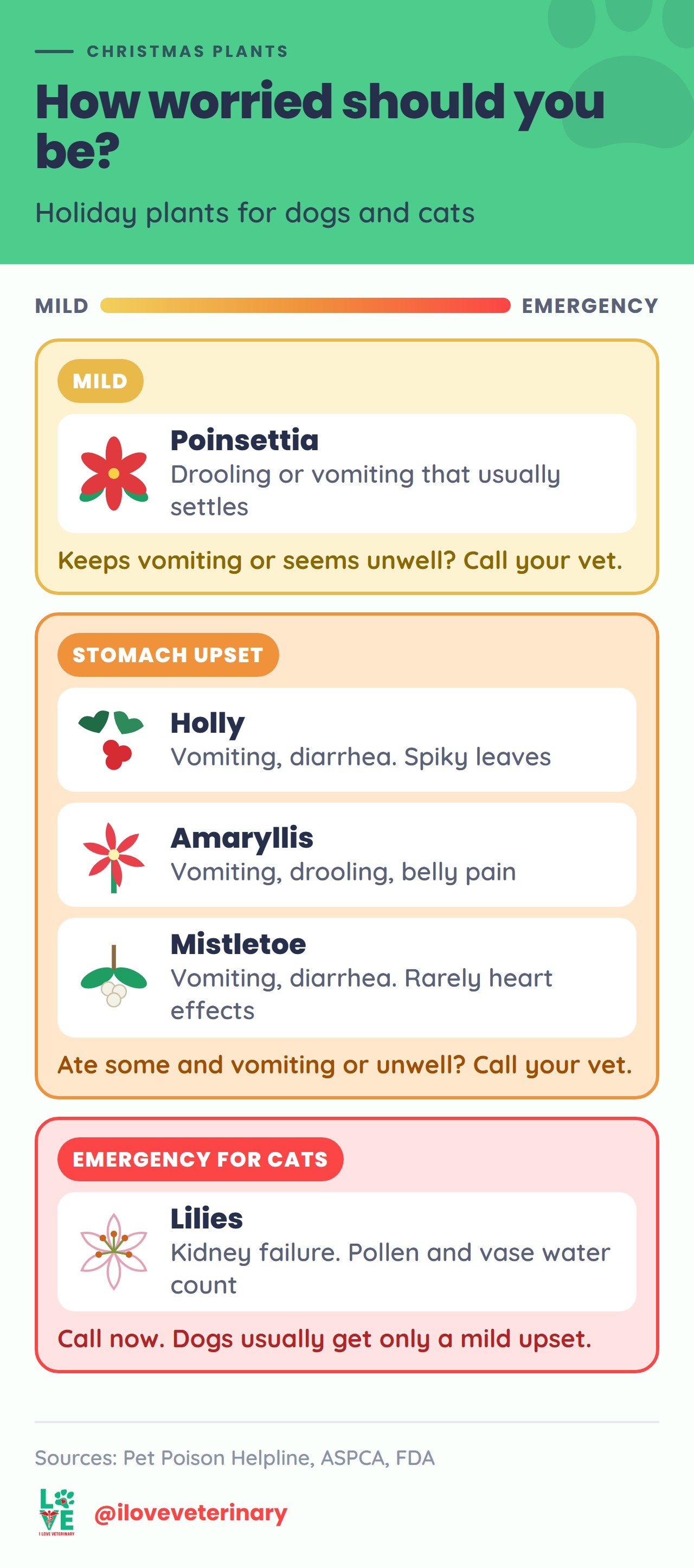
Only mildly. Pet Poison Helpline calls poinsettia poisoning "greatly exaggerated." The milky sap can cause drooling, vomiting and occasionally diarrhea if eaten, and redness or itching on the skin, and the signs usually settle on their own. Keep it out of reach anyway, and call your vet if your pet keeps vomiting or seems unwell.

Lilies are the real danger for cats
Lilies turn up in holiday bouquets and flower deliveries, and for cats they are an emergency. Every part of a true lily (Lilium species, such as Easter, stargazer and tiger lilies) or a daylily is toxic to cats: leaves, petals, pollen and even the vase water. According to the FDA, licking a little pollen off the fur can be enough to cause kidney failure.
The timeline is what makes lilies so dangerous. Early signs (being less active, drooling, vomiting, not eating) start within about 12 hours, and kidney failure can follow within 24 to 72 hours. If treatment starts 18 hours or more after the cat ate the lily, the kidney damage is usually permanent. If your cat may have touched a lily, call now and take the plant or a photo of it to the clinic. Dogs that eat lilies usually get only a mild stomach upset.
The simplest rule for cat homes: no lilies in the house. Our guide to plants toxic to cats lists safer choices.
Holly, mistletoe and amaryllis
- Holly: vomiting, diarrhea and lethargy. The leaves and berries are low in toxicity, but the spiky leaves can hurt a mouth.
- Mistletoe: vomiting and diarrhea. Rarely, larger amounts can cause a slow heart rate, low blood pressure and breathing trouble, so hang it well out of reach.
- Amaryllis: vomiting, drooling, diarrhea, belly pain, not eating, lethargy and sometimes tremors.
If your pet ate any of these and is vomiting or seems unwell, call your vet. Artificial greenery gives you the look without the risk.
Guests and open doors
A full house brings bags, noise and doors that keep opening.
- Guests' medicines sit in handbags, coat pockets and suitcases at floor level. Ask visitors to keep bags in a closed room or cabinet, and keep your own medicines locked away too.
- A quiet room helps anxious pets. Set up a room or crate with water, a bed and toys, and let your pet retreat there when the house gets loud. A pet that is hiding should be left in peace.
- Doors become an escape route. Ask guests to close doors and gates behind them, and check that your dog or cat wears a collar with an up-to-date ID tag and that the microchip details are current.
New Year's Eve fireworks
Loud fireworks scare many pets, and a frightened pet can bolt through an open door or gate. A plan for December 31:
- Exercise your dog in daylight, then keep pets indoors before the fireworks start.
- Give them a quiet, safe place: an interior room, a closet or a crate, with toys and a long-lasting chew.
- Close windows and curtains, and turn on music or the TV to soften the bangs.
- Don't punish a scared pet or force it out of hiding.
- Pick up party poppers and confetti strings afterward; for cats they work like tinsel.
If your pet has struggled with fireworks or thunderstorms before, ask your vet early about anxiety medicine.
Winter extras
Ice melt can cause a dangerous salt imbalance if a pet licks or eats it, so choose a pet-friendly product. And when it is freezing out, keep pets inside.
Sources
- ASPCA: Holiday Safety Tips
- ASPCA Animal Poison Control Center
- ASPCA: People Foods to Avoid Feeding Your Pets
- ASPCA: Holly, Mistletoe "American" and Amaryllis
- FDA: Keep Your Dogs and Cats Safe From Holiday Hazards
- FDA: Lovely Lilies and Curious Cats: A Dangerous Combination
- Pet Poison Helpline: Holiday Pet Safety
- Pet Poison Helpline: Poinsettia
- Pet Poison Helpline: Lilies
- Pet Poison Helpline: What to do in an emergency
- Pet Poison Helpline: Expert Tips for Keeping Your Pet Safe (fireworks)
- VCA Animal Hospitals: Linear Foreign Body in Cats
- Humane World for Animals: Holiday safety tips for pets
This article is for general information and is not a substitute for advice from your veterinarian.