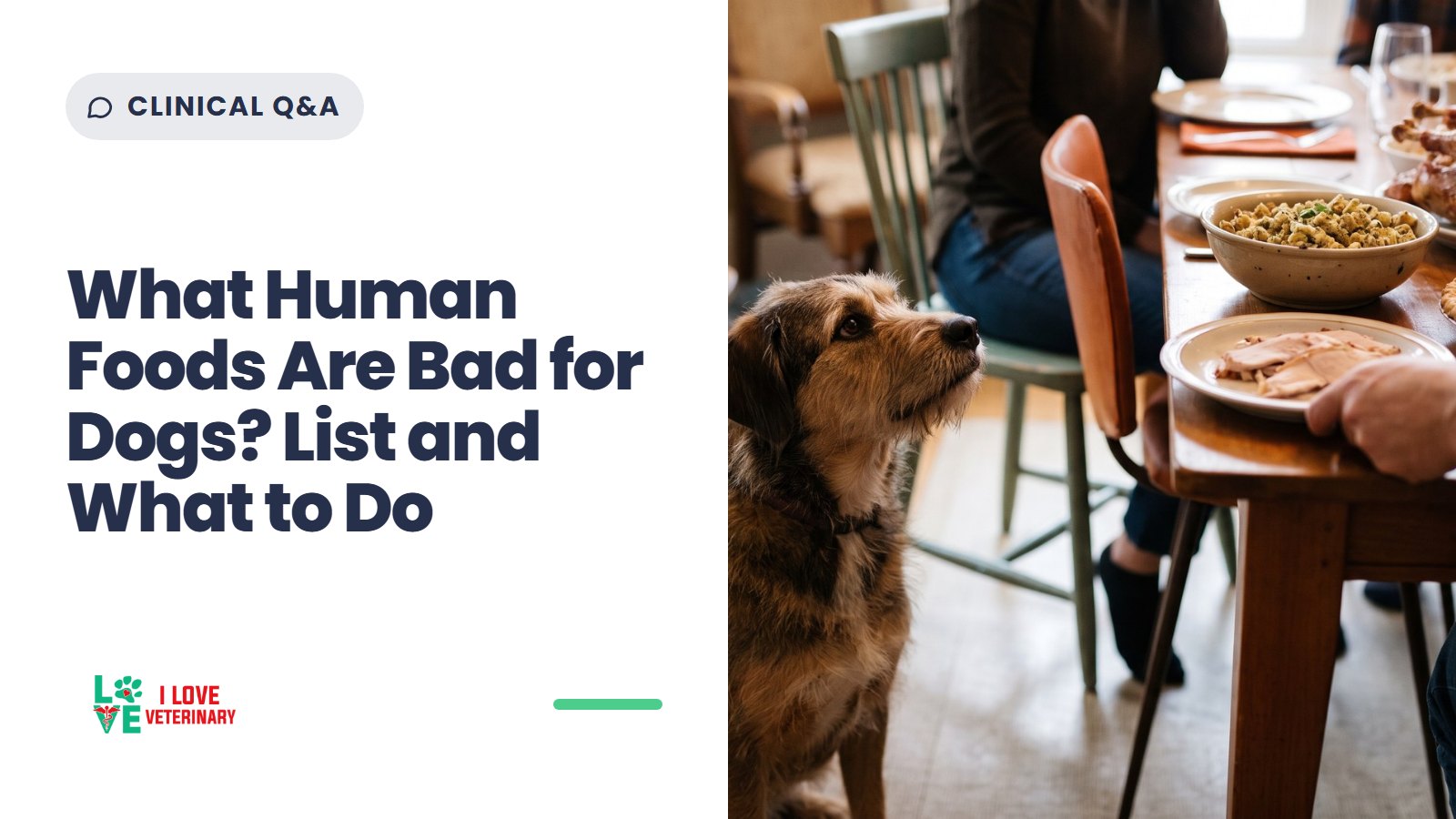
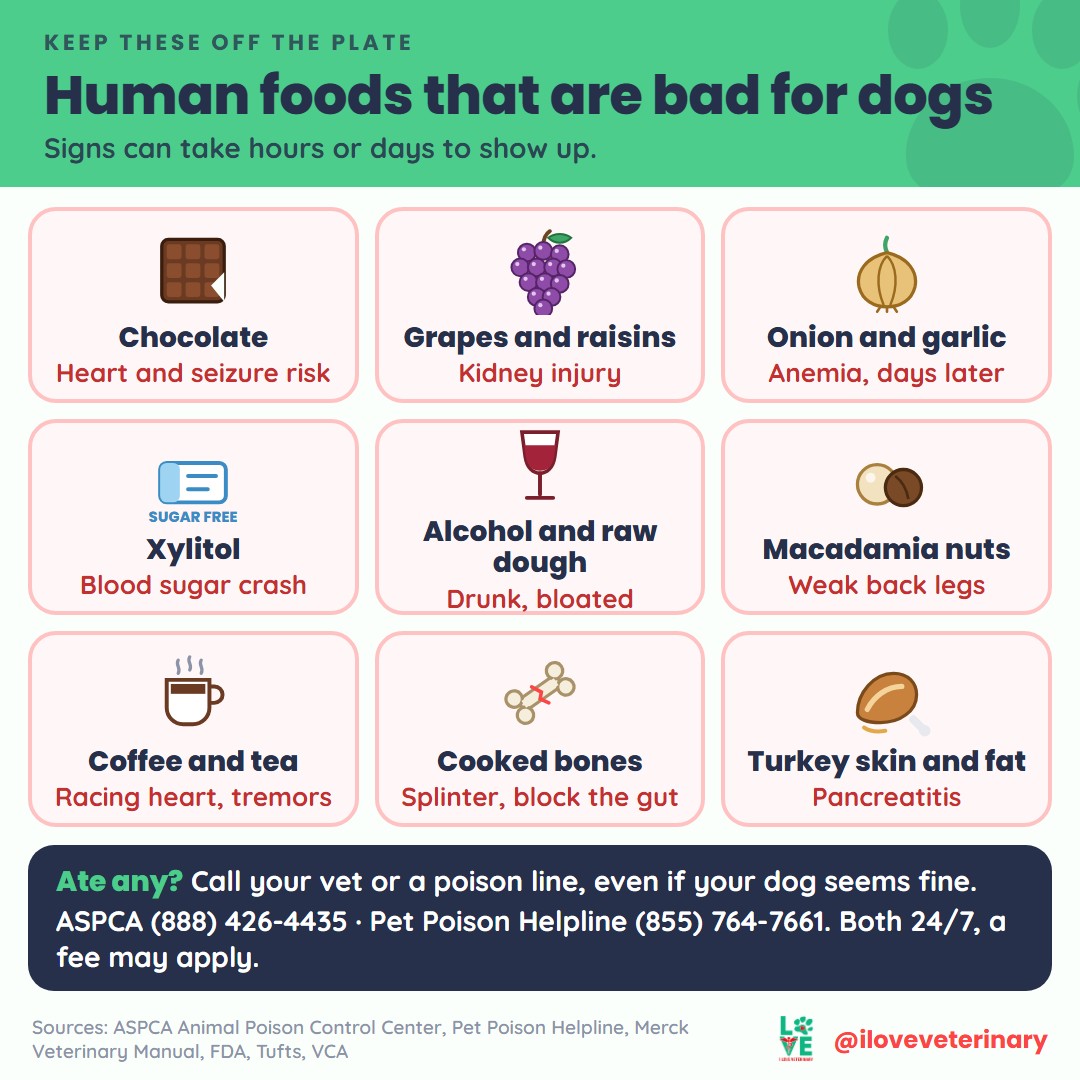
The human foods most likely to poison a dog are chocolate, grapes and raisins, onions and garlic, xylitol (a sugar substitute), alcohol and raw yeast dough, macadamia nuts and caffeine. Cooked bones and fatty scraps like turkey skin round out the list, and they turn up most around Thanksgiving and Christmas.
If your dog ate any of these, call your vet or a poison line for advice, even if your dog seems fine. They judge whether the amount matters, so you don't have to guess. The ASPCA Animal Poison Control Center is at (888) 426-4435 and Pet Poison Helpline is at (855) 764-7661. Both lines are open 24/7, and a fee may apply.
What Human Foods Are Bad for Dogs?
The short version, one line per food. Each gets its own section below.
Food | Where it hides | What it can do |
|---|---|---|
Chocolate | Candy, brownies, cocoa powder, baking chocolate, holiday desserts | Vomiting, a racing heart, tremors, seizures |
Grapes, raisins, currants | Fruitcake, trail mix, cookies, snack bars | Kidney injury |
Onions, garlic, chives, leeks | Stuffing, gravy, soups, onion or garlic powder | Red blood cell damage (anemia), often days later |
Xylitol (birch sugar) | Sugar-free gum, mints, candy, baked goods, some peanut butters | Sudden low blood sugar, liver damage |
Alcohol and raw yeast dough | Drinks left within reach, liquor-filled candy, rising bread or pizza dough | Wobbling, vomiting, a bloated stomach, alcohol poisoning |
Macadamia nuts | Cookies, nut mixes, baked goods | Weakness, wobbly back legs, vomiting, fever |
Caffeine | Coffee grounds and beans, tea bags, energy drinks, supplements | Restlessness, a racing heart, tremors |
Cooked bones | Turkey carcass, chicken wings, rib bones, the trash | Choking, a blocked or injured gut |
Fatty trimmings | Turkey skin, drippings, gravy, butter, bacon | Pancreatitis (vomiting, belly pain) |
Why Each One Is a Problem
Chocolate
Chocolate contains methylxanthines, a group of stimulants that includes theobromine and caffeine. Dogs can get vomiting, diarrhea, panting, extra thirst and peeing, hyperactivity, an abnormal heart rhythm, tremors and seizures, and severe cases can be fatal.
The darker the chocolate, the bigger the risk. White chocolate has the least methylxanthine, while baking chocolate and cocoa powder have the most, according to the ASPCA. Milk chocolate sits in between, so it is not "safe" either. How sick a dog gets depends on the type and amount of chocolate and the dog's size and health, which is exactly why a poison line wants those details. Chocolate is the food the ASPCA poison center gets more calls about than any other.
Watch for chocolate desserts that hide a second problem: they can also contain raisins, macadamia nuts or xylitol.
Grapes, Raisins and Currants
Grapes and their dried forms (raisins, sultanas, currants) can injure a dog's kidneys. Signs usually start with vomiting or diarrhea, followed by kidney injury. Nobody knows for sure which part of the grape causes the damage: tartaric acid is the leading theory, but it is still a theory.
Pet Poison Helpline warns that even small amounts are a serious concern for dogs. Fruitcake, raisin bread, cookies and trail mix are easy to forget. Our full guide to grapes and raisins for dogs covers what happens next.
Onions, Garlic, Chives and Leeks
The onion family (Allium) damages red blood cells, which can lead to anemia, a shortage of the red cells that carry oxygen. Raw, cooked, dried and powdered forms all count, and concentrated forms like onion powder and dry soup mix are the most common culprits in Merck's description. Cats are even more sensitive than dogs, and Japanese breeds such as Akitas and Shiba Inus are more sensitive than other dogs.
The tricky part is timing. Red blood cell damage usually shows up a few days after the meal, as weakness, pale gums, tiredness, faster breathing or red to brown urine. At the holidays, the usual source is the stuffing and the gravy. More in our guide to onions and dogs.
Xylitol (Birch Sugar)
Xylitol is a sugar alcohol used to sweeten sugar-free products. In dogs it triggers a rush of insulin that can drop blood sugar dangerously low (hypoglycemia), and some dogs go on to develop liver damage. Signs include vomiting, weakness, wobbling, collapse and seizures. They can start within about 30 minutes, or hours later with some gums.
It hides in sugar-free gum and mints, candy, sugar-free or low-sugar baked goods, some peanut and nut butters, toothpaste, chewable vitamins and protein bars. The FDA notes it may be listed as birch sugar or wood sugar. If peanut butter is your dog's favorite treat or pill pocket, check the label every time you buy a new jar. Our xylitol toxicity guide has more.
Alcohol and Raw Yeast Dough
Dogs can get into alcohol by lapping up a drink left on a coffee table, eating liquor-filled chocolates, or eating raw bread dough. Alcohol causes vomiting, wobbling, sleepiness, trouble breathing and tremors, and severe cases can lead to coma or death.
Raw yeast dough is a double hazard. In a dog's warm stomach it keeps rising, which can stretch the stomach painfully (bloat) and occasionally lead to it twisting, a life-threatening emergency called GDV. The yeast also makes alcohol, so the dog can become drunk at the same time. Pizza dough and sourdough starter count too. See our post on bloat in dogs for the warning signs.
Macadamia Nuts
Macadamia nuts can cause weakness (often in the back legs), wobbling, vomiting, tremors, a raised body temperature and depression, usually within 12 hours. The reason is still unknown. Merck describes it as typically nonfatal, and the ASPCA says recovery is expected within 24 to 72 hours, but a dog that suddenly can't stand is frightening and needs a vet. Their high fat can also trigger pancreatitis in some dogs.
Caffeine
Coffee, tea, soda, energy drinks and caffeine supplements all contain the same kind of stimulant as chocolate, and dogs are more sensitive to it than people. The concentrated sources worry Pet Poison Helpline most: coffee grounds or beans, tea bags, energy shots and pre-workout or diet supplements can cause serious toxicity. Expect restlessness, vomiting, a racing heart and tremors.
Cooked Bones
Cooked bones are a holiday classic for the wrong reasons. Turkey and chicken bones can splinter, and bones can cause choking, injure the gut or block it, which sometimes needs surgery. WSAVA, the global veterinary association, advises that bones, raw or cooked, can be very dangerous for dogs.
Carcasses in the trash are the usual route. If it has already happened, read what to do if your dog ate chicken bones and call your vet.
Fatty Trimmings, Turkey Skin and Gravy
Turkey skin, drippings, gravy, butter, bacon and meat scraps are not poisons, but a rich, fatty meal can set off pancreatitis, a painful inflammation of the pancreas. Signs include vomiting, diarrhea, not eating and belly pain, and Pet Poison Helpline notes they can show up as late as 4 days after the meal. Miniature Schnauzers are especially prone, though any dog can be affected.
Pet Poison Helpline lists fatty foods among the common calls it gets in Thanksgiving week.
Foods With a Worse Reputation Than They Deserve
A few foods often appear on "toxic" lists without much support for dogs specifically. They are still not great snacks.
- Avocado. The ASPCA says avocado is mainly a problem for birds, rabbits, horses, donkeys and ruminants such as goats and sheep, not dogs. Keep it away from your dog anyway: Pet Poison Helpline warns that a swallowed avocado pit can block the intestines.
- Tomatoes. The ASPCA lists the green parts of the tomato plant (leaves and stems) as toxic, but ripe tomato fruit is non-toxic. Details in can dogs eat tomatoes.
- Milk and dairy. Dogs don't make much lactase, the enzyme that digests milk sugar, so dairy can cause diarrhea or an upset stomach.
- Other nuts. Almonds, pecans and walnuts are high in fat and can cause vomiting, diarrhea and sometimes pancreatitis.
The Holiday Table: Thanksgiving and Christmas Dangers
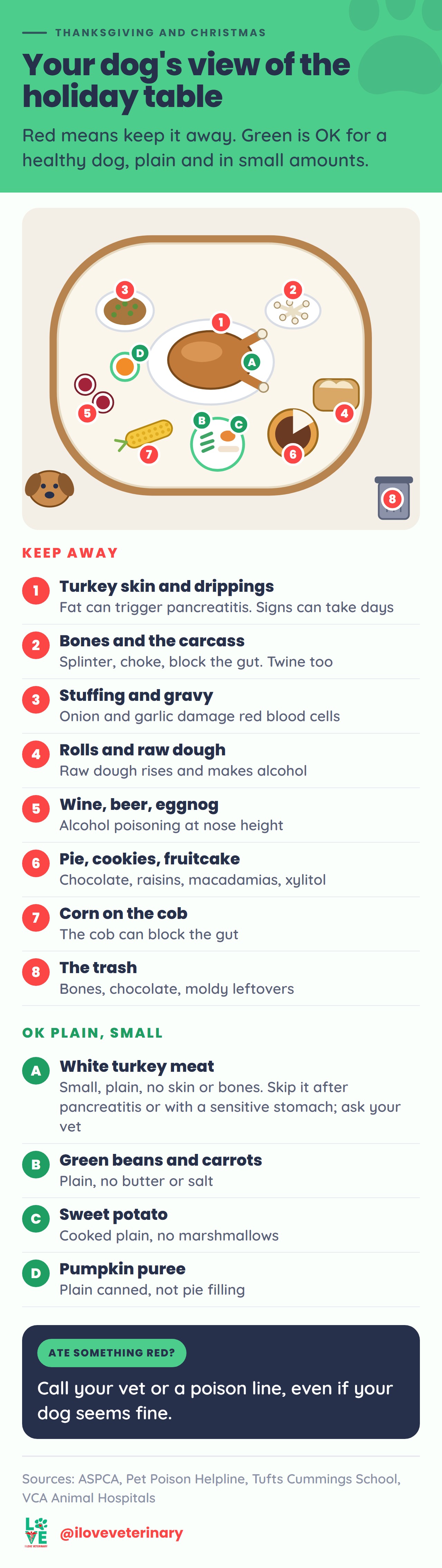
Thanksgiving (the fourth Thursday in November) and Christmas put more of the foods above within reach than any other time of year, along with guests who don't know the house rules. Walk the table the way your dog sees it:
- Turkey: skin, fat and drippings (pancreatitis), bones and the carcass (splinters, blockage), and the cooking twine or skewers (Tufts lists these as a hazard too).
- Stuffing and gravy: onions, garlic, chives and leeks, plus fat. Bouillon cubes used for gravy and stock are very salty.
- Turkey brine: dogs will lap up the salty liquid, which Pet Poison Helpline warns can cause salt poisoning.
- Rolls and bread: baked bread is not toxic, but raw dough rising on the counter is.
- Desserts: chocolate, raisins in fruitcake and cookies, macadamia nuts, and xylitol in sugar-free or low-sugar bakes. Batter with raw eggs can carry salmonella.
- Drinks: wine, beer, eggnog with liquor, cocktails at nose height on a coffee table.
- Corn on the cob: the cob can block the gut.
- The trash: bones, chocolate, onions and moldy leftovers all end up there. Moldy food can contain toxins that cause tremors and seizures.
A few habits help more than any list:
- Keep your dog's meals the same as any other day, the ASPCA advises.
- Take out the trash often or lock the lid.
- Tell guests, and especially children, not to slip food under the table.
- Don't leave plates or glasses unattended, even on the counter.
- Ask guests to keep medications in a closed cabinet, not in a bag on the floor.
- Give your dog a quiet room and a food puzzle during the meal.
For decorations, plants and the rest of the season, see our guide to keeping your pet safe at Christmas.
Signs Your Dog Ate Something Toxic
Call your vet right away if your dog shows any of these after getting into human food:
- Vomiting or diarrhea, especially if repeated
- Restlessness, panting, a racing heart
- Wobbling, weakness, trouble standing or walking
- Tremors or seizures
- A swollen, tight or painful belly
- Pale gums, weakness or red to brown urine
- Not eating, belly pain, hunching
- Collapse or not responding
Two warnings. First, a dog that looks fine may not stay fine: xylitol can act within 30 minutes or hours later, onion damage usually shows after a few days, and pancreatitis can appear up to 4 days after a fatty meal. Second, these signs overlap with many other illnesses, so they can't tell you which food is to blame. Your vet can.
My Dog Ate Something on This List: What to Do
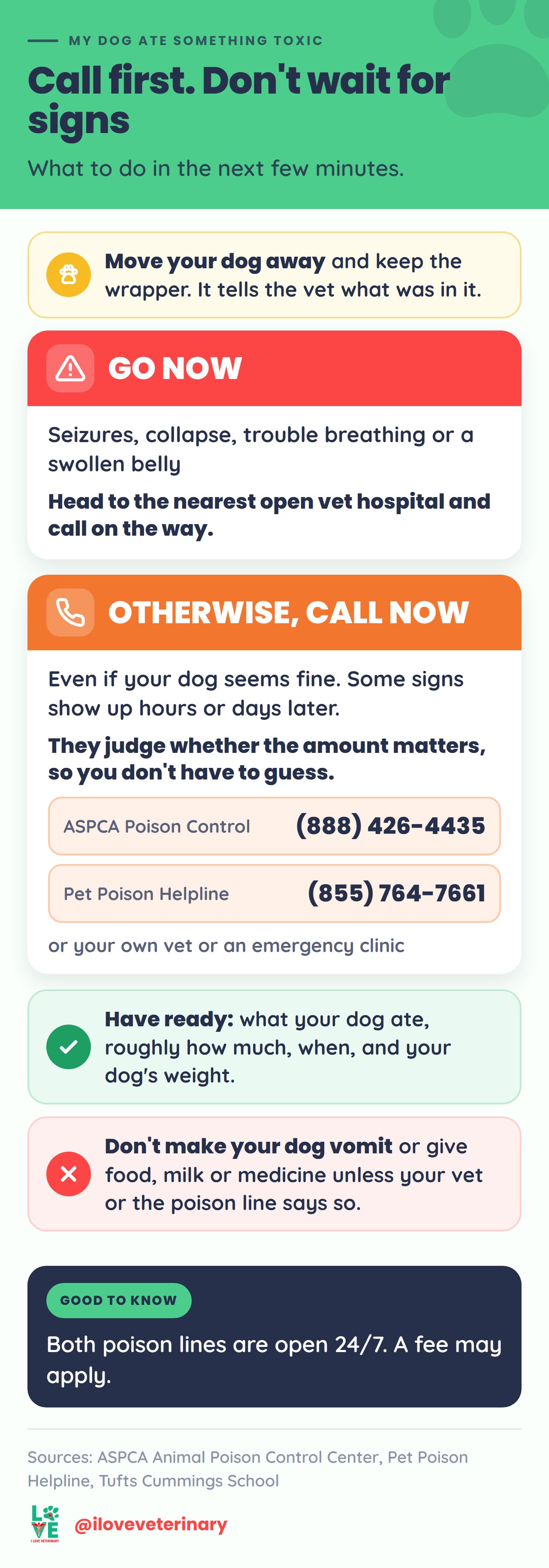
- Move your dog away and pick up what's left. Keep the wrapper or packaging; it tells the vet the type of chocolate, whether there was xylitol, and so on.
- Emergency signs? Go now. Seizures, collapse, trouble breathing or a swollen belly mean the nearest open vet hospital, calling on the way.
- Otherwise, call now, even if your dog seems fine. Your vet, an emergency clinic, the ASPCA Animal Poison Control Center at (888) 426-4435 or Pet Poison Helpline at (855) 764-7661 will judge whether the amount matters. Both lines are open 24/7; a fee may apply.
- Have the details ready: what your dog ate, roughly how much, when, and your dog's weight and any health problems.
- Don't try to make your dog vomit at home. Do it only if your vet or the poison line tells you to. Salt and other home tricks can cause poisoning of their own, as the ASPCA explains.
- Don't give food, milk or medicine unless your vet tells you to.
Time matters. Getting to a vet while the food is still in the stomach gives your vet more options.
Human Foods Dogs Can Have in Small, Plain Amounts
You don't have to leave your dog out of the holidays. If your dog is healthy, these are reasonable in small amounts, cooked or served plain, with no butter, salt, onion, garlic, gravy or sugar:
- Turkey: a little cooked white meat, boneless and skinless. Skip it entirely for dogs that have had pancreatitis or have a sensitive stomach, and ask your vet
- Green beans, raw or cooked
- Carrots, raw or cooked
- Pumpkin puree (plain canned pumpkin, not pie filling)
- Sweet potato, cooked plain (no marshmallows or brown sugar)
- Apple: plain slices, no core or seeds
- Peanut butter that does not contain xylitol
- Brussels sprouts, plain and cooked, a few at a time. See can dogs eat Brussels sprouts for the details
Keep all treats, human food included, to less than 10% of your dog's daily calories, as both WSAVA and Tufts' veterinary nutritionists advise.
If your dog has had pancreatitis, has a sensitive stomach, eats a prescription diet or has any other medical condition, ask your vet before sharing anything. Sudden diet changes alone can cause vomiting or loose stools in some dogs.
Work in a clinic, shelter or classroom? Our Human Foods That Are Toxic to Pets poster from the I Love Veterinary shop is made for clinic and classroom walls.
Sources
- ASPCA Animal Poison Control Center: People Foods to Avoid Feeding Your Pets
- ASPCA: Thanksgiving Safety Tips
- ASPCA: Holiday Safety Tips
- ASPCA: Is It Ever Safe to Induce Vomiting?
- ASPCA: Toxic and Non-toxic Plants, Tomato Plant
- ASPCA: Toxic and Non-toxic Plants, Avocado
- Pet Poison Helpline: Avocado
- Pet Poison Helpline: Thanksgiving Pet Safety Tips
- Pet Poison Helpline: Chocolate
- Pet Poison Helpline: Grapes
- Pet Poison Helpline: Garlic
- Pet Poison Helpline: Xylitol
- Pet Poison Helpline: Macadamia Nuts
- Pet Poison Helpline: Bread Dough
- Pet Poison Helpline: Alcohol
- Pet Poison Helpline: Caffeine
- Pet Poison Helpline: If Your Pet Eats Something Toxic, Hold the Hydrogen Peroxide
- Merck Veterinary Manual: Chocolate Toxicosis in Animals
- Merck Veterinary Manual: Garlic and Onion (Allium spp) Toxicosis in Animals
- Merck Veterinary Manual: Xylitol Toxicosis in Dogs
- Merck Veterinary Manual: Macadamia Nut Toxicosis in Dogs
- Merck Veterinary Manual: Bread Dough Toxicosis in Animals
- Merck Veterinary Manual: Pancreatitis in Dogs and Cats
- FDA: Paws Off Xylitol; It's Dangerous for Dogs
- WSAVA: Feeding Treats to Your Dog
- Tufts Cummings School of Veterinary Medicine: Healthy Eating for Dogs During This Time of Year
- Tufts Cummings School of Veterinary Medicine: 9 Human Foods That Are Toxic to Dogs
- VCA Animal Hospitals: Thanksgiving Foods Safe for Dogs
- VCA Animal Hospitals: Pancreatitis in Dogs
This article is for general information and is not a substitute for advice from your veterinarian.