If your pet is in trouble right now, go to a vet or emergency clinic first and say out loud what you can spend. If it can wait a day, work through these in order: your own vet, a humane society or shelter clinic, a veterinary school, a payment plan, then charities that pay vets directly.
Money trouble happens to good pet owners. A job loss or one bad week can turn a routine problem into an impossible one. Help does exist, and knowing where to ask first saves time when you have none to spare.

Is it an emergency? Don't wait on money for these
Some problems can't wait for a grant application. Get your pet to a vet now for any of these signs, drawn from the emergency lists of the American Animal Hospital Association (AAHA) and the Merck Veterinary Manual:
- Trouble breathing, gasping, or blue, gray or white gums
- Heavy bleeding, or an injury like being hit by a car
- A seizure
- Collapse, extreme weakness, or not responding to you normally
- Straining but not able to pee or poop
- Severe or constant pain
AAHA's list of pet emergency signs also includes a suddenly swollen belly. In a dog, a swollen belly with retching that brings nothing up can be bloat. Cornell's canine health center notes that the twisted form, GDV, is fatal without treatment, so go straight in.
If you think your pet ate something toxic, like a medication or one of the human foods that are toxic to dogs, call your vet, an emergency clinic or ASPCA Animal Poison Control at (888) 426-4435. It answers 24 hours a day, every day of the year. A consultation fee may apply.
Call the clinic on your way. Describe the signs, say what you can afford, and ask what they can do first. A vet can tell you whether it truly can't wait and may point you to lower-cost help nearby.
Start with your own vet
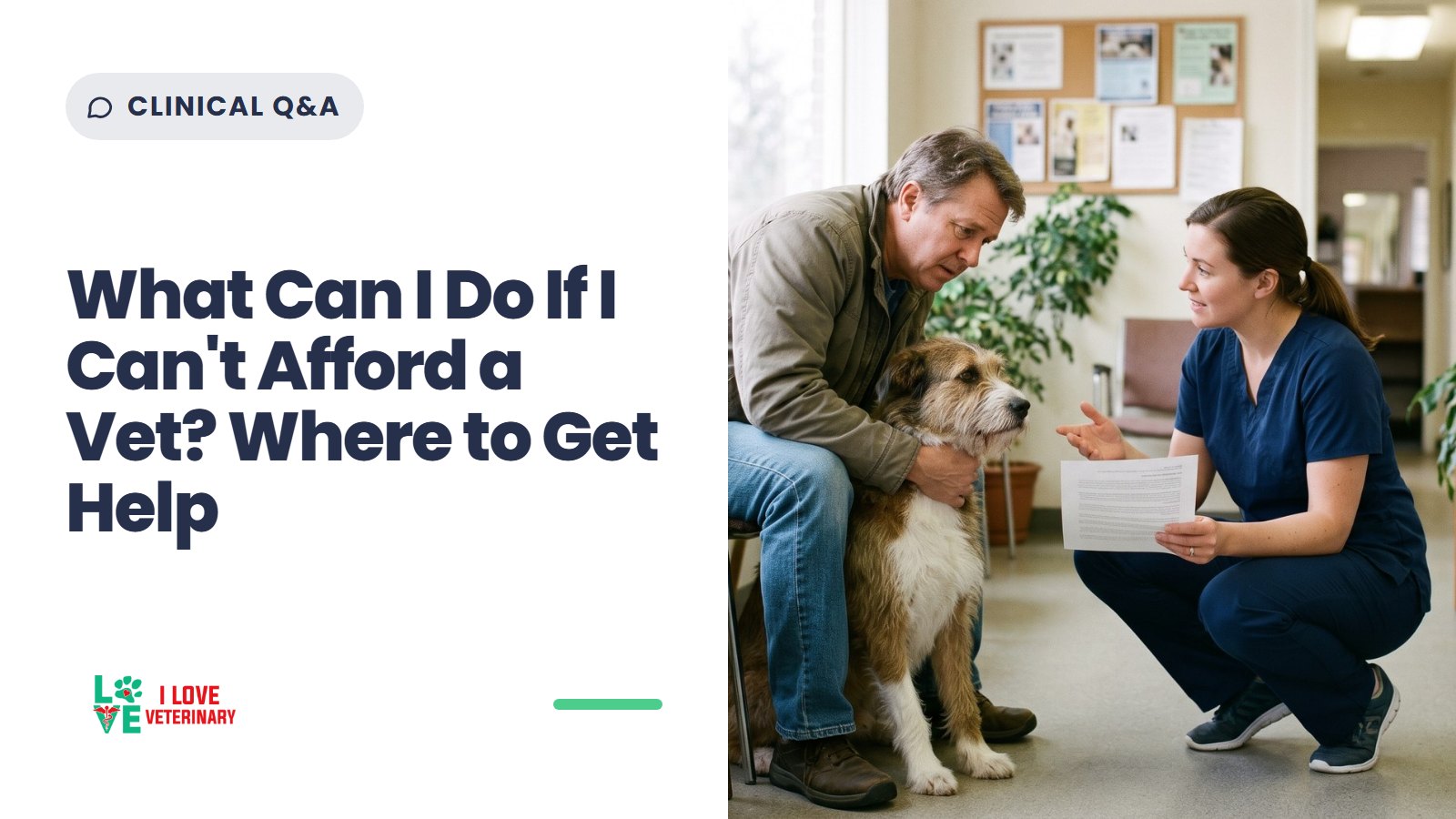
Money is a normal thing to bring up at the vet, so don't be embarrassed. Ask for an exam and a written estimate, then ask what matters most. Sometimes there is more than one way to treat the same problem, and the less expensive one can work just as well.
Humane World for Animals (formerly the Humane Society of the United States) suggests asking for a payment plan, especially if you're an established client, and asking whether the clinic keeps a fund, often built from other clients' donations, for people in a tight spot. A second opinion costs a consultation fee, but another vet may know a cheaper treatment that works as well.
Before you pay: what to ask for
- Does this need treatment today, or can it safely wait a few days?
- Can I get a written estimate? Which part matters most first?
- Is there another treatment option that costs less?
- Do you offer a payment plan, or work with a billing service that lets me pay over time?
- Does the clinic have a fund for clients who need help?
- Can you put the diagnosis and estimate in writing for a charity application?
That last one matters more than it sounds. Several of the charities below need your vet's diagnosis and estimate before they will look at an application.

Humane society and shelter vet clinics
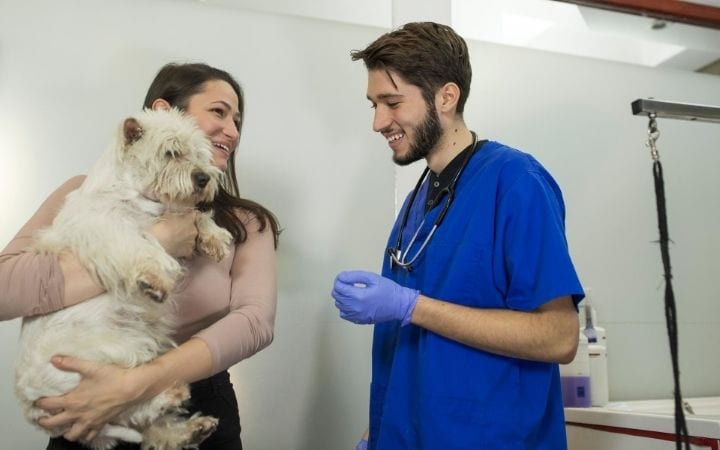
Some humane societies, SPCAs and shelters run clinics open to the public at lower prices. What they offer varies a lot. Some focus on vaccines and spay or neuter surgery, others offer basic care, and some shelter and community clinics take urgent cases on a limited basis.
One thing that surprises people: your local humane society is its own organization. Humane World for Animals is not a parent organization for local humane societies and shelters. Each one is run by its own board or by the city or county, so services and hours differ from town to town. You have to call yours.
How to find one near you:
- Search Pet Help Finder, a free national directory. Choose "Veterinary Services" and enter your ZIP code to see lower-cost providers nearby.
- Call your local humane society, SPCA or animal shelter and ask, "Do you have a clinic for the public, and what does it treat?" Even if they don't, the Banfield Foundation points out that local shelters are the ones most likely to know about low-cost or free care nearby.
- For spay or neuter surgery, the ASPCA points people to the SpayUSA database of low-cost programs.

Veterinary school teaching hospitals
If there is a veterinary college within driving distance, call it. Veterinary colleges run teaching hospitals, and some also run low-cost community clinics or have emergency assistance funds.
Tufts at Tech in Worcester, Massachusetts, is one example: final-year veterinary students work under experienced veterinarians and credentialed technicians, and clients who pre-qualify get heavily subsidized care. Not every school has a program like that, so ask. The AVMA keeps the official list of accredited veterinary colleges.
Payment plans, credit and crowdfunding
If your vet can't offer an in-house payment plan, ask which outside options the clinic accepts. The common ones are a third-party billing service that splits the bill into payments, and a health care credit card that some clinics accept for pet bills. Either can get your pet treated today, but read the terms before you sign. Some cards offer an interest-free period, and if a payment is late, a high interest rate can be charged back to the start. Only borrow what you can realistically repay.
Crowdfunding is the other route. A fundraising page shared with friends, family and your community can cover a gap that no grant will. Humane World lists general platforms like GoFundMe and pet-specific nonprofit options.
Charities that help pay vet bills
Charity funds are real, but they are small, busy and picky about what they cover. A few rules apply to the ones we checked:
- Get the diagnosis and estimate first. RedRover, Frankie's Friends and Pets of the Homeless all ask for your vet's diagnosis, treatment plan or estimate.
- Apply before treatment. None of them pay back a bill you've already paid.
- Some funds pay your vet directly. The Pet Fund and Pets of the Homeless send the money to the vet.
- Apply to more than one that fits, and keep your vet's office in the loop. They can often help with paperwork.

Which fund fits your situation
Your situation | Where to apply | Good to know |
|---|---|---|
Life-threatening emergency, with a diagnosis and estimate in hand | US only, income limit, one pet. Doesn't pay for exams, tests, routine or ongoing care. Small grants that fill a gap | |
Emergency or specialty care with a good prognosis | Pet must already have seen a vet. Can't help at hospitals that have their own funds, such as Banfield, BluePearl and VCA, so ask your hospital first | |
Cancer, heart disease, eye disease or another chronic condition that can wait | Never funds emergencies or urgent care. Usually a wait list. One-time grant. Email them first | |
Cancer care from a veterinary oncologist | Frankie's Friends' JLACF fund | The pet must be under a veterinary oncologist's care |
You are experiencing homelessness and your pet has an emergency | A social worker, shelter staff or outreach worker verifies your living situation. Not for ongoing treatment | |
Your pet needs a wheelchair | Donates wheelchairs. It does not pay vet bills |
Regional help. Some funds only serve one area. The Shakespeare Animal Fund helps with emergency bills in northern Nevada and North Central Florida for people at or below the poverty line. Harley's Hope Foundation supports older pet parents in Colorado. Frankie's Friends has a fund for Florida. Best Friends Animal Society keeps a state-by-state list, and Pet Help Finder searches by ZIP code.
Breed funds. You'll see breed-specific funds on many lists. Most of the ones we looked at help rescued or foster dogs, not owned pets, but a breed rescue group may still know of local help. If you bought from a breeder, check your contract for a health guarantee.
Groups that are gone. Older lists, including the earlier version of this page, still name some groups that no longer help. Brown Dog Foundation stopped operating on November 1, 2025, and the Magic Bullet Fund for pets with cancer is permanently closed. IMOM's website is no longer online, and Top Dog Foundation's site no longer lists an owner grant. Skip them and save yourself the wait.
Pet insurance: help for next time
Pet insurance can't help with a problem your pet already has. Policies limit coverage for pre-existing conditions, meaning illnesses or injuries that started before the policy did, and they can have a waiting period after you sign up. The insurance regulators' model pet insurance law also requires wellness plans for routine care to be kept separate from insurance, because they are not the same thing.
Where insurance earns its keep is the next emergency. Humane World suggests it for future medical expenses but notes that it isn't the right fit for every pet or every family, so read what a plan covers before you buy.
Prevention costs less than a crisis
The cheapest vet visit is often the one that happens before something goes wrong. For dogs, the Merck Veterinary Manual recommends a full checkup at least once a year for adults and twice a year or more for seniors, when tests can catch problems early. Core vaccines protect against serious diseases like distemper, parvovirus and rabies. Our guide to the DHPP vaccine explains the core shot for dogs.
Shelter and humane society clinics can be a lower-cost place for vaccines and spay or neuter surgery. Even a small monthly amount set aside for vet care makes the next surprise less scary.
If you've tried everything
Sometimes none of it comes together in time. Before you decide anything, ask your vet to walk you through every treatment option, including the less expensive ones. Vets call this the spectrum of care: a range that runs from basic, lower-cost care to advanced treatment, with many choices in between.
Then call your local shelter or a rescue and ask about pet support programs. Some shelters help families keep their animals with food, care or local referrals. As Humane World puts it, financial hardship doesn't have to mean giving up your pet.
If rehoming really is the kindest choice, a shelter or rescue can take over your pet's care. Choosing that is not a failure. It can be how your pet gets the care it needs.
Quick answers
Does the humane society have a vet clinic? Some do. Local humane societies and SPCAs are independent, so services vary from vaccines and spay or neuter to basic and limited urgent care. Call yours, or search Pet Help Finder by ZIP code.
Do vet schools treat pets for less? Some veterinary colleges run low-cost community clinics or have emergency assistance funds. Call the teaching hospital nearest you and ask.
Can a charity pay a bill I've already paid? The groups we checked don't. They want to see a diagnosis and estimate first, before treatment.
Sources
- Humane World for Animals: Resources for pet owners, from free pet food to low-cost vet care
- Humane World for Animals: Resources for pet owners
- American Animal Hospital Association: Help! Is this a pet emergency?
- Merck Veterinary Manual: When to See a Veterinarian
- Merck Veterinary Manual: Routine Health Care of Dogs
- Cornell Riney Canine Health Center: Gastric dilatation-volvulus (GDV) or bloat
- ASPCA: Animal Poison Control
- ASPCA: Low-Cost Spay/Neuter Programs
- Banfield Foundation: Resources for pet owners
- Pet Help Finder
- AVMA Council on Education: Accredited veterinary colleges
- AVMA News: HOD requests spectrum of care resources
- Cummings School of Veterinary Medicine at Tufts University: About Tufts at Tech
- RedRover Relief: Urgent Care grants
- Frankie's Friends: Apply for assistance
- The Pet Fund: For pet owners
- Pets of the Homeless: Emergency veterinary care application and Help by breed
- Handicapped Pets Foundation
- Shakespeare Animal Fund
- Harley's Hope Foundation
- Best Friends Animal Society: Pet financial assistance resources
- Brown Dog Foundation: About
- Magic Bullet Fund
- NAIC: NAIC passes Pet Insurance Model Act
This article is for general information and is not a substitute for advice from your veterinarian.